Frontiers in Endoscopy, Series #99

Post-Sphincterotomy Bleeding: Incidence, Risk Factors, and Management

Read Article

Introduction

Endoscopic retrograde cholangiopancreaticography (ERCP) is a commonly used therapeutic procedure for diagnostic and therapeutic purposes for various pancreatic-biliary pathologies. Endoscopic sphincterotomy (ES) is a requirement for many biliary interventions. ES can serve as the initial step in the treatment of biliary pathologies, such as the extraction of stones or to allow cholangioscopy or some forms of biliary duct stenting. The outcomes after ES are dependent on the interplay between several factors, including pre-sphincterotomy ductal cannulation, the technique and instrumentation used for sphincterotomy, the post-sphincterotomy therapeutic intervention performed, and finally, the experience and expertise of the endoscopist.1

Approximately 4 to 5% of ES are associated with some degree of adverse event.2 Bleeding is one of the most common adverse events associated with sphincterotomy.3 The bleeding can range from minimal  oozing to life-threatening hemorrhage requiring multiple blood transfusions and emergent endoscopic/radiologic/surgical intervention to achieve hemostasis. Understanding the type of sphincterotomy-related bleeding, recognizing high-risk scenarios, and implementing prompt and appropriate hemostatic strategies are key for improving patient outcomes. This article aims to provide a comprehensive overview of the incidence, risk factors, classification, current management strategies, and advanced interventions for refractory cases of endoscopic sphincterotomy-related bleeding.

Incidence

The American Gastroenterological Association (AGA) recognized sphincterotomy as the most important risk factor for bleeding during ERCP as the bleeding from ERCP.3 The incidence of bleeding associated with sphincterotomy can range from 0.5% to 12%.4-8 It is important to note that reporting of the incidence of bleeding varies and is highly dependent on the definition used by the investigators and authors across studies. Some studies define bleeding as a clinical diagnosis (melena or hematemesis) with laboratory evidence of a drop in hemoglobin while others include any bleeding at all, even mild, self-limited oozing. For example, the MESH study by Freeman et al. reported an incidence of bleeding post-ES of 2%.6 Others consider bleeding as endoscopic evidence after performing sphincterotomy. For example, Kim et al. and Leung et al. defined post-sphincterotomy bleeding as an adverse event if the bleeding did not subside after two to three minutes following sphincterotomy.7,8 Hence, the reported incidence was greater, 12.1% and 10.4%, respectively. Nonetheless, the incidence of bleeding as an adverse event post-sphincterotomy has decreased over time. From 10-12% in the 1990s, the current guidelines by the American Society for Gastrointestinal Endoscopy and the AGA cite an expected rate of sphincterotomy-associated bleeding as approximately 1 to 2%, likely representing advanced in sphincterotomy generator waveforms.9

Risk Factors

The risk factors for post-ES bleed include liver cirrhosis, end-stage renal disease, difficult cannulation, precut sphincterotomy and lower ERCP case volumes.9,10,11 The AGA identifies coagulopathy, anticoagulant therapy within three days of procedure, cholangitis, low endoscopist case volume (less than 1 per week), and additional therapeutic maneuvers including ampullectomy as risk factors for bleeding with ES.3 The risks specific for ES can be grouped depending on patient and procedure. A retrospective study by Lin et al. reported significantly increased incidence of post-sphincterotomy bleeding in patients with cirrhosis (OR 3.1), end stage renal disease (OR 3.55), antiplatelet use within three days before or after the procedure (OR 4.95), CBD dilation (OR 1.24) and history of duodenal ulcers (OR 2.06).10 Similarly, the endoscopist experience and the number of sphincterotomies/ERCPs performed also play an important role. For example, mean case volume of ≤ 1/week was associated with 74% significantly higher odds of bleed compared to operators with a high case volume.6

Kim et al. in their prospective analysis found statistically higher bleeding rates with a needle-knife sphincterotome compared to a traditional pull-type sphincterotome (79.4% vs 20.6%, p < 0.025). Moreover, bleeding was significantly more with zipper cuts (3.7% vs 1.2%, p 0.049%).7 However, it is important to note that with recent advancements in the field of advanced endoscopy and newer devices, zipper cuts are extremely rare. Bae et al. showed that the length of ES as an independent risk factor for bleeding.12 Full length (papillary orifice up to the superior margin of the sphincter opening, OR 68.27) was associated with the highest risk followed by medium length (papillary orifice to the midpoint between the proximal hooding fold and the superior margin of sphincter opening, OR 10.97) and then minimal length (papillary orifice to the proximal hooding fold, OR 1). It should be noted that, in general, a complete sphincterotomy is best for the patient. Evidence of extension of previous ES is mixed. While some studies state that it does not affect the risk of bleeding, Leung et al. reported significantly increased risk.3 Prabhu et al. in their review paper explained how sphincterotomy extension was safe without significant risk of adverse events.13

The type of device used for ES also plays an important role. Perini et al. in their study showed that the ValleyLab generator, which is no longer in clinical use, was associated with increased endoscopically evident bleeding (OR 4.02) compared to the microprocessor- controlled generator (ICC 200; ERBE). The ValleyLab generator was associated with increased occurrence of moderate or severe bleeding with increased requirement of urgent endoscopic intervention. It has since been replaced by modern electrosurgical generators. 

Classification of Sphincterotomy-Associated Bleeding

Bleeding can be broadly classified as clinically significant or insignificant. Clinically important bleeding can be defined as any bleed that requires intervention (endoscopic hemostasis, transfusion, etc.) and is visible not only through endoscopy but also in the form of melena/hematemesis/hematochezia with a significant drop in hemoglobin. 

Cotton et al. proposed a grading system to classify bleeding based on its severity.14 Bleeding can be classified into mild, moderate, and severe. Mild bleeding is defined as clinically apparent bleeding with a hemoglobin drop of less than 3 g/dL that does not require transfusion. Moderate bleeding refers to bleeding that necessitates transfusion of up to four units of blood, without the need for angiographic or surgical intervention. Severe bleeding involves the transfusion of five or more units and/or requires angiographic or surgical management. A clinically insignificant bleed would broadly include all the bleeds that do not fit the above criteria. However, in essence, the distinction between clinically significant and insignificant bleeding after a sphincterotomy is made via clinical judgment and observation and hinges on the impact on the patient’s health and the level of medical intervention required to control the bleeding.  

Freeman et al. reported a rate of 2% clinically significant bleeds, out of which 0.6% were mild (not requiring transfusion), 0.9% were moderate (requiring up to 4 units of blood), and 0.5% had severe bleeds (5 or more units of blood, surgery, or angiography).6 Similarly, other studies mostly report mild to moderate bleeding as the most common bleeding severity after sphincterotomy. Leung et al. in their study reported mild, moderate, and severe bleeds as 92.4%, 6.7% and 0.9%, respectively.8

Clinically evident bleeds can become life-threatening emergencies requiring massive blood transfusions, endoscopic interventions, and/or interventional radiology (IR) intervention for embolization. Freeman et al. reported 43.75% post-sphincterotomy patients requiring endoscopic intervention for hemostasis, and 4.2% patients required surgical intervention.6 Death occurred in 4.2% of cases despite aggressive intervention. 

Bleeding can also be classified as immediate or delayed based on the timing/onset of bleeding. Immediate bleeding usually occurs during the procedure and is evident by oozing or spurting of blood and is directly observed with the duodenoscope.6,8 However, this may not be clinically significant and in the majority of instances it is self-limiting and managed conservatively.6,8,15

Delayed bleeding refers to a clinically significant bleed occurring after the sphincterotomy, with usually biochemical evidence of hemoglobin drop.8,9 Freeman et al. reported delayed bleeding 1-10 days post-sphincterotomy in 52% cases.6 Lin et al. in their study reported 69.2% immediate and 30.8% delayed bleeds.10 Beyond that, 20% of these severe bleeds were more severe than those with immediate bleeding. Reported delayed bleeding rates were lower in the study by Leung et al., at 4.2% with all cases requiring blood transfusions and repeat endoscopic intervention.8 This indicates that delayed bleeding, although less frequent, can be more fatal compared to immediate bleeding. 

Management of Sphincterotomy Induced Bleeding

The cornerstones of managing post-sphincterotomy bleeding are rapid recognition, risk stratification, and immediate availability of appropriate endoscopic tools and expertise. Immediate bleeding, typically identified during ERCP, is addressed using a stepwise endoscopic approach based on bleeding severity and visibility. It should be noted that mild bleeding often stops spontaneously and, if not interfering with visualization, may not require treatment per se. 

If treatment is desired, balloon tamponade is usually the first method applied for mild bleeds and this technique can be supplemented with other treatment interventions if adequate hemostasis is not achieved in short order. Injection of epinephrine, hemostatic clips, stents, and thermal coagulation are commonly used endoscopic interventions for hemostasis.4 Topical agents can be used as adjuvants. Delayed bleeding is managed with supportive care and resuscitation with blood products, followed by repeat endoscopy for definitive control if bleeding does not stop spontaneously. In cases with severe bleeding, referral to interventional radiology for angiography with embolization or, rarely, surgical intervention may be necessary. The choice of intervention is often governed by whether the bleed is immediate or delayed, intermittent or ongoing, mild or severe, and the patient’s overall stability. In the following sections, we will discuss the various treatment interventions in detail that can be used to achieve hemostasis in post-sphincterotomy bleeding.

Tamponade

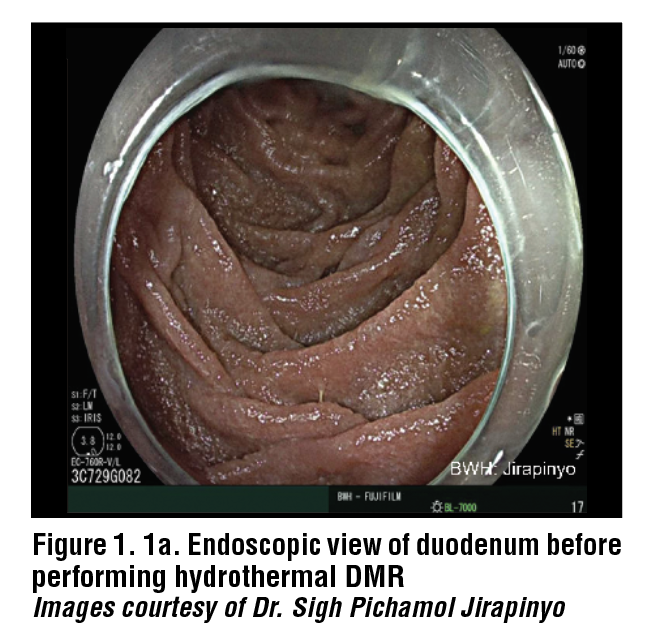
Balloon tamponade is frequently used to control sphincterotomy bleeding and ensure adequate visualization of the bleeding site. (Figure 1) The balloon exerting direct pressure on the bleeding vessel promotes clot formation and hemostasis. This tamponade is most commonly provided using a standard stone extraction balloon or, less frequently, a dilation balloon.16 One advantage of this approach is that the bleeding site can often be directly visualized through the clear plastic of the balloon itself, allowing for interrogation and direct confirmation of ongoing bleeding or cessation of bleeding. 

Balloon tamponade is an effective strategy especially for immediate onset bleeding after sphincterotomy. A recent study by Askora et al. showed that balloon tamponade was successful in achieving hemostasis in 10 of 18 subjects (55.6%), and an additional 4 subjects (22.2%) achieved hemostasis after 5 minutes of tamponade.17 Hence, it can be easily used by the endoscopist in cases of immediate post-ES bleed and often the first line of intervention.18 Staritz, et al. used balloon catheters in two cases of severe hemorrhage from the papillary orifice and reported cessation of bleeding after ten minutes.19

Despite the advantages and ease of use of balloon tamponade, it is not free of the risk of adverse events. It can lead to mucosal ischemia through increased pressure application to the mucosal surface during tamponade, although such events are rare. Other adverse events associated with balloon tamponade include bile duct injury, perforation, pancreatitis and cholangitis, and these risks are likely higher with dilation balloons than with retrieval balloons.10,20 Edema or spasm of the pancreatic duct or the biliary duct due to pressure application from the tamponade can contribute to these adverse events. Hence, the endoscopist should be careful in selecting a balloon of appropriate size, ensuring adequate but not undue inflation pressure, and just enough duration of balloon application to avoid adverse events. Despite that, balloon tamponade is a minimally invasive and highly effective intervention for initial use. It is also a cost-effective intervention option compared to more invasive procedures.

Local Injections 

Local injection therapy, most commonly with epinephrine, remains a commonly employed technique for controlling post-sphincterotomy bleeding. Injection with diluted epinephrine (1:10000 to 1:20000) is mostly effective in achieving hemostasis by two methods: vasoconstriction and mechanical tamponade by volume of fluid injected into submucosal space surrounding the vessel which compresses it and facilitates thrombosis.15 It should be noted that not all available injection catheters work through a duodenoscope, and simple plastic catheters may be deformed by the elevator mechanism of the duodenoscope and thus fail. Tsou et al. reported epinephrine injection alone was as effective as combination treatment with epinephrine injection and thermotherapy (96.2% vs 100%, p 0.44).22 Apart from epinephrine, hypertonic saline-epinephrine, dextrose-epinephrine, and polidocanol have also been utilized. Sakai et al. reported 100% successful hemostasis with hypertonic-epinephrine injection.23 Hence, local injections can be effectively used as first line agents to achieve hemostasis for mild bleeding and can be used as an adjunctive initial method which can then be followed immediately by a definitive treatment with clipping or thermal coagulation. Recently, fibrin glue has also been reported as an alternative to refractory post-ES bleeding. It contains fibrinogen and thrombin and promotes thrombogenesis to achieve hemostasis. Orlandini et al. reported 91.4% clinical success rate with one injection of fibrin glue in refractory post-ES bleeds.24 Out of the remaining 8.6%, half responded to a second injection of fibrin glue.

Thermal Coagulation

Thermal coagulation plays a significant role in achieving hemostasis when local injection has failed to provide adequate hemostasis. Thermal therapies include monopolar or bipolar electrocautery, heater probes and argon plasma coagulation. (Figure 2) Controlled thermal energy delivered through these techniques cauterizes the bleeding site and can often result in durable hemostasis.25 It should be noted that the cutting wire of the sphincterotome itself can be used to provide monopolar electrocautery to the bleeding site. Katsinelos et al. reported monopolar cautery was 100% successful in controlling post-ES bleeding which was not controlled with epinephrine injection alone.26 Similarly, Sherman et al. reported an 89% hemostasis rate with bipolar cautery in post-ES bleeds.27 A key advantage of thermal methods over injection alone is the creation of a more durable seal with the possibility of coaptation (thus compressing and cauterizing the bleeding vessel at the same time) leading to significantly lower rates of rebleeding. Combination therapies consisting of epinephrine injections and thermal coagulation have also been widely used. Tsou et al. reported 100% success rate in achieving hemostasis across all 37 patients who were treated with combination therapy.22

Clipping 

For refractory bleeding not controlled by tamponade or hemostatic topical agents, endoscopic clips can be used. Application of clip is technically challenging with a side viewing endoscope as the small mechanical parts of through-the-scope (TTS) clips can become damaged by the elevator mechanism of the duodenoscope, but some TTS clips work despite this challenge. Cap-assisted end-viewing endoscopes can potentially overcome this problem. Clips can be deployed directly onto the bleeding site, and they can be effective for both active bleeding and for prophylactic prevention. TTS clip application through end-viewing endoscope can achieve successful hemostasis in 90% cases.28 Kim et al. retrospectively evaluated the efficacy of clips for post-ES induced bleeding that was not controlled with epinephrine injection or tamponade. They reported a 100% success rate with no delayed bleeding or complications in all 45 patients treated with clips.29

A propensity score matched analysis conducted by Jinpei et al. in 2024 compared prophylactic hemostatic clip placement after ES with 232 patients in the hemostatic clip group and 161 in the control arm. They reported significantly lower odds of delayed bleeding in the hemostatic clip group arm (OR 0.134, 95% CI 0.025 – 0.719).30 Similarly, Chon et al. reported 100% success rates in all 57 subjects who were managed with endoclip for controlling post-ES bleed.31 Care must be taken to avoid inadvertent closure of the bile or pancreatic duct while placing the clip. However, such adverse events are very rare. Moreover, no significant adverse events have been reported associated with the clips. Clips are a good alternative for refractory post-ES bleeding uncontrolled by injections/ tamponade, which is easier to perform and has low chance of adverse events.

Stenting

Stents are another treatment alternative for post-ES bleeds uncontrolled with topical agents/ tamponade, and in general covered metal stents are used to treat sphincterotomy bleeding. Itoi et al. suggested 10 mm as an ideal diameter size of the stent.32 Fully covered self-expandable metal stents (FC-SEMS) have been shown to provide excellent tamponade. (Figure 3) Cochrane et al. reported FC-SEMS had significantly lower rate of bleeding at 72 hours compared to traditional endoscopic interventions (tamponade/epinephrine injection).33

In a retrospective study by Bilal et al. including 97 patients, FC-SEMS had a 100% technical success rate in achieving immediate hemostasis and 94% success in achieving durable clinical success for delayed hemostasis. Rebleeding was noted in 6.2% cases which were managed with repeat EGD/ERCP, embolization and surgery.34 The adverse events reported post FC-SEMS included pancreatitis in 4.1% cases and stent migration in 4.1% cases. Even though FC-SEMS have good success rates, due to the higher costs and adverse events associated they are considered as treatment alternatives after conventional endoscopic interventions like tamponate, topical agents or cauterization have failed to control bleeding. FC-SEMS are generally removed several weeks after placement when used to treat sphincterotomy bleeding. 

Topical Agents 

Topical agents represent a significant advancement in the treatment of GI bleeding, offering a non-mechanical method of hemostasis ideally suited for achieving hemostasis for diffuse hemorrhage or anatomically difficult locations which cannot be controlled by local injections, tamponade or clips.  Hemospray (Cook Endoscopy, Winston-Salem NC) acts as a mechanical barrier between the bleeding vessel and the lumen. When applied to the bleeding surface, it absorbs water from the blood and tissue fluids, leading to concentration of clotting factors and platelets. This promotes formation of an adhesive plug that covers the mucosal defect and applies physical tamponade on the bleeding vessel promoting hemostasis.35 Purastat (3-D Matrix, Inc., Tokyo, Japan) is another topical agent used for post-ES bleeds. It is a synthetic hemostatic agent made of amino acids and forms a three-dimensional scaffold after coming in contact with blood.36 This scaffold mimics the human extracellular matrix causing an adhesive effect and promoting hemostasis at the bleeding site. Another agent used is Beriplast (CSL Behring, Marburg, Germany), a fibrin sealant, which mimics final steps of the coagulation cascade to achieve hemostasis.37

Studies have shown high rates of immediate hemostasis (>90%) with Hemospray in achieving hemostasis for gastrointestinal bleeds.38 However, studies evaluating the use of Hemospray for post-ES bleeds are limited. Lesmana et al. in their retrospective study compared Beriplast and Purastat with conventional hemostatic techniques (epinephrine / balloon tamponade) for post-ES bleeds. The study involved 100 patients with 60 patients in the study arm (Beriplast or Purastat) and 40 patients in the control arm (conventional hemostatic agents). They reported a 100% success rate in achieving immediate hemostasis in both the arms. However, two patients (5%) in the control arm had rebleed while none were reported in the study arm. Out of these two patients, one was managed with one out of the two hemostatic agents (Beriplast or Purastat) and the other was managed with argon plasma coagulation.39

A recent RCT was performed comparing the efficacy of a polysaccharide hemostatic powder (XunNing®; Lianbai Bochao Medical Equipment, Chongqing, China) to endoclips for post-ES non-pulsatile bleeding. The study included 104 subjects with 52 each in the study and control arm. Immediate hemostasis was achieved in 100% subjects with polysaccharide hemostatic powder (PHP) while it was 92.3% with endoclip use (p = 0.022). Overall treatment success, which was defined as immediate hemostasis with no delayed bleeding, was significantly more with the PHP use (100% vs 90.4%; P = 0.022). Moreover, hemostasis was achieved in a shorter time with PHP (50.77 vs. 62.81 sec, p = 0.011).40

With topical agents, the primary concern is rebleeding. Hemospray use for gastrointestinal bleeds have shown rebleed rates of as high as 10% to 30%.32 Moosavi et al. reported a case of transient biliary obstruction after application of hemospray for post-ES bleed.41 Despite promising results from Lesmana et al., prospective studies specifically evaluating topical agents for post-sphincterotomy bleeding are needed.39

IR/surgery for Profound Post-ES bleeding

With advancements in the endoscopic techniques, only a small subset of patients with post-sphincterotomy bleeding will require intervention beyond endoscopy. IR-guided embolization is the preferred next-step modality for hemodynamically unstable patients with ongoing bleeding that is refractory to endoscopic control or when endoscopic visualization is impossible. The IR approach involves angiographic localization of bleeding source, typically the posterior pancreaticoduodenal artery and/or one of the branches of the gastroduodenal artery followed by embolization with coils, particles or glue. Maleux et al. reported 97% successful embolization in post-ES bleeding that was refractory to medical and endoscopic treatment.42 If bleeding is from duodenal varices, IR approaches may have difficulty in fully stopping it. Recurrent bleeding occurred in 9% cases and 30-day mortality was 20.6%. The high mortality rates in this study were attributed to hemostatic disorders characterized by increased international normalized ratio (INR) and activated partial thromboplastin time (aPTT) with statistically significant correlation between the 30-day mortality and elevated levels of INR and aPTT (P value of 0.008 and 0.012, respectively).

Shenbagaraj et al., in their retrospective study, reported 100% success (n=4) with embolization in post-ES bleeds that were refractory to endoscopic intervention.43

Surgery remains the definitive treatment of last resort, reserved for cases who have failed embolization or when bleeding is too massive for endoscopic or angiographic control. The surgical options include open surgical vessel ligation or surgical repair of the duodenum and papilla. Most commonly performed surgery is duodenotomy with direct suture ligation of bleeding vessels at the sphincterotomy site.4 More extensive procedures such as pancreaticoduodenectomy are rarely required and carry significant morbidity and mortality.

The choice between IR guided intervention and surgery is multidisciplinary, dependent on patient clinical stability, anatomy and expertise available at the treatment center. However, the minimally invasive nature of angioembolization is considered as a bridge between failed endoscopy and high-risk surgery.

Conclusion

Post-ES bleeding is a well- reported adverse event which, in general, requires a structured approach for management. The cornerstone of treatment is endoscopic intervention. Epinephrine injection, balloon tamponade, thermal coagulation, and the use of endoscopic clips are foundational treatment modalities. For refractory cases, FC-SEMS and topical hemostatic agents offer valuable alternatives before considering angioembolization or surgery.  

References

References

1.  Neuhaus H. Biliary sphincterotomy. InERCP 2019 Jan 1 (pp. 137-147). Elsevier.

2.  Perini RF, Sadurski R, Cotton PB, Patel RS, Hawes RH, Cunningham JT. Post-sphincterotomy bleeding after the introduction of microprocessor-controlled electrosurgery: does the new technology make the difference?. Gastrointestinal endoscopy. 2005 Jan 1;61(1):53-7.

3.  Adler DG, Lieb JG, Cohen J, Pike IM, Park WG, Rizk MK, Sawhney MS, Scheiman JM, Shaheen NJ, Sherman S, Wani S. Quality indicators for ERCP. Official journal of the American College of Gastroenterology| ACG. 2015 Jan 1;110(1):91-101.

4. Ferreira LE, Baron TH. Post-sphincterotomy bleeding: who, what, when, and how. Official journal of the American College of Gastroenterology| ACG. 2007 Dec 1;102(12):2850-8.

5. Goodall RJ. Bleeding after endoscopic sphincterotomy. Annals of the Royal College of Surgeons of England. 1985 Mar;67(2):87.

6.  Freeman ML, Nelson DB, Sherman S, Haber GB, Herman ME, Dorsher PJ, Moore JP, Fennerty MB, Ryan ME, Shaw MJ, Lande JD. Complications of endoscopic biliary sphincterotomy. New England Journal of Medicine. 1996 Sep 26;335(13):909-19.

7.  Kim HJ, Kim MH, Kim DI, Lee HJ, Myung SJ, Yoo KS, Park ET, Lim BC, Seo DW, Lee SK, Min YI. Endoscopic hemostasis in sphincterotomy-induced hemorrhage: its efficacy and safety. Endoscopy. 1999 Aug;31(06):431-6.

8.  Leung JW, Chan FK, Sung JJ, Chung SS. Endoscopic sphincterotomy-induced hemorrhage: a study of risk factors and the role of epinephrine injection. Gastrointestinal endoscopy. 1995 Dec 1;42(6):550-4.

9.  Chandrasekhara V, Khashab MA, Muthusamy VR, Acosta RD, Agrawal D, Bruining DH, Eloubeidi MA, Fanelli RD, Faulx AL, Gurudu SR, Kothari S. Adverse events associated with ERCP. Gastrointestinal endoscopy. 2017 Jan 1;85(1):32-47.

10. Lin WC, Lin HH, Hung CY, Shih SC, Chu CH. Clinical endoscopic management and outcome of post-endoscopic sphincterotomy bleeding. PloS one. 2017 May 17;12(5):e0177449.

11. Nelson DB, Freeman ML. Major hemorrhage from endoscopic sphincterotomy: risk factor analysis. Journal of clinical gastroenterology. 1994 Dec 1;19(4):283-7.

12. Bae SS, Lee DW, Han J, Kim HG. Risk factor of bleeding after endoscopic sphincterotomy in average risk patients. Surgical endoscopy. 2019 Oct 15;33(10):3334-40.

13. Parbhu S, Adler DG. Extension of a Prior Biliary or Pancreatic Sphincterotomy: Efficacy, Outcomes, and Adverse Events. PRACTICAL GASTROENTEROLOGY. 2016 Jan 1;40(1):21-32.

14. Cotton PB, Lehman G, Vennes J, Geenen JE, Russell RC, Meyers WC, Liguory C, Nickl N. Endoscopic sphincterotomy complications and their management: an attempt at consensus. Gastrointestinal endoscopy. 1991 May 1;37(3):383-93.

15. Wilcox CM, Canakis J, Mönkemüller KE, Bondora AW, Geels W. Patterns of bleeding after endoscopic sphincterotomy, the subsequent risk of bleeding, and the role of epinephrine injection. Official journal of the American College of Gastroenterology| ACG. 2004 Feb 1;99(2):244-8.

16. Rustagi T, Jamidar PA. Endoscopic retrograde cholangiopancreatography–related adverse events: general overview. Gastrointestinal Endoscopy Clinics. 2015 Jan 1;25(1):97-106.

17. Askora AA, Ibrahim AM, Elgohary M, Saad N, Abu Taleb MA. Efficacy and Safety of Balloon Tamponade in Control of Post Sphincterotomy Bleeding During Endoscopic Retrograde Cholangiopancreatography. Zagazig University Medical Journal. 2025 May 1;31(5):1911-27.

18. Ghoz HM, Dayyeh BK. Hemorrhagic complications following endoscopic retrograde cholangiopancreatography. Techniques in Gastrointestinal Endoscopy. 2014 Oct 1;16(4):175-82.

19. Staritz M, Ewe K, Goerg K, Meyer zum Büschenfelde KH. Endoscopic balloon tamponade for conservative management of severe hemorrhage following endoscopic sphincterotomy. Zeitschrift fur Gastroenterologie. 1984 Nov 1;22(11):644-6.

20. Mustafa FM, Ali HF. Endoscopic management of ERCP bleeding. The Egyptian Journal of Hospital Medicine. 2019 Apr 1;75(5):2888-93.

21. Matsushita M, Uchida K, Okazaki K. Effective injection site on endoscopic injection therapy for postsphincterotomy bleeding: apex or oral?. Official journal of the American College of Gastroenterology| ACG. 2008 Jun 1;103(6):1569-70.

22. Tsou YK, Lin CH, Liu NJ, Tang JH, Sung KF, Cheng CL, Lee CS. Treating delayed endoscopic sphincterotomy-induced bleeding: epinephrine injection with or without thermotherapy. World Journal of Gastroenterology: WJG. 2009 Oct 14;15(38):4823.

23. Sakai Y, Tsuyuguchi T, Sugiyama H, Nishikawa T, Kurosawa J, Saito M, Tawada K, Mikata R, Tada M, Ishihara T, Yokosuka O. Hypertonic saline-epinephrine local injection therapy for post-endoscopic sphincterotomy bleeding: removal of blood clots using pure ethanol local injection. Surgical Laparoscopy Endoscopy & Percutaneous Techniques. 2013 Aug 1;23(4):e156-9.

24. Orlandini B, Schepis T, Tringali A, Familiari P, Boškoski I, Borrelli de Andreis F, Perri V, Costamagna G. Fibrin glue injection: Rescue treatment for refractory post-sphincterotomy and post-papillectomy bleedings. Digestive Endoscopy. 2021 Jul;33(5):815-21.

25. Kuran S, Parlak E, Oguz D, Cicek B, Disibeyaz S, Sahin B. Endoscopic sphincterotomy–induced hemorrhage: treatment with heat probe. Gastrointestinal endoscopy. 2006 Mar 1;63(3):506-11.

26. Katsinelos P, Kountouras J, Chatzimavroudis G, Zavos C, Fasoulas K, Katsinelos T, Pilpilidis I, Paroutoglou G. Endoscopic hemostasis using monopolar coagulation for postendoscopic sphincterotomy bleeding refractory to injection treatment. Surgical Laparoscopy Endoscopy & Percutaneous Techniques. 2010 Apr 1;20(2):84-8.

27. Sherman S, Hawes RH, Nisi R, Lehman GA. Endoscopic sphincterotomy-induced hemorrhage: treatment with multipolar electrocoagulation. Gastrointestinal endoscopy. 1992 Mar 1;38(2):123-6.

28. Liu F, Wang GY, Li ZS. Cap-assisted hemoclip application with forward-viewing endoscope for hemorrhage induced by endoscopic sphincterotomy: a prospective case series study. BMC gastroenterology. 2015 Oct 15;15(1):135.

29. Kim TH, Sohn YW. Mo1428 Hemoclip Application Using CAP-Fitted Forward Endoscopy to Treat Post-Sphincterotomy Bleeding in Patients Undergoing ERCP. Gastrointestinal Endoscopy. 2015 May 1;81(5):AB416.

30. Dong J, Feng Q, Teng G, Niu H, Bian D. Application of a New Hemostatic Clip to Prevent Delayed Bleeding After Endoscopic Sphincterotomy: A Propensity Score–matched Analysis. Journal of Clinical Gastroenterology. 2024 Jul 1;58(6):614-8.

31. Chon HK, Kim TH. Endoclip therapy of post-sphincterotomy bleeding using a transparent cap-fitted forward-viewing gastroscope. Surgical Endoscopy. 2017 Jul;31(7):2783-8.

32. Itoi T, Yasuda I, Doi S, Mukai T, Kurihara T, Sofuni A. Endoscopic hemostasis using covered metallic stent placement for uncontrolled post-endoscopic sphincterotomy bleeding. Endoscopy. 2011 Apr;43(04):369-72.

33. Cochrane J, Schlepp G. Comparing endoscopic intervention against fully covered self-expanding metal stent placement for post-endoscopic sphincterotomy bleed (CEASE Study). Endoscopy International Open. 2016 Dec;4(12):E1261-4.

34. Bilal M, Chandnani M, McDonald NM, Miller CS, Saperia J, Wadhwa V, Singh S, Cohen JM, Berzin TM, Sawhney MS, Pleskow DK. Use of fully covered self-expanding metal biliary stents for managing endoscopic biliary sphincterotomy related bleeding. Endoscopy International Open. 2021 May;9(05):E667-73.

35. Holster IL, van Beusekom HM, Kuipers EJ, Leebeek FW, de Maat MP, Tjwa ET. Effects of a hemostatic powder hemospray on coagulation and clot formation. Endoscopy. 2015 Jul;47(07):638-45.

36. Subramaniam S, Kandiah K, Thayalasekaran S, Longcroft-Wheaton G, Bhandari P. Haemostasis and prevention of bleeding related to ER: The role of a novel self-assembling peptide. United European gastroenterology journal. 2019 Feb;7(1):155-62.

37. Eberhard U, Broder M, Witzke G. Stability of Beriplast® P fibrin sealant: Storage and reconstitution. International journal of pharmaceutics. 2006 Apr 26;313(1-2):1-4.

38. Chahal D, Sidhu H, Zhao B, Jogendran M, Dahiya M, Tandon P, Donnellan F. Efficacy of Hemospray (TC-325) in the treatment of gastrointestinal bleeding: an updated systematic review and meta-analysis. Journal of Clinical Gastroenterology. 2021 Jul 1;55(6):492-8.

39. Lesmana CR, Sandra S, Paramitha MS, Gani RA, Lesmana LA. Endoscopic Management Using Novel Haemostatic Agents for Immediate Bleeding during Endoscopic Retrograde Cholangio-Pancreatography. Canadian Journal of Gastroenterology and Hepatology. 2023;2023(1):5212580.

40. Li H, Zuo J, Wang W, Wu S, Zhao Y, Wei Y, Song J, Zhang Z, Yao W, Wang J, Liu C. Efficacy of Polysaccharide Hemostatic Powder on blood oozing among patients with Post-Endoscopic Sphincterotomy Bleeding: A Randomized Controlled Trial. Official journal of the American College of Gastroenterology| ACG. 2022 May 12:10-4309.

41. Moosavi S, Chen YI, Barkun AN. TC-325 application leading to transient obstruction of a post-sphincterotomy biliary orifice. Endoscopy. 2013 Dec;45(S 02):E130-.

42. Maleux G, Bielen J, Laenen A, Heye S, Vaninbroukx J, Laleman W, Verhamme P, Wilmer A, Van Steenbergen W. Embolization of post-biliary sphincterotomy bleeding refractory to medical and endoscopic therapy: technical results, clinical efficacy and predictors of outcome. European radiology. 2014 Nov;24(11):2779-86.

43. Shenbagaraj L, White J, Czajkowski M, Allison M. PTU-116 Delayed post sphincterotomy bleeding and management–4 year single centre experience.

Download Tables, Images & References

Dispatches from the GUILD Conference, Series #71

Global Consensus Statement for the Management of Inflammatory Bowel Disease in Pregnancy: Implications for the Gastroenterologist

Read Article

The management of inflammatory bowel disease (IBD) during pregnancy presents unique challenges, requiring a balance between maternal health, disease control, and fetal well-being. A global consensus conference, led by a multidisciplinary team of gastroenterologists, content specialists, and patient advocates was held in May 2024 to standardize care across countries with evidence-based recommendations. In this article, key guidance is provided on preconception counseling, maintaining disease remission, and safe medication use throughout pregnancy and lactation. We also address fertility preservation, risk mitigation during delivery, and neonatal outcomes. Collaboration between gastroenterologists, obstetricians and colorectal surgeons (if needed) is essential to optimize outcomes. This article also provides recommendations for a foundation of consistent care and highlights areas for future research, particularly regarding novel therapies and long-term neonatal health.

Introduction

The management of inflammatory bowel disease (IBD) during pregnancy is a complex intersection of maternal health, fetal development, and disease management. This article synthesizes global consensus derived from the recent international meeting of leading gastroenterologists, maternal-fetal medicine experts, and patient advocates.1 The guidelines aim to standardize IBD care during pregnancy, emphasizing evidence-based practices while considering regional variations in resources. This summary highlights the key findings and actionable recommendations for gastroenterologists.

Methodology

The GRADE (Grading of Recommendations Assessment, Development, and Evaluation) system provided a robust framework to assess the quality of evidence and the strength of recommendations. For questions that had inadequate data for GRADE, the RAND appropriateness method was used to vote on consensus recommendations. 

Preconception Counseling and Optimization

Pregnancy represents a period of intense metabolic, hormonal, microbiome and immunological changes. The interaction between pregnancy and IBD is bi-directional, and it may increase the risk of maternal, fetal and obstetric complications.2,3 Proactive management before conception is critical to minimize risks for both mother and child.

Women with IBD are advised to achieve stable disease remission and optimize their nutritional status before conception to improve pregnancy outcomes. Preconception counseling is also recommended to enhance medication adherence, reduce the risk of disease flares during pregnancy, and minimize the likelihood of delivering low birth weight infants.

Fertility

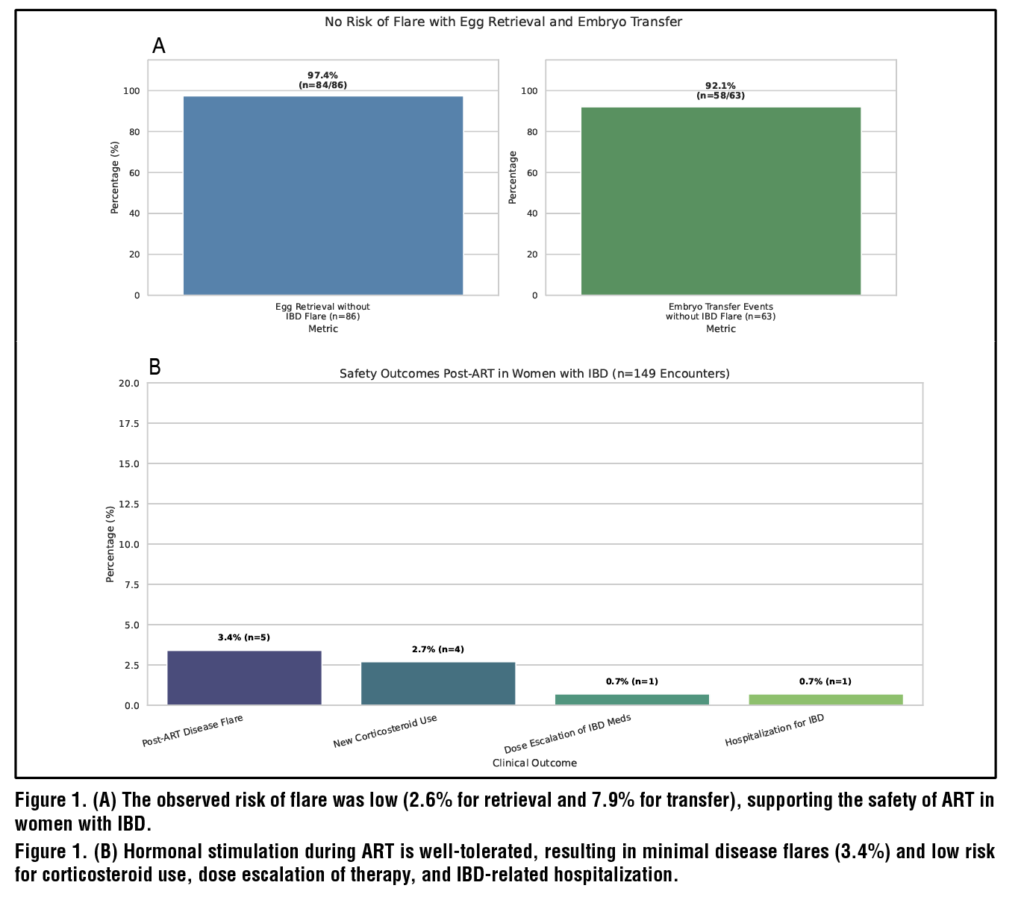
Women with IBD may have reduced fertility compared to women without IBD due to reduced ovarian reserve.4 While there is a lack of data, based on the experience of the expert group, they may undergo oocyte retrieval without increased risk of flare. Additionally, women with IBD are suggested to have a higher risk of infertility when their disease is active compared to when it is in remission. In women with ulcerative colitis (UC), undergoing an ileal pouch anal anastomosis (IPAA) is associated with reduced fertility in comparison to UC patients who have not had this surgical procedure. However, women with IBD may have similar success rates with assisted reproductive technology (ART), including live birth outcomes, as women without IBD. Similarly, those who have undergone pelvic surgery for IBD show comparable effectiveness of in vitro fertilization (IVF) in terms of live birth rates to their non-IBD counterparts.

Table 1.
Optimal Timing for IBD Therapy Discontinuation Prior to Conception

DrugRecommended Time to Discontinue Before Conception*
OzanimodAt least 3 months
EtrasimodAt least 1–2 weeks
TofacitinibAt least 4 weeks
UpadacitinibAt least 4 weeks
FilgotinibAt least 4 weeks

Maternal Factors Impacting Pregnancy 

The risk of developing UC and Crohn’s Disease (CD) among offspring of patients with IBD is 2-13 times higher than the risk in the general population.5 Furthermore, children born to a parent with CD may have higher risk of developing IBD than children born to a parent with UC.5 IBD disease activity is also positively associated with adverse pregnancy outcomes such as pre-term birth, low birth weight and small for gestation age.6,7 The placenta is an embryonic/fetal organ that expresses an equal complement of maternal and paternal genes without eliciting a maternal immune response and rejection of this organ. The placenta is a highly immunologic organ and may have a role in adverse outcomes among women with immune dysfunction.8 Additionally, maternal and fetal microbiome may be altered through prenatal antibiotic use and maternal diet, possibly leading to an increased risk of IBD in offspring.9,10

Disease Activity Management During Pregnancy

Maintaining disease remission throughout pregnancy is essential, as active disease correlates with adverse maternal and fetal outcomes. Pregnancy is marked by significant immunological changes, which may require medication adjustment and disease monitoring, with noninvasive tools, preferentially.

We recommend that IBD surgery during pregnancy be performed when it is required, without basing the decision solely on the trimester. Endoscopy should be considered only when it is likely to influence treatment decisions. In cases where cross-sectional imaging is needed during pregnancy, the use of intestinal ultrasound or MRI without gadolinium is preferred over a CT scan. Additionally, fecal calprotectin is suggested as a useful tool for monitoring disease activity throughout pregnancy.

Management of Pregnancy and Delivery

Pregnancies for women with IBD should be considered high risk. Aside from maintaining IBD remission, successful pregnancy and delivery in women with IBD require careful consideration of several nuanced factors. Women with IBD should be assessed early in pregnancy or preconception for nutritional status, weight gain and micronutrient deficiency. Pregnant women with IBD are also at an elevated risk for developing preeclampsia.11 The presence of an IPAA or perianal disease plays a critical role in determining the most appropriate mode of delivery. Disease activity monitoring and continuation/resumption of maintenance therapy in the postpartum period are vital. 

We recommend that pregnant women with IBD begin taking low-dose aspirin with food between 12 and 16 weeks of gestation to reduce the risk of developing preterm preeclampsia, noting that there is no evidence of an increased risk of IBD flare with this practice12,13 and that stopping aspirin at week 36 may help reduce the risk of bleeding. Additionally, for those with Crohn’s disease and active perianal disease, we recommend opting for a cesarean section to prevent the worsening of perianal symptoms. Furthermore, we suggest that pregnant women with IBD who have previously undergone an IPAA consider cesarean section, as this may help reduce the risk of a decline in pouch function that can be associated with a complicated vaginal delivery.

Medication Use During Pregnancy and Conception

IBD medications can generally be continued on schedule throughout pregnancy and lactation. This includes all biologics and biosimilars, mesalamine and thiopurines. The exceptions are methotrexate (teratogen – absolute contraindication) and janus kinase (JAK) inhibitors and sphingosine-1-phosphate (S1P) receptor modulators – which should be avoided unless essential for maternal health (Table 1). Disease activity at conception and during pregnancy, and de-escalation of biologics during pregnancy or after delivery are associated with postpartum disease activity and increased complications of labor and delivery in women with IBD. Continuing effective medication can mitigate this risk.14

Corticosteroid therapy may be used when clinically necessary with appropriate monitoring, as data do not demonstrate an increased risk of congenital malformation. However, the drug and/or underlying disease activity may lead to increased complications for infant and mother.

Table 2.
Medical Therapy Recommendations During Pregnancy and Conception

Medication CategoryManagement
5-ASAContinue for maintenance therapy
SulfasalazineContinue throughout pregnancy. Folic acid 2 mg daily
CorticosteroidsUse when clinically necessary, with appropriate monitoring
Anti-TNF Therapy  (Infliximab, Adalimumab, Golimumab, Certolizumab)Continue throughout pregnancy
IL-23, IL-12/23 Therapy (Risankinumab, Ustekinumab)Continue throughout pregnancy 
Anti-integrin  (Vedolizumab, Natalizumab)Continue throughout pregnancy 
MethotrexateShould be discontinued one to three months before conception due to teratogenic risks
JAK Inhibitors  (Tofacitinib, Upadacitinib)Discontinue unless no other options for maternal health
S1P Receptor Modulators (Ozanimod, Etrasimod)Discontinue unless no other options for maternal health

In women with IBD who continue thiopurines during pregnancy, precaution should be taken for intrahepatic cholestasis by measurement of liver enzymes, metabolite levels and consideration of split dosing.15 Women with IBD who are pregnant and have infections, fistula or pouchitis that require antibiotics may take an appropriate course of a low-risk antibiotic. Women with IBD may initiate or continue calcineurin inhibitors (cyclosporine and tacrolimus) during pregnancy with careful monitoring if there are no viable alternative treatment options available. Table 2 summarizes the medication management recommendations. 

Table 3.
Medical Therapy Recommendations During Breastfeeding

Medication CategoryManagement
5-ASA/SulfasalazineMay breastfeed
ThiopurinesMay breastfeed
CorticosteroidsMay breastfeed 
Anti-TNF Agents (Infliximab, Adalimumab, Golimumab, Certolizumab)May breastfeed
Anti-Integrins (Vedolizumab, Natalizumab)May breastfeed
Anti-IL-12/23 and Anti-IL-23 Agents (Ustekinumab, Risankizumab, Mirikizumab, Guselkumab)May breastfeed
BiosimilarsMay breastfeed
S1P Receptor Modulators (Etrasimod, Ozanimod)Should not breastfeed
JAK Inhibitors (Tofacitinib, Upadacitinib, Filgotinib)Should not breastfeed

Lactation

Breastfeeding is strongly encouraged as it offers numerous benefits for the infant and does not exacerbate maternal IBD. For most drugs, a weight adjusted percentage of the maternal dosage (relative infant dose) of ≤ 10% is considered relatively safe.16,17 In infants exposed in utero to infliximab, adalimumab, vedolizumab or ustekinumab, maternal breastfeeding did not affect neonatal clearance of the drug.18,19,20  Due to limited human safety data including unknown effects on the immune system of the infant, breastfeeding should be avoided in case of treatment with JAK-inhibitor.21 Table 3 summarizes the medication management recommendations. 

Maternal and Fetal Outcomes

The interaction between IBD and pregnancy outcomes is bidirectional, with active disease increasing the risk of complications. Controlling disease activity during pregnancy among women with IBD is critical to reduce maternal and fetal adverse outcomes. 

We suggest that women with IBD face an increased risk of adverse pregnancy outcomes, including low birth weight and preterm delivery, compared to women without IBD. Moreover, those with moderate to severe disease activity are at a higher risk of spontaneous abortion than both women without IBD and those with milder forms of the disease. In addition, pregnant women with IBD are more likely to experience venous thromboembolism (VTE) during pregnancy and in the postpartum period compared to their counterparts without IBD and should be considered for prophylaxis, particularly after cesarean section. 

Short and Long-term Neonatal Outcomes

Emerging evidence supports the safety of in utero exposure to most IBD medications.

We suggest that children born to women with IBD experience higher rates of neonatal ICU admissions and hospitalizations during their first year of life compared to those born to women without IBD. Additionally, children born to women with active IBD are more likely to be small for gestational age and have a low birth weight compared to those born to women with inactive IBD. We further suggest that treatment with biologics during pregnancy does not increase the risk of early childhood malignancy or developmental delays, and similarly, thiopurine therapy during pregnancy does not appear to elevate the risk of early childhood developmental delays.

Vaccinations

Inactive vaccines should be given on schedule to infants of women with IBD regardless of in utero IBD medication exposure. Children exposed to thiopurine monotherapy, JAK inhibitors or S1P receptor modulators in utero may receive appropriate live vaccines after 1 month of age and live vaccines can be given to infants of mothers breastfeeding while on biologics. Previously, guidelines recommended avoiding live vaccines for 6 months after in utero biologic exposure, however, evidence suggests that the rotavirus vaccine when administered to infants exposed to biologics in utero did not result in any serious adverse events.22,23 Bacillus Calmette-Guérin (BCG) vaccine, however, is greater risk. Infants exposed to in utero biologics should not receive BCG vaccine until after 6 months of age or until the time when infant serum concentrations of drug are undetectable. 

Conclusion

The global consensus on IBD management in pregnancy provides a robust framework that underlines key strategies in the management of this vulnerable population, ensuring that gastroenterologists are well-equipped to facilitate effective decision-making and specialist collaboration. The pregnant patient with IBD requires multidisciplinary care from gastroenterologists, obstetricians and maternal-fetal medicine specialists as well as surgeons and nutritionists as appropriate. Key takeaways include prioritizing preconception counseling and ensuring that patients with IBD are in remission before conception to optimize both maternal and fetal outcomes. Educating patients about the safety of continuing most IBD therapies—including monoclonal antibodies—throughout pregnancy and lactation empowers them to make informed decisions. All IBD patients may be at risk for pre-term preeclampsia and should initiate low-dose aspirin between 12 to 16 weeks of gestation to mitigate this risk. Infants should receive all inactive vaccines on schedule regardless of in utero drug exposure. The live vaccine, rotavirus, can also be given on schedule, but BCG should only be given after 6 months if biologic exposure in utero. 

Future research should aim to fill current knowledge gaps, particularly regarding newer oral therapies and long-term neonatal outcomes. By integrating these practices and focusing on maternal health, healthcare providers can play a pivotal role in safeguarding the well-being of both mother and child. 

References

1. Global Consensus Statement on the management of pregnancy in inflammatory
bowel disease. Mahadevan U, Seow CH, Barnes EL, Chaparro
M, Flanagan E, Friedman S, Julsgaard M, Kane S, Ng S, Torres J,
Watermeyer G, Yamamoto-Furusho J, Robinson C, Fisher S, Anderson P,
Gearry R, Duricova D, Dubinsky M, Long M; Global Consensus Group
for Pregnancy in IBD. Online ahead of print
1. Gut. 2025 Aug 28:gutjnl-2025-336402. doi: 10.1136/
gutjnl-2025-336402. PMID: 40876906
2. Clin Gastroenterol Hepatol. 2025 Aug 6:S1542-3565(25)00322-2.
doi: 10.1016/j.cgh.2025.04.005. PMID: 40874901
3. Aliment Pharmacol Ther. 2025 Aug 28. doi: 10.1111/apt.70290.
PMID: 40874657
4. Inflamm Bowel Dis. 2025 Aug 28:izaf171. doi: 10.1093/ibd/
izaf171. PMID: 40874613
5. Am J Gastroenterol. 2025 Aug 27. doi: 10.14309/
ajg.0000000000003651. PMID: 40862489
2. Fuhler GM. The immune system and microbiome in pregnancy. Best
Pract Res Clin Gastroenterol. 2020;44-45:101671. doi:10.1016/j.
bpg.2020.1016712
3. Förger F, Villiger PM. Immunological adaptations in pregnancy that
modulate rheumatoid arthritis disease activity [published correction appears in Nat Rev Rheumatol. 2020 Mar;16(3):184. doi: 10.1038/
s41584-020-0394-4]. Nat Rev Rheumatol. 2020;16(2):113-122.
doi:10.1038/s41584-019-0351-2
4. Sun H, Jiao J, Tian F, et al. Ovarian reserve and IVF outcomes in
patients with inflammatory bowel disease: A systematic review and
meta-analysis. EClinicalMedicine. 2022;50:101517. Published 2022 Jul
1. doi:10.1016/j.eclinm.2022.101517
5. Orholm M, Fonager K, Sørensen HT. Risk of ulcerative colitis and
Crohn’s disease among offspring of patients with chronic inflammatory
bowel disease. Am J Gastroenterol. 1999;94(11):3236-3238.
doi:10.1111/j.1572-0241.1999.01526.x
6. Cornish J, Tan E, Teare J, Teoh TG, Rai R, Clark SK, Tekkis PP. A metaanalysis
on the influence of inflammatory bowel disease on pregnancy.
Gut. 2007;56:830–837. doi: 10.1136/gut.2006.108324
7. Mahadevan U, Sandborn WJ, Li DK, Hakimian S, Kane S, Corley DA.
Pregnancy outcomes in women with inflammatory bowel disease: a large
community-based study from Northern California. Gastroenterology.
2007;133:1106–1112. doi: 10.1053/j.gastro.2007.07.019
8. Taleban S, Gundogan F, Chien EK, Degli-Esposti S, Saha S. Placental
inflammation is not increased in inflammatory bowel disease. Ann
Gastroenterol. 2015;28(4):457-463
9. Örtqvist AK, Lundholm C, Halfvarson J, Ludvigsson JF, Almqvist C.
Fetal and early life antibiotics exposure and very early onset inflammatory
bowel disease: a population-based study. Gut. 2019;68(2):218-225.
doi:10.1136/gutjnl-2017-314352
10. Torres J, Hu J, Seki A, et al. Infants born to mothers with IBD present
with altered gut microbiome that transfers abnormalities of the adaptive
immune system to germ-free mice. Gut. 2020;69(1):42-51. doi:10.1136/
gutjnl-2018-317855
11. Boyd HA, Basit S, Harpsøe MC, Wohlfahrt J, Jess T. Inflammatory
Bowel Disease and Risk of Adverse Pregnancy Outcomes. PLoS One.
2015;10(6):e0129567. Published 2015 Jun 17. doi:10.1371/journal.
pone.0129567
12. Rolnik DL, Wright D, Poon LC, et al. Aspirin versus Placebo in
Pregnancies at High Risk for Preterm Preeclampsia. N Engl J Med.
2017;377(7):613-622. doi:10.1056/NEJMoa1704559
13. DeBolt CA, Gottlieb ZS, Rao MG, et al. Low-Dose Aspirin Use Does
Not Increase Disease Activity in Pregnant Patients with Inflammatory
Bowel Disease. Dig Dis Sci. 2024;69(5):1803-1807. doi:10.1007/
s10620-024-08364-2
14. Malhi G, Tandon P, Perlmutter JW, Nguyen G, Huang V. Risk Factors
for Postpartum Disease Activity in Women with Inflammatory Bowel
Disease: A Systematic Review and Meta-analysis. Inflamm Bowel Dis.
2022;28(7):1090-1099. doi:10.1093/ibd/izab206
15. Prentice R, Flanagan E, Wright E, et al. Thiopurine Metabolite Shunting
in Late Pregnancy Increases the Risk of Intrahepatic Cholestasis of
Pregnancy in Women with Inflammatory Bowel Disease and Can be
Managed with Split Dosing. J Crohns Colitis. 2024;18(7):1081-1090.
doi:10.1093/ecco-jcc/jjae023
16. LaHue SC, Anderson A, Krysko KM, et al. Transfer of monoclonal
antibodies into breastmilk in neurologic and non-neurologic diseases.
Neurol Neuroimmunol Neuroinflamm. 2020;7(4):e769. Published
2020 May 27. doi:10.1212/NXI.0000000000000769
17. Sah BNP, Lueangsakulthai J, Hauser BR, et al. Purification of Antibodies
from Human Milk and Infant Digestates for Viral Inhibition Assays. Front
Nutr. 2020;7:136. Published 2020 Aug 25. doi:10.3389/fnut.2020.00136
18. Julsgaard M, Christensen LA, Gibson PR, et al. Concentrations of
Adalimumab and Infliximab in Mothers and Newborns, and Effects
on Infection. Gastroenterology. 2016;151(1):110-119. doi:10.1053/j.
gastro.2016.04.002
19. Julsgaard M, Baumgart DC, Baunwall SMD, et al. Vedolizumab clearance
in neonates, susceptibility to infections and developmental milestones:
a prospective multicentre population-based cohort study. Aliment
Pharmacol Ther. 2021;54(10):1320-1329. doi:10.1111/apt.16593
20. Julsgaard M, Wieringa JW, Baunwall SMD, et al. Infant Ustekinumab
Clearance, Risk of Infection, and Development After Exposure
During Pregnancy. Clin Gastroenterol Hepatol. 2025;23(1):134-143.
doi:10.1016/j.cgh.2024.01.008
21. Julsgaard M, Mahadevan U, Vestergaard T, Mols R, Ferrante M,
Augustijns P. Tofacitinib concentrations in plasma and breastmilk of a
lactating woman with ulcerative colitis. Lancet Gastroenterol Hepatol.
2023;8(8):695-697. doi:10.1016/S2468-1253(23)00158-9
22. Fitzpatrick T, Alsager K, Sadarangani M, et al. Immunological effects
and safety of live rotavirus vaccination after antenatal exposure to
immunomodulatory biologic agents: a prospective cohort study from
the Canadian Immunization Research Network. Lancet Child Adolesc
Health. 2023;7(9):648-656. doi:10.1016/S2352-4642(23)00136-0
23. Ernest-Suarez K, Murguía-Favela LE, Constantinescu C, et al. Live
Rotavirus Vaccination Appears Low-risk in Infants Born to Mothers with
Inflammatory Bowel Disease on Biologics. Clin Gastroenterol Hepatol.
Published online July 31, 2024. doi:10.1016/j.cgh.2024.07.007

Download Tables, Images & References

Liver Disorders, SERIES #18

Understanding New Nomenclature in Advanced Chronic Liver Disease

Read Article

As understanding of disease processes in medicine evolves, terminology must often evolve too. Terminology related to cirrhosis has been changing to better capture the spectrum of liver disease and patients’ progression along that spectrum that is not adequately captured by the terms “compensated cirrhosis” and “decompensated cirrhosis” alone. This article aims to review this newer terminology that has emerged over the past several years regarding portal hypertension and cirrhosis along the spectrum of compensated and decompensated disease. Appropriate use of terminology is important. It can help direct our conversations with patients in helping them to understand their disease and provide anticipatory guidance for what their future health may look like. It is also critically important in conveying how sick a patient may be when communicating with other providers and in conveying the complexity of medical decision making in our documentation.

Background

In medicine, there is constant advancement in the understanding of diseases, their pathophysiology, and subsequent management. Over time, these advances necessitate changes in the nomenclature related to diseases so that the terminology used best describes the disease process a patient has. Furthermore, these changes have the potential to communicate more nuanced information about the disease to convey severity and to globally portray prognosis and course. This can be seen in the divergence from eponyms to more disease descriptive terms and attempts to identify and change stigmatizing language. The field of hepatology has gone through a significant terminology revolution recently, notably with migration away from nonalcoholic steatohepatitis and nonalcoholic fatty liver disease to metabolic dysfunction-associated steatohepatitis (MASH) and metabolic dysfunction–associated steatotic liver disease (MASLD). This has been coupled with the addition of the term metabolic and alcohol related/associated liver disease (MET/ALD), which captures a patient population that likely has multifactorial steatosis that was not captured with the previous nomenclature.1 The field of hepatology has further experienced evolution in the nomenclature surrounding cirrhosis to better capture the spectrum of liver disease and patients’ progression along that spectrum that is not adequately captured by the terms “compensated cirrhosis” and “decompensated cirrhosis” alone (refer to Table 1). Addition of new terms, honing of definitions and adding new classification systems will hopefully capture more patients with liver disease and be able to better convey where a patient is along the liver disease spectrum. This article aims to review this newer terminology that has emerged over the past several years regarding portal hypertension and cirrhosis along the spectrum of compensated and decompensated disease. Appropriate use of terminology is important. It can help direct our conversations with patients in helping them to understand their disease and provide anticipatory guidance for what their future health may look like. It is also critically important in conveying how sick a patient may be when communicating with other providers and in conveying the complexity of medical decision making in our documentation.

Table 1. 

As our understanding of cirrhosis has become more nuanced, so has our understanding of prognosis, and nomenclature has had to change to match this. Previously cirrhosis was viewed in 2 major stages, “compensated” and “decompensated”, with respective median survival being 10-12 years and 2-4 years.2-4 It has previously been acknowledged that generalized life expectancy estimations are difficult to apply to individual patients, since broadly stating decompensated cirrhosis has a certain mortality rate does not account for the differences in mortality that are seen with differing decompensating events such as development of ascites versus development of varices or differences with having one decompensating factor versus having two or more.2 Even in patients with compensated cirrhosis, generalized mortality statements do not account for possible differences related to compensated with varices versus compensated cirrhosis without varices.2 Though we do have scoring systems, like MELD3.0, that help to convey how sick our patients are, MELD3.0 was created to predict 3-month mortality without a liver transplant.5 When discussing longer term mortality and having informed discussions with patients, it is helpful to understand their global course and how certain events in the progression of cirrhosis affect survival.

Advanced chronic liver disease, clinically significant portal hypertension and compensated cirrhosis

The term cirrhosis refers to a pathology-based diagnosis.6-8 With increasing availability of non-invasive tests and imaging, liver biopsy and hepatic venous pressure gradients (HVPG) are being obtained less frequently.9 Non-invasive testing (NIT) in patients that are otherwise compensated is often not able to account for the pathologic differences between advanced fibrosis and cirrhosis.6 Regardless of the pathologic stage, patients with increased liver stiffness levels on NIT still may have liver disease worth treating and or surveying long term. To account for the increasing number of patients falling into this category, the Baveno VI consensus applied the term compensated advanced chronic liver disease (cACLD), which encompassed patients with both advanced fibrosis (bridging fibrosis) and cirrhosis who did not have a liver biopsy.6,7 Using transient elastography (TE), cACLD may be termed “possible” for patients with liver stiffness measurements (LSM) over 10kPa and “certain” for patients with LSM over 15kPa.4,6 Patients may still have chronic liver disease with LSM under 10kPa. As with any of the more advanced stages of liver disease, the underlying etiology should be addressed but, for these patients, the 3-year risk of decompensation or liver related death is less than 1%.1 Patients with ongoing injury and LSM between 7-10kPa may need to be monitored for progression to cACLD.6

Compensated cirrhosis and cACLD can be further stratified into those with clinically significant portal hypertension and those without clinically significant portal hypertension.6,7 Clinically significant portal hypertension (CSPH) is defined as HVPG greater than or equal to 10mmHgand is the degree of elevation at which complications of portal hypertension can present.6,10 As a brief review of the pathophysiology of portal hypertension in cirrhosis, current understandings suggest that early in the disease process portal hypertension is driven by changes in the hepatic parenchyma and increase in intrahepatic vascular tone in response to various vasoactive mediators.10,11 Mild portal hypertension is defined as portal pressures between 5 and 10mmHg. As cirrhosis progresses though, changes in systemic circulation begin to contribute to portal hypertension including through increased cardiac output and increased intravascular volume.10 Patients with mild portal hypertension (5-10mmHg), may not yet have developed the hyperdynamic state that influences portal hypertension in patients with portal pressures over 10mmHg, which is thought to be the reason patients with mild portal hypertension do not respond as well to non-selective beta blocker therapies.10

For patients who have undergone NIT, there are parameters to identify who likely has CSPH and therefore do not require invasive measurement. Liver stiffness measurements (LSM) over 25kPa on TE regardless of platelet count, LSM of 20-25kPa with platelet count less than 150k/mm3 or LSM 15-20kPa with platelet count less than 110k/mm3 are consistent with CSPH. Other cutoff values exist for non-TE elastography methods.4 It should be kept in mind that these numbers are only validated in viral liver disease, alcohol-associated liver disease, and MASH.6 Imaging that shows recanalization of umbilical vein, periesophageal varices, splenorenal shunt, clinically apparent ascites or hepatofugal flow in the main portal vein on doppler ultrasound are also consistent with CSPH regardless of liver disease etiology.4

By stating that a patient has cACLD without clinically significant portal hypertension you are implying that the patient has liver disease but is not currently experiencing complications of their liver disease and is unlikely to experience a portal hypertensive complication in their current state. Management of patients in this subset should focus on identification and treatment of the underlying etiology of liver disease. When you state that a patient has compensated advanced chronic liver disease with clinically significant portal hypertension though, not only do they require etiologic identification and management, but they may also benefit from management of the hyperdynamic element of their portal hypertension with non-selective beta blocker therapy.4,6,11

Compensated cirrhosis is defined by the Baveno VII consensus statement as the absence of a present or past decompensating event (variceal bleeding, clinically apparent ascites and overt hepatic encephalopathy).6 This definition has not changed significantly over time, though it should be noted that while multiple studies have incorporated the presence of jaundice as a decompensating event, this has not been universally agreed upon as decompensation. At this time there is not enough data to allow for the classification of jaundice, minimal ascites only seen on imaging, minimal (“covert”) hepatic encephalopathy and occult bleeding from portal hypertensive gastropathy as decompensating events, so patients with these findings, at present, are still by current definitions compensated.6 In patients with compensated cirrhosis (or cACLD) and CSPH, non-selective beta blockers should be initiated with the goal of preventing decompensation.6 Compensated cirrhosis has historically been associated with median survival time of 12 years or more,2-4 but the presence or absence of varices has been shown to influence risk of death, with their absence being associated with 5-year risk of death of 1.5% and presence being associated with risk of death of 10%.18 Indeed, in patients with cACLD, progressive increase in LSM, regardless of etiology of liver disease, is associated with an increase in relative risk of decompensation and mortality.6

Decompensated cirrhosis, acute decompensation, further decompensation and acute on chronic liver failure

Decompensated cirrhosis refers to the development of complications of portal hypertension, specifically clinically apparent ascites, overt hepatic encephalopathy and variceal bleeding, and this has remained relatively unchanged over time.6 Of note, some research papers will include jaundice as a defining decompensating event12,13 and others bacterial infection14-17 but the Baveno VII consensus statement suggests that further research is required prior to the inclusion of jaundice in the definition of decompensation, and bacterial infections are considered a possible precipitant of decompensation, not a defining characteristic.6 After the first decompensating event occurs, median survival drops to 2-4 years.13 Acute decompensation is the main cause of hospitalization in patients with cirrhosis.14 In the coming years we may see further stratification of decompensation based on the speed at which initial decompensating events occur. This may come with recommendations as to whether treatment for the decompensating event requires inpatient admission versus outpatient treatment with proposed addition of terminology to include non-acute decompensation, but more research is needed to determine the clinical significance of the more indolent presentations of decompensation.12

The development of a decompensating event is a key step in the natural history of cirrhosis that portends an increase in mortality with the different decompensating events having different associated mortality. Four percent of patients may die during their initial presentation with a decompensating event.19 Ascites is the most common initial decompensating event, reported to be seen in 36% of patients by itself and in combination with another decompensation event in 37% of patients.19 A prospective cohort study of 494 patients showed variceal bleeding as the first decompensating event in 10% of patients and hepatic encephalopathy in 5% of patients.18 The mortality associated with the development of ascites has been reported to be 20-58% at 1 year, 77% at 3 years, and 78% at 5 years.10,18,20-21 The combination of ascites with hepatic encephalopathy has been associated with median survival of just 1.1 years compared to median survival of 3.9 years with hepatic encephalopathy alone.21 Acute variceal hemorrhage is associated with significant short-term mortality of 10-15%19 although that is often not from the bleeding itself, but from complications that arise from the bleed, including worsening liver or renal failure.20 Estimated 5-year mortality is 20% for those presenting with bleeding alone and 88% for any combination of a bleeding event with a non-bleeding decompensation.19 Another important clinical event that is not considered a specific decompensating event is infection, which has been associated with 1 month mortality of 30% and an additional 30% at 1 year.20

It has been observed that when subsequent complications of portal hypertension follow an initial event, there is an even higher associated increase in mortality. This has been termed further decompensation. According to the Baveno VII consensus statement, further decompensation is defined as having a second portal hypertensive-mediated complication develop, such as the onset of ascites or hepatic encephalopathy in a patient who has had a previous variceal hemorrhage (with the caveat that it did not occur in the same time frame as the hemorrhagic event). Additional examples would be the development of recurrent variceal bleeding in a patient with previous bleeding, the requirement of more than 3 large volume paracenteses within 1 year, or recurrent hepatic encephalopathy; and although the following clinical scenarios are not defined as decompensation events, the development of jaundice, spontaneous bacterial peritonitis or hepatorenal syndrome acute kidney injury (HRS-AKI) can be defined as “further decompensation” in a patient with a prior traditional decompensation.6 Though this definition was included in the Baveno VII consensus statement, it was based on expert opinion, without significant evidence to support it. Part of the aim of a large multicenter cohort study published in 2024 was to evaluate whether risk of death increased with further decompensation as defined by the Baveno VII consensus statement. Based on their analysis, mortality was increased by approximately 2 times that of the associated first decompensating event, with a mean survival of 273 days (9 months) after further decompensation was reported.13

Acute on chronic liver failure (ACLF) is another term whose definition continues to be honed. It should be noted that there is no international consensus on the definition, with noted variability between European, North American and Asian societies.22 Despite the lack of a unifying definition of criteria, there is clear consensus that there is high short-term mortality with ACLF, and the European and North America definitions include the presence of extrahepatic organ failure.22,23 The specific definition used by the North American Consortium for the Study of End Stage Liver Disease (NACSELD) uses the presence of at least two different extrahepatic organ failures to define ACLF. These include shock, West Haven III/IV hepatic encephalopathy, need for renal replacement therapy, and mechanical ventilation.24 Another important concept to keep in mind with the definition used in North America is that ACLF can occur in patients with chronic liver disease even without the presence of cirrhosis.24 A large multicenter European cohort shows that in patients with acute decompensation that were diagnosed with ACLF, the 30- and 90-day mortality rates were 32.8% and 51.2% respectively, and 1.8% and 9.8% in those that did not have ACLF.14

Recompensation

It is important to remember that patients who have a history of ascites or hepatic encephalopathy, and whose disease is controlled with diuretics, TIPS, and/or hepatic encephalopathy-directed therapies, do not have compensated disease6,10 but rather decompensated disease controlled by medical and/or procedural therapies. There is, however, a subgroup of patients who have clinically meaningful response to treatment of their underlying etiology of liver disease, specifically those with hepatitis C viral infections who attain sustained viral response, hepatitis B infections with viral suppression, and sustained abstinence from alcohol. These patients, in the absence of other contributing liver disease (ex. MASH, alcohol use disorder), can experience improvement in their HVPG and consequent decrease in risk of decompensation. With sustained adequate improvement in LSM, those with cACLD can potentially stop long term liver stiffness monitoring regimens, and those with CSPH on beta blockers can potentially come off beta blockers if endoscopically proven to not have varices.6 Furthermore, patients who have previously had a decompensating event can potentially experience recompensation. Recompensation is a term that was introduced in the Baveno VII consensus statement.  For recompensation to be present, all of the following must have occurred: removal, suppression or cure of the primary etiology of the liver disease, resolution of ascites and/or hepatic encephalopathy for more than 12 months off of decompensation-directed therapy, absence of variceal hemorrhage for at least 12 months and, finally, stable improvement of liver function testing.6

Conclusion

The continued refinement in the terminology we use in relation to liver disease is a crucial step in the history of our understanding of liver disease that will hopefully allow us to better categorize our patients into risk strata. This is important not just at the point of care to understand our patients’ individual risk, but also to ensure we can continue to advance research in the care for patients with chronic liver disease. There is currently a suggestion for application of new terminology related to the speed at which decompensation occurs (i.e., whether the first decompensating event comes on more slowly and is seen as an outpatient (“non-acute”) as opposed to an acute event that leads to hospitalization). Non-acute decompensation potentially accounts for 45% of decompensation.12 There is also a group of patients who have decompensated cirrhosis with symptoms that are adequately managed with medical therapy who should not be classified as recompensated as they likely do have a higher mortality than a patient who has never experienced decompensation or does not require medications anymore.

We should bear in mind that mortality prediction in cirrhosis is imperfect since the etiologies of cirrhosis are variable and the clinical outcomes of one etiology of cirrhosis do not necessarily align with those of other etiologies, but much of cirrhosis research to date has included heterogenous populations. In the future, we are likely to see further refinement of terminology in the staging of cirrhosis and chronic liver disease and continued refinement and individualization of care for patients based on that staging, their underlying etiology of liver disease and their portal pressures. As studies start to further analyze patients based on etiology of advanced chronic liver disease, we may also start to see differences in morbidity and mortality based on age and etiology of disease rather than simply type of decompensation as was shown in one population-based study evaluating mortality associated with hepatic encephalopathy.25 Indeed in 2012, the International Liver Pathology Study Group recommended discontinuation of the term cirrhosis altogether because of the implied problems that come with trying to classify many disease processes, with different patterns of scarring, regeneration and progression, with a “morphology-based unitary term”.10 While this has not come to bear in clinical practice, it is clearly of increasing importance for all providers who see these patients to understand the terminology here described, to ensure we understand the risk stratification of each of our patients and provide care commensurate to that risk. 

References

References

1. D’Amico G. The clinical course of cirrhosis. Population based studies and the need of personalized medicine. Journal of Hepatology. 2014;60(2):241-242. doi:https://doi.org/10.1016/j.jhep.2013.10.023

2. Rinella ME, Lazarus JV, Vlad Ratziu, et al. A multi-society Delphi consensus statement on new fatty liver disease nomenclature. Hepatology. 2023;60(2). doi:https://doi.org/10.1097/hep.0000000000000520

3. D’Amico G, Garcia-Tsao G, Pagliaro L. Natural history and prognostic indicators of survival in cirrhosis: a systematic review of 118 studies. Journal of hepatology. 2006;44(1):217-231. doi:https://doi.org/10.1016/j.jhep.2005.10.013

4. Kaplan DE, Bosch J, Ripoll C, et al. AASLD practice guidance on risk stratification and management of portal hypertension and varices in cirrhosis. Hepatology. 2024;79(5):10.1097/HEP.0000000000000647. doi:https://doi.org/10.1097/HEP.0000000000000647

5. Kim WR, Mannalithara A, Heimbach JK, et al. MELD 3.0: The Model for End-Stage Liver Disease Updated for the Modern Era. Gastroenterology. 2021;161(6):1887-1895.e4. doi:https://doi.org/10.1053/j.gastro.2021.08.050

6. Roberto de Franchis, Bosch J, Garcia-Tsao G, et al. Corrigendum to “Baveno VII – Renewing consensus in portal hypertension” [J Hepatol (2022) 959-974]. Journal of hepatology. 2022;77(1):271-271. doi:https://doi.org/10.1016/j.jhep.2022.03.024

7. de Franchis R, Baveno VI Faculty. Expanding consensus in portal hypertension: Report of the Baveno VI Consensus Workshop: Stratifying risk and individualizing care for portal hypertension. Journal of hepatology. 2015;63(3):743-752. doi:https://doi.org/10.1016/j.jhep.2015.05.022

8. Hytiroglou P, Snover DC, Alves V, et al. Beyond “Cirrhosis.” American Journal of Clinical Pathology. 2012;137(1):5-9. doi:https://doi.org/10.1309/ajcp2t2ohtapbtmp

9. Sterling RK, Asrani SK, Levine D, et al. AASLD Practice Guideline on non-invasive liver disease assessments of portal hypertension. Hepatology. 2024;81(3). doi:https://doi.org/10.1097/hep.0000000000000844

10. Ripoll C, Bari K, Garcia-Tsao G. Serum albumin can identify patients with compensated cirrhosis with a good prognosis. Journal of clinical gastroenterology. 2015;49(7):613-619. doi:https://doi.org/10.1097/MCG.0000000000000207

11. Tsochatzis EA, Bosch J, Burroughs AK. Liver cirrhosis. The Lancet. 2014;383(9930):1749-1761. doi:https://doi.org/10.1016/s0140-6736(14)60121-5

12. Tonon M, D’Ambrosio R, Calvino V, et al. A new clinical and prognostic characterization of the patterns of decompensation of cirrhosis. Journal of hepatology. 2024;80(4):603-609. doi:https://doi.org/10.1016/j.jhep.2023.12.005

13. Gennaro D’Amico, Zipprich A, Villanueva C, et al. Further decompensation in cirrhosis. Results of a large multicenter cohort study supporting Baveno VII statements. Hepatology. 2023;79(4). doi:https://doi.org/10.1097/hep.0000000000000652

14. Moreau R, Jalan R, Gines P, et al. Acute-on-Chronic Liver Failure Is a Distinct Syndrome That Develops in Patients With Acute Decompensation of Cirrhosis. Gastroenterology. 2013;144(7):1426-1437.e9. doi:https://doi.org/10.1053/j.gastro.2013.02.042

15. Trebicka J, Fernandez J, Papp M, et al. The PREDICT study uncovers three clinical courses of acutely decompensated cirrhosis that have distinct pathophysiology. Journal of Hepatology. 2020;73(4):842-854. doi:https://doi.org/10.1016/j.jhep.2020.06.013

16. Dilan Gülcicegi, Goeser T, Kasper P. Prognostic assessment of liver cirrhosis and its complications: current concepts and future perspectives. Frontiers in Medicine. 2023;10. doi:https://doi.org/10.3389/fmed.2023.1268102

17. Ferstl P, Trebicka J. Acute Decompensation and Acute-on-Chronic Liver Failure. Clinics in Liver Disease. 2021;25(2):419-430. doi:https://doi.org/10.1016/j.cld.2021.01.009

18. D’Amico G, Pasta L, Morabito A, et al. Competing risks and prognostic stages of cirrhosis: a 25-year inception cohort study of 494 patients. Alimentary Pharmacology & Therapeutics. 2014;39(10):1180-1193. doi:https://doi.org/10.1111/apt.12721

19. D’Amico G, Bernardi M, Angeli P. Towards a new definition of decompensated cirrhosis. Journal of Hepatology. 2022;76(1):202-207. doi:https://doi.org/10.1016/j.jhep.2021.06.018

20. Schiff ER, Maddrey WC, K Rajender Reddy. Schiff’s Diseases of the Liver. John Wiley & Sons Ltd; 2018.

21. Tapper EB, Aberasturi D, Zhao Z, Hsu CY, Parikh ND. Outcomes after hepatic encephalopathy in population-based cohorts of patients with cirrhosis. Alimentary Pharmacology & Therapeutics. 2020;51(12):1397-1405. doi:https://doi.org/10.1111/apt.15749

22. Arroyo V, Moreau R, Jalan R. Acute-on-Chronic Liver Failure. Longo DL, ed. New England Journal of Medicine. 2020;382(22):2137-2145. doi:https://doi.org/10.1056/nejmra1914900

23. Moreau R, Tonon M, Krag A, et al. EASL Clinical Practice Guidelines on acute-on-chronic liver failure. Journal of Hepatology. 2023;79(2):461-491. doi:https://doi.org/10.1016/j.jhep.2023.04.021

24. Constantine Karvellas, Bajaj JS, Kamath PS, et al. AASLD Practice guidance on Acute-on-chronic liver failure and the management of critically Ill patients with cirrhosis. Hepatology. 2023;79(6). doi:https://doi.org/10.1097/hep.0000000000000671

25. Badillo R, Rockey DC. Hepatic Hydrothorax. Medicine. 2014;93(3). doi:https://doi.org/10.1097/MD.0000000000000025

Download Tables, Images & References

Nutrition Reviews in Gastroenterology, SERIES #27

Gentler Solutions: Adapting the Low FODMAP Elimination Diet for Irritable Bowel Syndrome for Symptom Relief

Read Article

Irritable Bowel Syndrome (IBS) is a common gastrointestinal (GI) disorder marked by abdominal pain, bloating, and altered bowel habits. Dietary changes are key to managing symptoms, with the low-FODMAP diet being the most evidence-based approach. Its complexity and restrictiveness, however, can make adherence difficult without guidance from a registered dietitian (RD). Given rising concerns around food-related anxiety and disordered eating in IBS, a shift toward more flexible, individualized dietary strategies is emerging. More research is needed to confirm the long-term outcomes of these less restrictive approaches. This review aims to present the current state of scientific evidence on the use of the low-FODMAP diet for managing IBS, including its three-phase structure and possible application of less restrictive FODMAP diet versions. It also explores the key role of GI expert RDs in the practical implementation of diet therapy, including patient assessment for suitability.

Defining IBS: Symptoms, Prevalence, and Impact

Irritable bowel syndrome (IBS) is a multifactorial and commonly encountered GI disorder, classified as a disorder of gut-brain interaction (DGBI). The Rome IV criteria are used to diagnose IBS and includes presence of recurrent abdominal pain occurring at least once weekly in conjunction with disturbances in bowel habits, including changes in stool frequency and form for the past three months, in the absence of identifiable structural or known biomarkers. IBS occurs 2.5 times more in females than males and symptom onset must have occurred at least 6 months prior to diagnosis.1,2 

Prevalence rates vary by country; a recent United States based survey study found that 6.1% met Rome IV IBS criteria,3 while higher rates have been found in low- and middle-income countries, ranging from 6-44%.4 The etiology of IBS has yet to be fully characterized but believed to involve GI motility changes, post-infectious reactivity, visceral hypersensitivity, altered gut-brain interactions, microbiota dysbiosis, small intestinal bacterial overgrowth, food sensitivity, carbohydrate malabsorption, and intestinal inflammation. An acute enteric infection can result in post-infectious IBS, and this represents the most direct risk factor for IBS.5,6

While interest and research are growing to better understand the pathophysiology of IBS to guide treatments, perceived efficacy of current therapies remain limited. Based on survey data, it is evident that many patients with IBS continue to face significant challenges. One survey study revealed that most patients would give up 25% of their remaining life (average 15 years) and 14% would risk a 1/1000 chance of death for a treatment that would relieve IBS symptoms.7 Another survey study revealed patients are willing to accept a 1% risk of sudden death in return for a 99% chance of cure of their symptoms from a medication.8 From a health-related quality of life (HRQOL) impact, patients with IBS had significantly worse HRQOL on selected SF-36 scales than patients with diabetes mellitus and end stage renal disease.

Table 1. FODMAPs: It’s In The Details 

Acronym Food Components Rich FODMAP Sources (examples) 
F– ermentable 
O-ligosaccharide Fructans and galacto-oligosaccharides (GOS) Wheat, barley, rye, onion, garlic, legumes (e.g., beans, lentils, chickpeas), pistachios, cashews 
D-isaccharide Lactose Cow, sheep, and goat milk, ice cream, yogurt 
M-onosaccharide Excess fructose Honey, apple, pear, watermelon 
A-nd – – 
P-olyols Sugar alcohols: mannitol, sorbitol, xylitol celery, stone fruits (e.g., apricot, peach, plum), apple, pear, sugar free gum + mints

Evolution of Diet as a Therapy in Irritable Bowel Syndrome 

Dietary trials in IBS were limited until the early 2000s. Patients were often prescribed a high fiber diet which offered variable benefits. The term FODMAP (fermentable oligosaccharides, disaccharides, monosaccharides, and polyols) emerged initially in the literature in 2005, speculating a potential link to diet induced small bowel ecology and colonic permeability, potentially predisposing one to inflammatory bowel disease.10 Many individuals living with IBS associate their symptoms to specific foods, which has spurred greater scientific research into the role of diet in managing this challenging and often debilitating disorder. A survey of nearly 200 individuals living with IBS found that 84% believed that eating any food could trigger their symptoms. The majority (70%) identified carbohydrates as triggers, particularly foods rich in fermentable carbohydrates such as dairy products (49%), beans/lentils (36%), apple (28%), flour (24%), and plum (23%).11 See Table 1 for FODMAP subtypes and food sources.The low-FODMAP diet approach evolved into a therapeutic strategy for IBS symptom management, starting initially as a broad elimination diet for IBS, to currently, a three-phase approach. See Figure 1. 

Food intolerance (e.g., lactose intolerance) resulting from carbohydrate malabsorption can mimic symptoms of IBS, such as bloating, gas and alteration in bowel habits. The low-FODMAP elimination approach applied a more global restriction to commonly malabsorbed carbohydrates, restricting a wide range of poorly absorbed short-chain carbohydrates. Research trials revealed good efficacy rates, with a notable 50% to 80% of IBS noting clinically relevant symptom benefit.12,13 Efficacy data variability may be due to differences in the approach to diet implementation. In most studies, a dietitian provided guidance on dietary implementation, while participants prepared their own meals. While in the seminal study by Halmos et al., low- FODMAP meals were provided to the participants throughout the study period.14 Currently, there are numerous systematic reviews and meta-analyses supporting the diet’s benefits. A recent systematic and meta-analysis including 15 randomized controlled trials (RCTs) and 1118 participants revealed a benefit over placebo to the low-FODMAP diet, with a risk ratio (RR) of 1.21 (95% confidence interval= 0.98-1.51).15  

FODMAP Effect on Gut Physiology in Irritable Bowel Syndrome

As the application of the diet showed benefit globally, further research began to better understand the full mechanism of FODMAPs in IBS. Initial mechanistic insights into how FODMAPs triggered IBS symptoms focused on their effects on luminal distention via osmotic effects and fermentation of the poorly absorbed carbohydrates. This was followed by novel magnetic resonance imaging (MRI) studies that revealed that the size of the FODMAP subtype results in variable effects on bowel distention. The monosaccharide, fructose, distends the small bowel with water due to its greater osmotic effects, while fructans, oligosaccharides, distend the colon from release of gases due to bacterial fermentation.16 The smaller the size of the FODMAP, the greater the osmotic effect while longer chain FODMAP fibers such as fructans, have greater effects on distention via fermentation. In the latest innovative research, investigators using mice models have shown that a high-FODMAP diet may lead to dysbiosis, impaired colonic barrier function, mast cell recruitment and activation, and heightened visceral sensitivity. In mice, a high-FODMAP diet promotes the growth of gram-negative bacteria, resulting in elevated levels of luminal lipopolysaccharide (LPS). This LPS can stimulate mast cells via toll-like receptor 4 (TLR4), triggering the release of bioactive compounds such as tryptase, histamine, and prostaglandin E2. These mediators can, in turn, increase intestinal permeability and enhance visceral sensitivity. Collectively, animal data (and interim analysis from a small human IBS trial) suggests a complex interaction of diet, gut microbiota, immune activation, visceral hypersensitivity and resultant colonic barrier dysfunction.17

A Therapeutic Diet for Irritable Bowel Syndrome: The Low-FODMAP Model

With growing data and research assessing the efficacy of this approach in IBS, the low-FODMAP diet remains the most evidence-based nutritional therapy. The 3-phase approach starts with the elimination phase, followed by the reintroduction phase and lastly the personalization phase. The goal of the elimination phase is to identify FODMAP sensitivity, and if present, alleviate GI symptoms. The next step is to systematically reintroduce FODMAP subtypes back into the diet to identify personal triggers, and lastly, the personalization phase which allows for a more liberal diet, adding back tolerated foods. For those that do not experience any symptom improvement with the elimination phase, the diet should be stopped, and different therapeutic approaches should be explored.

Practical Considerations for Success with the Low FODMAP Diet

Initiating a low-FODMAP diet in an individual with IBS, when possible, should be done under the guidance of a dietitian with expertise in the diet. Research has shown that by applying the diet with dietitian guidance versus without, the patients had a greater likelihood of following the 3-phases appropriately and attaining a therapeutic level of FODMAP intake to effectively reduce symptoms.18 An early referral to a dietitian is important to facilitate accurate and effective implementation of the diet from the outset.

The complexity of the diet benefits from expert RD direction to provide patients with the tools to carry out menu planning, grocery shopping, and label reading to decipher suitable food products for consumption. Further assessment should include considering the patient’s lifestyle, cultural preferences, food accessibility, health literacy, and personal goals for nutrition therapy. Appropriate candidates for the diet are selected carefully through screening for a history of eating disorder or excessive food fear to ensure that a restrictive diet does not induce harm. Using a patient-centered approach is important to confirm the patient desires a nutritional approach to treatment and to gain an understanding on how much they are willing to change in their diet on the onset. See Table 2 for candidates for the low-FODMAP diet.

Table 2. Low-FODMAP Suitability: Clinical Cues and Considerations 

Eating triggers IBS symptoms 
No eating disorder currently or in past medical history 
No evidence of heightened food fear 
Able to prepare own food or have assistance with special diet preparation 
No signs of malnutrition 
Desires a nutritional approach

On the initial visit (generally 45 minutes -1 hour), the RD’s expertise and guidance can reinforce key nutritional principles, including evaluating the patient’s overall dietary adequacy, nutrient balance, eating behaviors (e.g., chewing food thoroughly to maximize digestion, eating in a relaxed state to engage the parasympathetic nervous system for rest and digestion) and promoting a positive, enjoyable relationship with food. While it is essential to encourage mindful adherence to the diet to assess its benefits, care must be taken to avoid fostering hypervigilance. This is particularly important in a population already vulnerable to food-related stress, anxiety and depression due in part to gut-brain axis dysregulation. 

Up to one-third of people with IBS also experience anxiety or depression. Individuals with IBS who also experience anxiety or depression may struggle with significant food-related distress. This can include unnecessary and prolonged dietary restrictions, rigid beliefs about certain foods, resistance to altering these beliefs, and fear of eating in situations where they cannot maintain complete control over their diet. For these individuals, it is important to provide clear, evidence-based guidance on appropriate dietary modifications and to dispel common food-related myths. Dietitians can help patients by setting realistic expectations such as noting that diet alone may not resolve GI symptoms and promoting an integrated, multi-disciplinary care approach.19 Integrated care has proven more effective than gastroenterologist-only treatment in improving IBS symptoms, mental health, quality of life, and reducing healthcare costs.20 

Figure 2. Top-Down and Bottom-Up Low FODMAP Approach

Potential Downsides of the Low-FODMAP Diet

Stool microbiome analysis research during use of the low-FODMAP diet has highlighted possible adverse effects. During the elimination phase, alterations in the stool microbiome have been observed; however, the potential negative effects of these changes are not yet fully understood. From a gut microbiome impact, the elimination phase of the diet has been shown to increase stool pH, which may provide a more favorable environment for potentially pathogenic microbes to flourish, however this effect is not consistent in the literature.21,22 Further, a reduction in health promoting microbiota, such as bifidobacteria levels are reduced in the elimination phase. However this change has been shown to be mitigated in small clinical trials with use of a probiotic or when the diet is liberalized in the personalization phase.23,24 

Nutrient adequacy can be impacted in the elimination phase of the low-FODMAP diet. Diet evaluations of low-FODMAP diet followers appear to be lower in carbohydrates, fiber and calcium.25 It should be noted that in IBS, it is not uncommon for the baseline diet to be nutritionally inadequate. A recent prospective, open-labeled, case-report dietary intervention of 36 patients with IBS showed that an extended low-FODMAP diet (12 weeks) is not inferior to the participants’ baseline diet; revealing the IBS baseline diet has nutrient deficiencies and a low-FODMAP did not exacerbate these.26 The low-FODMAP diet, especially when dietitian-led and appropriately implemented, may be less restrictive than a patient’s baseline diet. 

Other concerns about the low-FODMAP diet are its potential impact with food-related quality of life (FRQoL) given its restrictive nature. In fact, finding low-FODMAP suitable food options when dining out can be challenging and the diet requires some level of culinary skills. FRQoL has been found to be reduced in those staying on the elimination phase of the diet versus progressing through the 3 phases.27 Additionally, the potential added costs of following a specialized diet may add another barrier. Low-FODMAP and gluten free products often come at a higher cost compared to traditional wheat-based staples.28 

Reintroduction Trials: What Have We Learned

Two trials focused on reintroducing FODMAPs were conducted to determine which FODMAP subtypes are most linked to digestive symptoms in patients with IBS. In one trial, US researchers Eswaran and colleagues carried out a key single-center study to evaluate the effects of reintroducing specific FODMAPs in patients who met the Rome IV criteria for IBS who had shown symptom improvement on a low-FODMAP elimination diet. This small, randomized, double-blind trial involved reintroducing individual FODMAP subtypes, with a final analysis including 20 participants. While maintaining the elimination phase of the low-FODMAP diet, each participant was randomized to follow one of five sequences involving the reintroduction of fructans, excess fructose, galacto-oligosaccharides (GOS), lactose, or polyols, all provided in a brownie. Participants consumed two brownies daily. See Table 3 for reintroduction FODMAP subtype amounts. The study aimed to identify which specific FODMAPs triggered symptoms such as abdominal pain and bloating. Results showed that fructans and GOS were the most common triggers, causing significant increases in abdominal pain, with GOS also linked to increased bloating. In contrast, lactose, excess fructose, and polyols did not significantly affect symptoms. These findings indicate that not all FODMAPs contribute equally to IBS symptoms, supporting a more targeted dietary management approach.29

Table 3. Reintroduction of FODMAP Quantities Administered Each Week29 

FODMAP Moderate Dose  (day 1-3) High Dose  (day 4-7) 
Lactose 10 g/day 20 g/day 
Excess fructose 10.5 g/day 21 g/day 
Polyol (sorbitol) 5 g/day 10 g/day 
Fructans 0.75 g/day 1.5 g/day 
GOS (galacto-oligosaccharides) 2 g/day 4 g/day 

In another reintroduction FODMAP diet trial, Belgium researchers, Van den Houte et al. (2024) provides further validation that not all FODMAP subtypes trigger symptoms in most patients with IBS. Their blinded, randomized, crossover trial aimed to identify specific FODMAP triggers and assess their impact on IBS symptoms, quality of life, and psychosocial comorbidities. In this trial, 117 participants with IBS meeting Rome IV criteria who responded favorably to the low-FODMAP elimination diet phase, defined as a reduction of ≥50 points from baseline on the IBS Severity Scoring System (IBS-SSS), progressed to a 9-week reintroduction phase. During this phase, participants continued the low-FODMAP diet while being exposed to six different FODMAPs or glucose (30 g dose/day) as a control. Each FODMAP was provided as a powdered supplement in a randomized, blinded, crossover sequence. See the daily dosages of FODMAP subtypes are outlined in Table 4. Symptom severity was recorded daily using a 0–10 point numerical rating scale. Symptom recurrence was triggered in 85% of the FODMAP powders, by an average of 2.5 ± 2 FODMAPs/patient. The most prevalent triggers were fructans (56%), mannitol (54%), and GOS (35%).30

Table 4. Daily FODMAP Subtypes and Quantities Tested30 

FODMAPs Daily Powder Dose 
Fructans 20 g/day 
Excess fructose 60 g/day 
GOS 12 g/day 
Lactose 60 g/day 
Mannitol 15 g/day 
Sorbitol 15 g/day

These findings sparked interest in the clinical feasibility of achieving adequate symptom control through a more liberal FODMAP restriction.

Variations of the FODMAP Diet

FODMAP Simple

Based on the findings that fructans and GOS are commonly found to be triggers in clinical practice, and both reintroduction studies suggested their common role in instigating symptoms, a 2-center pilot feasibility study was initiated to assess for benefit of a bottom-up approach to FODMAP restriction. The “FODMAP simple” diet only limited fructans and GOS and was compared to the traditional low-FODMAP elimination diet in patients with IBS-with diarrhea (IBS-D). See Figure 2. The pilot feasibility study, which included 10 participants following the traditional low FODMAP diet group and 14 following the FODMAP simple diet, revealed the FODMAP simple approach improved symptoms in majority of patients with IBS-D. Furthermore, the FODMAP simple diet was better tolerated than the traditional low-FODMAP diet (adverse effects rate 12.5% vs. 26.3%).31 Given this was a pilot-feasibility study, the results should be viewed primarily as hypothesis generating versus evidence-based data. While this is not robust data to change clinical practice guidelines, it does provide some signals that a less restrictive approach may be effective for many with IBS. 

FODMAP Gentle

In the FODMAP gentle approach, the dietitian modifies FODMAP intake based on the patient’s current intake and symptom profile, identifying only a subset of FODMAP rich foods to eliminate and assess symptom benefit. A FODMAP gentle diet involves selectively reducing certain foods that are highest in FODMAPs. See Table 5 for high-FODMAP foods often excluded in the FODMAP gentle diet.

This approach was introduced by Halmos and Gibson, Monash University researchers suggesting a FODMAP gentle approach may be undertaken when the traditional low-FODMAP elimination diet a “top-down” approach to treatment may not be appropriate.32 The authors highlight that some patients may be more appropriate for a less restrictive form of modifying FODMAPs such as individuals with pre-existing dietary restrictions (e.g., celiac disease, allergies) that may face nutritional deficiencies or those with active eating disorders or with food fear where a highly restrictive diet may exacerbate their psychological and potentially physical health. In such cases, it may be more appropriate to either forgo dietary therapy altogether or adopt a “bottom-up” strategy, such as the FODMAP gentle, a milder form of FODMAP restriction. It’s important to note that the FODMAP gentle approach has not been formally evaluated in the research setting. 

Case Vignette:
A Targeted FODMAP Gentle Strategy in Practice

A 23-year-old female with a history of IBS-C (IBS with constipation) presents with an increase in gas and bloating, which she finds increasingly frustrating. She has no history of an eating disorder or noted elevation of food fears. Her weight is stable with no alarm signs (e.g., blood in stool, unintended weight loss). She just started a new job at a coffee shop two months ago, where she has been consuming three complimentary soy lattes per shift as part of her employee benefits. While her constipation improved, symptoms of abdominal pain and gas have increased, which she describes as moderate and impacting on her day-to-day living. During the initial consultation, the dietitian recommended a FODMAP gentle approach, restricting her soy milk (a common source of the FODMAP subtype, GOS). The patient was instructed to substitute with almond milk or lactose free cow’s milk in her lattes. This slight change provided adequate symptom relief for this patient—and no further diet modifications were needed.

Caution: Diet is Not Always a Benign Intervention in Patients with GI Disorders

While often viewed as a holistic and natural approach to IBS care, diet change in the GI patient population may come with some unintended consequences. Of great interest and concern is the association of disordered eating particularly in the face of food fear, or a condition called avoidant restrictive food intake disorder (ARFID). ARFID was first included in the Diagnostic and Statistical Manual of Mental Disorders, 5th Edition in 2013, with a proposed subgroup highlighted by a pathologic restriction resulting from a fear of negative effects associated with eating.33 Further, individuals with past or a current eating disorder (ED) may develop GI symptoms as a consequence from their disordered eating behaviors. Malnutrition, for instance, can lead to pelvic floor dysfunction due to muscle atrophy, a predictor of abdominal distention and constipation.34 It can be challenging to determine whether GI symptoms are intrinsic features of EDs or consequences of malnutrition resulting from behaviors such as laxative misuse, self-induced vomiting, or food restriction. 

Table 5. FODMAP Rich Foods Excluded in the Gentle Low-FODMAP Diet 

Food Group Common High-FODMAP Sources 
Grains Wheat, rye 
Vegetables Onion, leek, cauliflower, mushrooms (button) 
Fruit Apple, pear, dried fruit, stone fruit, watermelon 
Dairy Lactose containing milk or yogurt 
Protein Legumes (e.g., beans, lentils, chickpeas)

Healthcare providers in GI are indeed faced with a patient population at risk for disordered eating. One systematic review and meta-analysis found 23.4%of patients with GI disease (n=691) displayed disordered eating patterns.35 Screening for food fear (Nine Item Avoidant/Restrictive Food Intake Disorder Screen (NIAS)) or eating disorders (Eating Attitudes (EAT-26)) can help assess for maladaptive eating behaviors.36,37 With a positive screening for ARFID or ED, a referral to an ED therapist for a clinical diagnosis and management would be the next step.34,38 It is important to note, there is a need for validated ARFID and ED screening tools in the GI patient population. The NIAS can be used to screen for ARFID among patients with IBS; however, the IBS patient population is different than the population NIAS was developed in, and the validity is a bit unclear.37,38 While disordered eating behaviors benefit from eating disorder expert care, it’s important a GI provider remain engaged in GI care as needed.38

Conclusion

The low-FODMAP diet has emerged as a valuable therapeutic tool for managing IBS, offering symptom relief through strategic carbohydrate restriction. It’s complexity and restrictive nature underscore the critical role of GI-Expert RDs in guiding patients through its phases, ensuring nutritional adequacy, helping guide a positive food relationship and mitigating any potential nutrient and diet related health risks. There is growing interest and initial research underway into less restrictive approaches to the low-FODMAP diet, such as “FODMAP Gentle” and “FODMAP Simple”. Given the increasing concern that elimination diets may lead to disordered eating patterns or worsen conditions such as ARFID, especially among GI patients, the aim is to offer individuals with IBS a personalized and as liberal a diet as possible, while still effectively managing symptoms. Ideally, this approach should be initiated and monitored by a qualified GI-expert RD whenever feasible. 

References

1. Lacy BE, Pimentel M, Brenner DM, et al. ACG Clinical Guideline:
Management of Irritable Bowel Syndrome. Am J Gastroenterol.
2021;116(1):17-44.
2. Ford AC, Lacy BE, Talley NJ. Irritable bowel syndrome. N Eng J
Med 2017; 376:2566–78.
3. Almario CV, Sharabi E, Chey WD, Lauzon M, Higgins CS, Spiegel
BMR. Prevalence and Burden of Illness of Rome IV Irritable
Bowel Syndrome in the United States: Results from a Nationwide
Cross-Sectional Study. Gastroenterology. 2023;165(6):1475-1487.
4. Arnaout AY, Nerabani Y, Douba Z, Kassem LH, Arnaout K,
Shabouk MB, Zayat H, Mayo W, Bezo Y, Arnaout I, Yousef A,
Zeina MB, Aljarad Z; PRIBS Study Team. The prevalence and risk
factors of irritable bowel syndrome (PRIBS study) among adults in
low- and middle-income countries: A multicenter cross-sectional
study. Health Sci Rep. 2023 Oct 4;6(10): e1592.
5. Tang HY, Jiang AJ, Wang XY, et al. Uncovering the pathophysiology
of irritable bowel syndrome by exploring the gut-brain axis: a
narrative review. Ann Transl Med. 2021;9(14):1187.
6. Ford AC, Sperber AD, Corsetti M, Camilleri M. Irritable bowel
syndrome. Lancet. 2020;396(10263):1675-1688.
7. Drossman DA, Morris CB, Schneck S, et al. international survey
of patients with IBS: Symptom features and their severity, health
status, treatments, and risk Taking to achieve clinical benefit. J
Clin Gastroenterol 2009;43(6):541–50.
8. Lacy BE, Everhart KK, Weiser KT, et al. IBS patients’ willingness to
take risks with medications. Am J Gastroenterol 2012; 107: 804-9.
9. Gralnek IM, Hays RD, Kilbourne A, Naliboff B, Mayer EA. The
impact of irritable bowel syndrome on health-related quality of
life. Gastroenterology. 2000;119(3):654-660.
10. Gibson PR, Shepherd SJ. Personal view: food for thought–western
lifestyle and susceptibility to Crohn’s disease. The FODMAP
hypothesis. Aliment. Pharmacol. Ther. 2005; 21: 1399–1409.
11. Böhn L, Störsrud S, Törnblom H, Bengtsson U, Simrén M.
Self-reported food-related gastrointestinal symptoms in IBS are
common and associated with more severe symptoms and reduced
quality of life. Am J Gastroenterol. 2013;108(5):634-641.
12. Eswaran SL, Chey WD, Han-Markey T, Ball S, Jackson K. A
Randomized Controlled Trial Comparing the Low FODMAP Diet
vs. Modified NICE Guidelines in US Adults with IBS-D. Am J
Gastroenterol. 2016;111(12):1824-1832.
13. Staudacher HM, Whelan K. The low FODMAP diet: recent
advances in understanding its mechanisms and efficacy in
IBS. Gut. 2017;66(8):1517-1527.
14. Halmos EP, Power VA, Shepherd SJ, Gibson PR, Muir JG. A
diet low in FODMAPs reduces symptoms of irritable bowel syndrome.
Gastroenterology. 2014;146(1):67-75. e5.
15. Khan Z, Muhammad SA, Amin MS, Gul A. The Efficacy of the
Low-FODMAP (Fermentable Oligosaccharides, Disaccharides,
Monosaccharides, and Polyols) Diet in Irritable Bowel Syndrome:
A Systematic Review and Meta-Analysis. Cureus. 2025 Jan
7;17(1): e77053.
16. Murray K, Wilkinson-Smith V, Hoad C, et al. Differential effects
of FODMAPs (fermentable oligo-, di-, monosaccharides and
polyols) on small and large intestinal contents in healthy subjects
shown by MRI. Am J Gastroenterol 2014; 109:110–9
17. Singh P, Grabauskas G, Zhou SY, Gao J, Zhang Y, Owyang C.
High FODMAP diet causes barrier loss via lipopolysaccharidemediated
mast cell activation. JCI Insight. 2021 Nov 22;6(22):
e146529.
18. Tuck CJ, Reed DE, Muir JG, Vanner SJ. Implementation of the low
practicalgastro.com FODMAP diet in functional gastrointestinal symptoms: A real-world experience. Neurogastroenterol Motil. 2020;32(1): e13730.
19. Staudacher HM, Black CJ, Teasdale SB, Mikocka-Walus A, Keefer
L. Irritable bowel syndrome and mental health comorbidity –
approach to multidisciplinary management. Nat Rev Gastroenterol
Hepatol. 2023 Sep;20(9):582-596.
20. Basnayake C, Kamm MA, Stanley A, et al. Standard gastroenterologist
versus multidisciplinary treatment for functional
gastrointestinal disorders (MANTRA): an open-label, singlecentre,
randomised controlled trial. Lancet Gastroenterol Hepatol.
2020;5(10):890-899.
21. Halmos EP, Christophersen CT, Bird AR, Shepherd SJ, Gibson
PR, Muir JG. Diets that differ in their FODMAP content alter the
colonic luminal microenvironment. Gut. 2015;64(1):93-100.
22. So D, Loughman A, Staudacher HM. Effects of a low FODMAP
diet on the colonic microbiome in irritable bowel syndrome:
a systematic review with meta-analysis. Am J Clin Nutr.
2022;116(4):943-952.
23. Staudacher HM, Lomer MCE, Farquharson FM, et al. A Diet Low
in FODMAPs Reduces Symptoms in Patients with Irritable Bowel
Syndrome and A Probiotic Restores Bifidobacterium Species: A
Randomized Controlled Trial. Gastroenterology. 2017;153(4):936-
947.
24. Staudacher HM, Rossi M, Kaminski T, et al. Long-term personalized
low FODMAP diet improves symptoms and maintains
luminal Bifidobacteria abundance in irritable bowel
syndrome. Neurogastroenterol Motil. 2022;34(4): e14241.
25. Staudacher HM. Nutritional, microbiological and psychosocial
implications of the low FODMAP diet. J Gastroenterol Hepatol.
2017;32 Suppl 1:16-19.
26. Hillestad EMR, Steinsvik EK, Teige ES, et al. Nutritional safety
and status following a 12-week strict low FODMAP diet in
patients with irritable bowel syndrome. Neurogastroenterol Motil.
2024;36(7):e14814.
27. Silva H, Porter J, Barrett J, Gibson PR, Garg M. Dietary Intake,
Symptom Control and Quality of Life After Dietitian-Delivered
Education on a FODMAP Diet for Irritable Bowel Syndrome: A
7-Year Follow Up. Neurogastroenterol Motil. Published online
July 1, 2025.
28. Lee AR, Wolf RL, Lebwohl B, Ciaccio EJ, Green PHR.
Persistent Economic Burden of the Gluten Free Diet. Nutrients.
2019;11(2):399.
29. Eswaran S, Jencks KJ, Singh P, Rifkin S, Han-Markey T,
Chey WD. All FODMAPs Aren’t Created Equal: Results of a
Randomized Reintroduction Trial in Patients With Irritable Bowel
Syndrome. Clin Gastroenterol Hepatol. 2025;23(2):351-358.e5.
30. Van den Houte K, Colomier E, Routhiaux K, et al. Efficacy and
Findings of a Blinded Randomized Reintroduction Phase for the Low
FODMAP Diet in Irritable Bowel Syndrome. Gastroenterology.
2024;167(2):333-342.
31. Singh P, Chey SW, Nee J, et al. Is a Simplified, Less Restrictive
Low FODMAP Diet Possible? Results From a Double-Blind,
Pilot Randomized Controlled Trial. Clin Gastroenterol Hepatol.
2025;23(2):362-364.e2.
32. Halmos EP, Gibson PR. Controversies and reality of the FODMAP
diet for patients with irritable bowel syndrome. J Gastroenterol
Hepatol. 2019;34(7):1134-1142.
33. American Psychiatric Association. (2013). Diagnostic and
Statistical Manual of Mental Disorders (5th ed.; DSM-5).
Arlington, VA: American Psychiatric Publishing.
34. Riehl ME, Scarlata K. Understanding Disordered Eating Risks
in Patients with Gastrointestinal Conditions. J Acad Nutr Diet.
2022;122(3):491-499.
35. Satherley R, Howard R, Higgs S. Disordered eating practices in
gastrointestinal disorders. Appetite. 2015; 84:240-250.
36. Garner DM, Olmsted MP, Bohr Y, Garfinkel PE. The eating attitudes
test: psychometric features and clinical correlates. Psychol
Med. 1982;12(4):871-878.
37. Zickgraf HF, Ellis JM. Initial validation of the Nine Item Avoidant/
Restrictive Food Intake disorder screen (NIAS): A measure of
three restrictive eating patterns. Appetite. 2018; 123:32-42.
38. Scarlata K, Zickgraf HF, Satherley RM, et al. A Call to Action:
Unraveling the Nuance of Adapted Eating Behaviors in Individuals
with Gastrointestinal Conditions. Clin Gastroenterol Hepatol.
2025;23(6):893-901.e2.

Download Tables, Images & References

Frontiers in Endoscopy, Series #98

Endoscopic Ultrasound-Guided Therapy for Gastric Varices: Current Evidence and Emerging Perspectives

Read Article

1. Introduction

Gastric varices (GV) are a serious complication of portal hypertension, present in about 20% of cirrhotic patients compared to up to 85% with esophageal varices (EV).1,2 Though less common, GV are associated with more severe bleeding, higher mortality, and increased rebleeding rates.1,3 IGV1 (isolated fundal varices) and GOV2 (gastroesophageal varices extending into the fundus) carry the highest bleeding risk, with 2-year incidence rates of up to 78% and 55%, respectively.1 (Figure 1)

Sarin’s classification is the standard system for categorizing GV into four types: GOV1 (extension of EV into the lesser curvature), GOV2 (into the fundus), IGV1 (isolated fundal), and IGV2 (elsewhere in the stomach).1,2 GOV1 is most common (75%), followed by GOV2 (21%), IGV2 (4%), and IGV1 (<2%).1 GV bleeding is more severe, harder to control, and more likely to recur, warranting early recognition and targeted treatment.

Unlike EV, which drain into the azygos system, GV form complex portosystemic collaterals via the gastrorenal or left inferior phrenic veins.1,4 They may rupture at portal pressures below 12 mmHg due to differences in wall tension and shunt dynamics.1,4 Their fundal location, thin walls, and high flow through large shunts increase bleeding risk, often without warning.

Management is challenging due to anatomical variability and limited trial data. Endoscopic cyanoacrylate injection (ECI) is the preferred treatment for cardiofundal varices (GOV2, IGV1), achieving high hemostasis rates.1,2 EBL and sclerotherapy are less effective, with <50% hemostasis and rebleeding rates up to 63% over two years. ECI, while effective, carries embolization risks—particularly with gastrorenal shunts—and requires expertise. Access to glue is also limited. Radiologic options like TIPS and BRTO are used for refractory cases but have drawbacks such as hepatic encephalopathy or worsening of EV.1,2 EUS-guided coiling has emerged as a promising alternative, allowing Doppler-guided coil placement with or without glue. It offers precise targeting and reduced embolic risk compared to direct glue injection.3,7 While early data show high success rates, widespread use is limited by procedural variability and lack of randomized trials. This review explores the rationale, technique, and evidence supporting EUS-guided coiling in GV management.

2. Current Standards of Care

Initial management of bleeding gastric varices (GV) includes hemodynamic stabilization, vasoactive agents (e.g., octreotide or terlipressin), prophylactic antibiotics, and restrictive transfusion. Endoscopy within 12 hours is recommended for diagnosis and classification. Once stable, AGA and AASLD guidelines advise cross-sectional imaging (CT or MRI) to assess vascular anatomy and suitability for BRTO or TIPS.2,8

Endoscopic cyanoacrylate injection (ECI) is first-line therapy for cardiofundal varices (GOV2, IGV1), supported by AGA, AASLD, Chinese, and Baveno VII guidelines due to its high hemostasis rates. However, its use is limited by glue availability, risk of systemic embolization—especially in gastrorenal shunts—and need for operator expertise.2,8-10

BRTO is preferred in patients with a gastrorenal shunt and preserved liver function, while TIPS is indicated when endoscopic therapy fails or BRTO is not feasible. AASLD recommends repeat ECI every 2–4 weeks until obliteration, with surveillance at 3–6 months, then annually. Routine prophylaxis is not recommended, though high-risk patients may be considered.2,8-10

EUS-guided therapies, though not yet widely adopted, are emerging as valuable options in specialized centers for high-risk or refractory cases.3,7

3. Technique(s) Overview

EUS-guided coil embolization has emerged as an advanced modality for targeted treatment of bleeding and non-bleeding gastric varices (GV), particularly in cases with complex anatomy or high-risk shunts. Using Doppler-enhanced EUS, variceal inflow and outflow can be visualized in real time, enabling targeted therapy even in obscured or actively bleeding fields.11,12

Coils (e.g., Nester® and Tornado®; Cook Medical, USA) are made of soft platinum wires embedded with synthetic Dacron fibers to enhance thrombogenicity. They act as a scaffold to promote hemostasis, either alone or in combination with cyanoacrylate, thrombin, or gelatin sponge. Coil use reduces sclerosant volume and systemic embolization risk, particularly in high-flow varices such as those associated with gastrorenal shunts. EUS also permits access to feeder vessels and deep submucosal varices not amenable to conventional endoscopic therapy.11,12

This approach combines precision targeting, intraprocedural flow monitoring, and direct embolization, making it well suited for both primary and rescue therapy.

Standard Technique of EUS-Guided Coil Embolization

A. Pre-Procedure Preparation

The procedure is typically performed under general anesthesia or monitored anesthesia care, with the patient supine or in the left lateral decubitus position to optimize scope control. Instilling 100–200 mL of sterile water into the stomach may improve visualization by floating the varix.12 Prophylactic antibiotics are commonly administered, and pre-procedural imaging (CT/MRI) is often used to delineate portosystemic shunts like gastrorenal shunts (GRS) for planning and embolic risk assessment.11,13

B. Procedure Steps

Once the gastric fundus is visualized, EUS with color Doppler is used to identify the target varix or feeder vessel, typically seen as an anechoic, tubular submucosal channel. These vessels may appear dilated or tortuous. Doppler imaging is essential for assessing flow direction and hemodynamics before intervention.13,14 A 19G or 22G FNA needle is then used to puncture the target, selected based on coil size: 

• 0.035-inch coils for 19G or

• 0.018-inch coils for 22G.11,14

Needle placement is confirmed under direct EUS visualization. If needed, further confirmation can be achieved by 

• aspirating blood or 

• injecting 1–1.5 mL of distilled water to visualize hyperechoic bubbles under EUS—the preferred method to avoid trauma from suction11

Once confirmed, hemostatic coils are deployed. Coils are often 20–30% larger than the varix diameter to ensure secure anchorage and thrombosis, but if the varices are very wide this is not always possible.11,15 Deployment is performed under continuous EUS guidance with the needle tip in view, using a stylet or guidewire and steady pressure.11,14 Fluoroscopy can be used during deployment but is not mandatory. 

Doppler flow can be reassessed post-deployment.13 If residual flow persists and immediate complete cessation of flow is desired, adjunctive agents (cyanoacrylate, thrombin, or gelatin sponge) may be injected through the same needle.11,14,16 It should be noted that complete cessation of flow is not always possible to achieve during the procedure and that the formation of a stable thrombus takes time. 

When using glue, the needle is flushed with distilled water or 5% dextrose (not saline) to prevent premature polymerization and catheter blockage.11

The procedure can be performed via either a transgastric or transesophageal route, the latter offering a tamponade effect that may reduce puncture-site bleeding.11 Route selection depends on operator preference, anatomy, and variceal location. (Figures 2 and 3) 

C. Post-Procedure Care

Patients are monitored for immediate AEs such as bleeding, embolism, or pain.13 Follow-up is typically conducted at 1–3 months to assess variceal obliteration and recurrence, with further management guided by endoscopic and endosonographic Doppler findings or perceived rebleeding risk.13 Chavan et al. recommend initial follow up at 4 weeks, then at 3 months and every 6 months to monitor variceal status to perform flow studies, but this is often left to the operator and the patient to decide.11

Technique Variations

A. Coil Embolization Alone

As described above, coil embolization involves EUS-guided deployment of thrombogenic platinum coils into the gastric varix or its feeder vessel without adjunctive agents. The coils induce mechanical thrombosis and flow disruption, resulting in clot formation and hemostasis. It avoids glue-related complications such as systemic embolization and endoscope damage. Careful patient and varix selection remains essential for optimal outcomes.15,16

B. Coil Plus Cyanoacrylate Glue (Combination Therapy)

In combination therapy, the key technical modification from coil monotherapy is the sequential injection of cyanoacrylate glue following coil placement. After coil placement, a measured volume of glue is injected through the same FNA needle to promote complete obliteration. The coil acts as a scaffold, reducing glue migration and localizing polymerization within the varix. This technique typically uses less glue than direct endoscopic injection, thereby reducing, but not eliminating, the risk of systemic embolization. Immediate needle flushing with distilled water or 5% dextrose is essential post-injection to prevent in-lumen polymerization, which could occlude the catheter or damage the endoscope.16-18

C. Coil Plus Thrombin Injection

This technique mirrors standard EUS-guided coil embolization up to variceal targeting, with the key distinction being the use of human thrombin instead of cyanoacrylate following coil placement. Once Doppler confirms reduced flow, thrombin is injected through the same FNA needle to enhance thrombosis and achieve obliteration. Unlike glue, thrombin does not polymerize, eliminating the need for rapid flushing and the risk of catheter occlusion or endoscope damage. It is reconstituted in saline and delivered in 1 mL aliquots (total dose: 600–10,000 IU), with injection stopped upon Doppler-confirmed flow cessation or reaching the maximum dose. This approach is particularly useful for patients at high embolic risk, those with glue allergies, or in settings without access to cyanoacrylate. Although data are limited, early series by O’Rourke et al. and Frost et al. report favorable technical success and safety, supporting its role as a viable alternative in select cases.19,20 Of note, most centers do not have ready access to thrombin. 

D. Coil Plus Absorbable Hemostatic Agents (e.g., Gelatin Sponge)

In this variation, the key modification from coil monotherapy involves the adjunctive use of absorbable gelatin sponge (AGS) following coil placement. After Doppler-confirmed reduction in flow, a gelatin-based slurry is injected through the same needle to enhance thrombosis and promote complete variceal obliteration. Commercially available AGS products include GELFOAM® (Pfizer, USA), SURGIFOAM® (Ethicon, a Johnson & Johnson company, USA), and INSTASPON® (manufactured in India by INSTASPON Pvt. Ltd.). The coil serves as a mechanical scaffold, while AGS reinforces hemostasis by limiting residual blood flow within the varix. Unlike cyanoacrylate, AGS does not pose a risk of catheter blockage or polymer-related embolization, and therefore does not require rapid needle flushing. Additionally, AGS is biodegradable and dissolves within days, making it especially useful in patients with high embolic risk or contraindications to glue. Doppler reassessment guides further management if persistent flow is detected, and operator judgment remains critical in timing the injection and selecting appropriate patients. This approach has also been applied in cases where TIPS or BRTO were not feasible or had failed. Structured EUS follow-up is used to confirm obliteration and monitor for recurrence.21-22 However, while AGS is widely available in many surgical and interventional settings globally, its use in EUS-guided interventions remains relatively limited and center-specific, likely due to variations in operator familiarity, regulatory approvals, and material availability.

E. Feeder Vessel Embolization

In this variation of EUS-guided therapy, the target shifts from the submucosal variceal complex (SVC) to the feeder or perforator vessel supplying the gastric varices. Under EUS with color Doppler, the inflow vessel is identified—typically facilitated by Type 1 Arakawa anatomy where a dominant perforator is visualized.23 In practice, feeder vessel embolization can be performed using the same core techniques as traditional SVC targeting, including coils, cyanoacrylate, or combination therapy, depending on operator preference and anatomy. In a recent comparative analysis by Samanta et al., this approach demonstrated comparable technical and clinical success to SVC targeting but required fewer coils and less glue, suggesting greater procedural efficiency. However, it is more technically demanding, necessitates anatomical mapping, and current clinical data remain limited.23 In many patients, a feeder can be identified with careful evaluation. 

F. Access Route:
Transgastric vs. Transesophageal

EUS-guided variceal embolization can be performed via a transgastric or transesophageal route. The transgastric approach, involving direct puncture of the gastric fundus, is straightforward and allows direct visualization but may require the echoendoscope to be in a highly flexed position.  However, the transesophageal route may be advantageous when fundal varices are difficult to access, unstable during puncture, or visualization is limited. This route also provides a tamponade effect, as the needle traverses muscular layers, potentially reducing procedural bleeding. Transesophageal approaches allow a straight echoendoscope position and may be easier for the operator with regards to needle operation as well. Ultimately, the choice depends on anatomical factors and operator expertise, and both approaches require continuous needle-tip visualization to minimize complications. No studies have directly compared outcomes between these two approaches, and both are considered acceptable based on clinical context.11

4. Clinical Efficacy and Safety Profile 

Technical and Clinical Success

EUS-guided coil embolization consistently achieves high technical success rates (98–100%) across studies, regardless of whether the approach involves coils, CYA, or combination therapy.24,25 In a meta-analysis by McCarty et al., combination therapy had a 100% technical success rate, slightly outperforming glue (97%) and coil (99%) monotherapies (P < 0.001).15 Monotherapy is often favored in practice due to simplicity and ease of use. 

Clinical success—defined as immediate hemostasis and early bleeding control—varies by modality. Coil monotherapy achieves success rates of 88.6% to 94.7%, especially in patients with localized or low-flow varices.14,15 CYA monotherapy performs similarly (91.3%–96%) but carries higher embolic risk in high-flow settings.15,26

Combination therapy consistently delivers the best clinical outcomes. McCarty et al. reported a 98.2% success rate with coil + glue, compared to 96% for glue alone and 89.5% for coils (P < 0.001).15 In a randomized trial by Jhajharia et al., combination therapy achieved 100% obliteration vs. 92.3% with glue alone, using fewer sessions and significantly less glue (1.5 mL vs. 3.5 mL).26

Alternative techniques also show promise. Coil plus thrombin injection yielded 95% technical and 85% clinical success in the prospective series by O’Rourke et al., with no thrombin-related complications.19 Coil with absorbable gelatin sponge (AGS) also demonstrated favorable results, although this is not widely performed. Bazarbashi et al. achieved 100% technical success and hemostasis, with no rebleeding at 9 months, versus rebleeding in 11 of 30 patients (38%) in the CYA group.21 Samanta et al. reported complete obliteration in 23 of 24 patients (95.8%) when targeting the feeder vessel, with lower rebleeding (2 of 24; 8.3%), fewer re-interventions (1 of 24; 4.2%), and reduced use of coils and glue, though further validation is needed.23

Safety Profile and Adverse Events

EUS-guided coil embolization has a favorable safety profile, with AE rates ranging from 3% to 9.1%. Romero-Castro et al. reported minor GI bleeding in 9.1% of coil-only cases, with no systemic embolization.27,28 Bhat et al. found a pooled AE rate of 7.2%, mostly transient pain and minor bleeding.25,26 No major series have reported systemic embolization with coil monotherapy, though rare complications such as coil migration and puncture-site bleeding (~10%) have been noted.29

CYA glue monotherapy carries higher AE risks, largely due to systemic embolization and device-related issues. Pulmonary embolism occurred in 47% of patients in Romero-Castro et al.’s study (but these patients were mostly asymptomatic).27,28 Bick et al. reported a 20.3% AE rate, including splenic infarction (3%) and bacteremia (2–6%).30 Device-related adverse events such as needle adhesion and endoscope blockage occurred in 1.4–2.7% of cases.27,31

Combination therapy with coils and glue offers a safer profile than glue alone, with McCarty et al. reporting a 10% adverse event (AE) rate vs. 21% (P < 0.001), and Lobo et al. noting pulmonary embolism in 25% vs. 50% with glue alone (P = 0.144), likely due to coils limiting glue migration.15,32 Across modalities, common AEs include transient abdominal pain (8–15%), fever (5–9%), and minor GI bleeding (6–50%), with major bleeding occurring in up to 10%; the use of real-time Doppler and controlled injection helps minimize these risks.27,29 Alternative approaches are also well-tolerated: thrombin injection resulted in 0% AEs even in emergencies (Frost et al.), gelatin sponge use showed no complications in Ge et al. and only mild AEs in 4.7% of cases in Bazarbashi et al., while feeder vessel embolization preserved safety and reduced the need for coils and glue.20-23

Long-Term Outcomes:
Rebleeding and Reintervention

EUS-guided therapies for GV—including coil embolization, CYA glue injection, and combination therapy—demonstrate varying long-term efficacy, with most follow-up data limited to 6–13 months.15,16,33,34

Combination therapy (coil + glue) consistently shows superior outcomes. Rebleeding rates range from 4.8% to 14%, with McCarty et al. reporting a pooled rate of 14% versus 30% for glue alone and only slightly higher at 17% for coil monotherapy.15 Other studies reinforce this: Florencio de Mesquita et al. reported 5% rebleeding with combination therapy versus 24% for glue (P < .001), Chen et al. found 4.8% vs. 27.8% (P = .041), and Robles-Medranda et al. observed 3.3% vs. 20% (P = .04).18,33,34 Of note, Bazarbashi et al. found higher rebleeding rates for combination therapy (14.9%) versus coils alone (10.5%), the difference was not statistically significant (P = .99).14

Reintervention rates are also lowest with combination therapy: McCarty reports 15%, compared to 26% for glue and 25% for coil monotherapy.15 Florencio de Mesquita found reintervention rates of 11.9% with combination therapy vs. 36.4% for glue (P = .03), while Robles-Medranda reported 83.3% did not need further reintervention vs. 60% with coil alone.18,34

Glue monotherapy, while effective for initial hemostasis, has the highest long-term rebleeding rates—ranging from 24% to 57.9% in studies by Florencio de Mesquita, Chen, Mukkada, and Romero-Castro.28,33–35 Reintervention rates range from 15% to 36%.15,34 Coil monotherapy avoids glue-related embolic risks but offers modest long-term durability. Rebleeding rates range from 10.5% to 20%.14,15,18 McCarty et al. reported a 25% pooled reintervention rate with coil monotherapy, though individual study data on reintervention are limited.15

Alternative techniques show early promise but are based on small cohorts. Thrombin injection, though based on a small cohort, showed promising results in the study by Frost et al., which included 8 patients—3 with active bleeding (2 of whom achieved hemostasis) and 5 treated electively, none of whom rebled during follow-up.20 Gelatin sponge adjuncts, though based on limited data, yielded complete obliteration at 4 months in a single-patient case report (Ge et al.) and a 14.1% rebleeding rate among 10 patients in the Bazarbashi cohort, with most cases managed with re-coiling.21,22 Feeder vessel identification with subsequent embolization showed similar durability with fewer coils and less sclerosant, improving efficiency without compromising outcomes.23

Long-term outcomes depend on factors such as treatment indication, variceal anatomy, and technical precision (e.g., coil sizing, Doppler-confirmed obliteration).14,15,33 Among current options, EUS-guided combination therapy provides the most durable control, with consistently lower rebleeding and reintervention rates. However, longer-term prospective studies are needed to confirm its sustained efficacy.

5. Advantages and Limitations of EUS-Guided Coil Therapies Compared to DEI and BRTO/TIPS

EUS-guided coil embolization, particularly when combined with cyanoacrylate, offers key advantages over traditional treatments like direct endoscopic injection (DEI), BRTO, and TIPS. Real-time Doppler guidance enables direct visualization of gastric varices and feeder vessels, allowing precise coil placement and immediate confirmation of obliteration. In contrast, DEI is a semi-blind technique with higher risks of incomplete obliteration and systemic embolization.36 EUS-guided therapy also uses less cyanoacrylate (1.4 mL vs. 2.6 mL), reducing glue-related complications such as needle blockage and endoscope damage.33,37

Compared to BRTO, EUS-guided therapy shows similar efficacy with fewer adverse events. A multicenter propensity-matched study reported comparable one-year bleeding rates (15.3% vs. 13.6%) and four-week obliteration rates (83.1% vs. 91.5%), but significantly fewer adverse events with EUS (5.1% vs. 22.0%; P = 0.007). BRTO was associated with higher rates of new or worsening ascites and esophageal variceal progression.38 Unlike TIPS, which alters systemic hemodynamics and increases the risk of hepatic encephalopathy, EUS-guided therapy provides localized variceal treatment without portal decompression.33,36

However, limitations exist. EUS-guided therapy had a higher reintervention rate than BRTO (28.8% vs. 5.1%; P = 0.001), likely due to incomplete obliteration of collateral vessels not addressed endoscopically.38 Additionally, its adoption is constrained by limited availability of equipment and expertise. Variability in technique—including coil size, number, glue volume, and use of Doppler—highlights the need for procedural standardization.15,36

In summary, EUS-guided therapy of gastric varices is a precise, minimally invasive, and safer alternative to DEI, with a favorable safety profile compared to BRTO and TIPS. Broader implementation will require standardized protocols, increased training, and prospective studies evaluating long-term efficacy and cost-effectiveness.

6. Future Directions 

As EUS-guided therapy gains traction in the management of gastric varices, several critical gaps remain. While early data support its safety and efficacy—particularly with coil embolization—large randomized trials comparing it to TIPS and BRTO are lacking, especially in patients with complex anatomy or advanced liver disease. Long-term outcomes beyond 12 months are also underreported. These may be difficult trials to conduct given the frequency of gastric varices as compared to esophageal varices.

Another major challenge is the lack of procedural standardization. Variability in coil type, size, number, adjunctive agents, and Doppler criteria highlights the need for consensus protocols to guide practice and training. Similarly, cost-effectiveness analyses are needed, particularly in resource-limited settings where access to cyanoacrylate or interventional radiology may be constrained.

The role of EUS-guided therapy in primary prophylaxis for high-risk varices remains largely unexplored. More data are needed to guide patient selection and preventive efficacy. Emerging techniques—such as biodegradable agents, molecular imaging, and AI-assisted Doppler interpretation—may improve targeting, precision, and scalability. Feeder vessel–targeted embolization also shows promise in reducing material use and procedural time.

In sum, while EUS-guided approaches represent a transformative advance in gastric variceal management, broader adoption will require standardized practices, comparative studies, and continued innovation.

7. Conclusion

Endoscopic ultrasound-guided therapy represents a promising targeted approach for managing gastric varices, offering improved precision and safety compared to conventional therapies. Combination therapy with coil and cyanoacrylate consistently demonstrates superior efficacy, with lower rebleeding and reintervention rates than monotherapies, although coils as monotherapy are also highly effective. Alternative adjuncts like thrombin, gelatin sponge, and feeder vessel embolization show promise but are supported by limited data.

While retrospective studies suggest EUS-guided therapy may be comparable—or even favorable to—BRTO and TIPS in select patients, high-quality, prospective trials are needed. Standardization of technique, broader training, and cost-effectiveness analyses will be essential for wider adoption. With continued research and refinement, EUS-guided coiling has the potential to become a central component of gastric variceal management. 

References

References
1. Luo, Xuefeng, and Virginia Hernández-Gea. “Update on the
management of gastric varices.” Liver International 42.6
(2022): 1250-1258.
2. Henry, Zachary, et al. “AGA clinical practice update on management
of bleeding gastric varices: expert review.” Clinical
Gastroenterology and Hepatology 19.6 (2021): 1098-1107.
3. DeWitt, John M. “Endoscopic treatment of gastric variceal
bleeding: Where have we come from, and where are we
going?.” Gastrointestinal Endoscopy 99.1 (2024): 38-40.
4. Gulamhusein, Aliya F., and Patrick S. Kamath. “The epidemiology
and pathogenesis of gastrointestinal varices.”
Techniques in Gastrointestinal Endoscopy 19.2 (2017):
62-68.
5. Chandra, Subhash et al. “Endoscopic Cyanoacrylate Glue
Injection in Management of Gastric Variceal Bleeding:
US Tertiary Care Center Experience.” Journal of clinical
and experimental hepatology vol. 8,2 (2018): 181-187.
doi:10.1016/j.jceh.2017.11.002
6. Tseng, Yujen et al. “Thromboembolic Events Secondary
to Endoscopic Cyanoacrylate Injection: Can We Foresee
Any Red Flags?.” Canadian journal of gastroenterology
& hepatology vol. 2018 1940592. 3 Apr. 2018,
doi:10.1155/2018/1940592
7. Chandan, Saurabh, et al. “EUS–guided therapies for primary
and secondary prophylaxis in gastric varices—An updated
systematic review and meta-analysis.” Endoscopic ultrasound
12.4 (2023): 351-361.
8. Kaplan, David E., et al. “AASLD Practice Guidance on risk
stratification and management of portal hypertension and
varices in cirrhosis.” Hepatology 79.5 (2024): 1180-1211
9. De Franchis, Roberto, et al. “Baveno VII–renewing consensus
in portal hypertension.” Journal of hepatology 76.4
(2022): 959-974.
10. Xu, Xiaoyuan, et al. “Guidelines for the management of
esophagogastric variceal bleeding in cirrhotic portal hypertension.”
Journal of Clinical and Translational Hepatology
11.7 (2023): 1565.
11. Chavan, Radhika, et al. “Technical tips for EUS-guided
embolization of varices and pseudoaneurysms.” VideoGIE
9.4 (2024): 211-219.
12. Ryou, Marvin, et al. “AGA clinical practice update on interventional
EUS for vascular investigation and therapy: commentary.”
Clinical Gastroenterology and Hepatology 21.7
(2023): 1699-1705.
13. Binmoeller, Kenneth F. “Endoscopic ultrasound–guided
coil and glue injection for gastric variceal bleeding.”
Gastroenterology & Hepatology 14.2 (2018): 123.
14. Bazarbashi, Ahmad Najdat, et al. “EUS-guided coil injection
therapy in the management of gastric varices: the first
US multicenter experience (with video).” Gastrointestinal
endoscopy 99.1 (2024): 31-37.
15. McCarty, Thomas R., et al. “Combination therapy versus
monotherapy for EUS-guided management of gastric varices:
A systematic review and meta-analysis.” Endoscopic
Ultrasound 9.1 (2020): 6-15.
16. Xiao, Yong, et al. “Balloon-occluded retrograde transvenous
obliteration combined with EUS-guided coil embolization
and endoscopic cyanoacrylate injection therapy of
gastric varices with huge gastrorenal shunt (with videos).”
practicalgastro.com Endoscopic ultrasound 12.1 (2023): 157-159.
17. Bazarbashi, Ahmad Najdat, et al. “Endoscopic ultrasoundguided
treatment of gastric varices with coil embolization
and absorbable hemostatic gelatin sponge: a novel alternative
to cyanoacrylate.” Endoscopy International Open 8.02
(2020): E221-E227.
18. Robles-Medranda, Carlos, et al. “Endoscopic ultrasonography-
guided deployment of embolization coils and cyanoacrylate
injection in gastric varices versus coiling alone: a
randomized trial.” Endoscopy 52.04 (2020): 268-275.
19. O’Rourke, Joanne, et al. “EUS-guided thrombin injection
and coil implantation for gastric varices: feasibility, safety,
and outcomes.” Gastrointestinal Endoscopy 100.3 (2024):
549-556.
20. Frost, John W., and Srisha Hebbar. “EUS-guided thrombin
injection for management of gastric fundal varices.”
Endoscopy International Open 6.06 (2018): E664-E668.
21. Bazarbashi, Ahmad Najdat, et al. “Endoscopic ultrasoundguided
coil embolization with absorbable gelatin sponge
appears superior to traditional cyanoacrylate injection for
the treatment of gastric varices.” Clinical and Translational
Gastroenterology 11.5 (2020): e00175.
22. Phillip, S. Ge, et al. “Successful EUS-guided treatment
of gastric varices with coil embolization and injection of
absorbable gelatin sponge.” VideoGIE 4.4 (2019): 154-156.
23. Samanta, J., et al. “Is endoscopic ultrasound-guided angioembolization
of feeder vessel as good as targeting submucosal
variceal complex in the management of gastric varices:
A pragmatic comparative analysis.” Endoscopy 57.S 02
(2025): OP208.
24. Kouanda, Abdul, et al. “Safety and efficacy of EUS-guided
coil and glue injection for the primary prophylaxis of gastric
variceal hemorrhage.” Gastrointestinal Endoscopy 94.2
(2021): 291-296.
25. Bhat, Yasser M., et al. “EUS-guided treatment of gastric
fundal varices with combined injection of coils and cyanoacrylate
glue: a large US experience over 6 years (with video).”
Gastrointestinal endoscopy 83.6 (2016): 1164-1172.
26. Jhajharia, Ashok, et al. “Endoscopic ultrasonography-guided
coil embolization and cyanoacrylate injection versus cyanoacrylate
injection alone for gastric varices: a randomized
comparative study.” Endoscopy 57.02 (2025): 107-115.
27. Manolakis, Anastasios, Kyriaki Tsagkidou, and Konstantinos
Eleftherios Koumarelas. “Endoscopic ultrasound-guided
therapies in the treatment of gastric varices: An in-depth
examination of associated adverse events.” World Journal of
Gastrointestinal Endoscopy 16.12 (2024): 640.
28. Romero-Castro, Rafael, et al. “EUS-guided coil versus
cyanoacrylate therapy for the treatment of gastric varices: a
multicenter study (with videos).” Gastrointestinal endoscopy
78.5 (2013): 711-721.
29. Khoury, Tawfik, et al. “Endoscopic Ultrasound-Guided
Angiotherapy for Gastric Varices: A Single Center
Experience.” Hepatology Communications 3.2 (2019): 207-
212.
30. Bick, Benjamin L., et al. “EUS-guided fine needle injection
is superior to direct endoscopic injection of 2-octyl
cyanoacrylate for the treatment of gastric variceal bleeding.”
Surgical Endoscopy 33 (2019): 1837-1845.
31. Guo, Yun-Wei, et al. “Procedure-related complications in
gastric variceal obturation with tissue glue.” World journal
of gastroenterology 23.43 (2017): 7746.
32. LÔBO, Maíra Ribeiro de Almeida, et al. “Safety and efficacy
of EUS-guided coil plus cyanoacrylate versus conventional
cyanoacrylate technique in the treatment of gastric varices: a
randomized controlled trial.” Arquivos de Gastroenterologia
56.01 (2019): 99-105.
33. Chen, Dawei, Sunya Fu, and Ruiwei Shen. “Efficacy and
safety of EUS-guided coil embolization in combination with
cyanoacrylate injection versus conventional endoscopic
cyanoacrylate injection in the treatment of gastric varices
with spontaneous portosystemic shunts.” Gastroenterology
Report 12 (2024): goae026.
34. de Mesquita, Cynthia Florencio, et al. “EUS-guided coiling
plus glue injection compared with endoscopic glue injection
alone in endoscopic treatment for gastric varices: a systematic
review and meta-analysis.” Gastrointestinal Endoscopy
(2024).
35. Mukkada, Roy J., et al. “Endoscopic ultrasound-guided
coil or glue injection in post-cyanoacrylate gastric variceal
re-bleed.” Indian Journal of Gastroenterology 37 (2018):
153-159.
36. Amalou, Khellaf, et al. “Endoscopic ultrasound-guided
treatment of isolated gastric varices.” World Journal of
Gastrointestinal Endoscopy 17.2 (2025): 100556.
37. Samanta, J., et al. “Is EUS-guided angioembolisation a
comparable alternative to Balloon-occluded Retrograde
Transvenous Obliteration (BRTO) for the management of
gastric varices with significant portosystemic shunts: A
multicenter tertiary-care experience.” Endoscopy 56.S 02
(2024): OP024.
38. Giri, Suprabhat, et al. “Endoscopic ultrasound-guided therapies
versus retrograde transvenous obliteration for gastric
varices: Multicenter propensity matched analysis.”
Endoscopy International Open 13.continuous publication
(2025).

Download Tables, Images & References

DISPATCHES FROM THE GUILD CONFERENCE, SERIES #70

Use of Beta-blockers in Patients with Cirrhosis

Read Article

Non-selective beta-blockers improve outcomes in patients with cirrhosis and are recommended in
(1) compensated cirrhosis and CSPH (to prevent decompensation), (2) decompensated cirrhosis
without prior episodes of VH (to prevent first VH), and (3) patients with prior episodes of VH
in combination with EVL (to prevent recurrent VH). NSBB should be started as soon as any of
the above indications is identified, as progressive hemodynamic changes (hypotension, decreased renal perfusion) may cause the therapeutic window to be missed. Carvedilol is preferred, starting at 3.125 mg daily and titrated to 12.5 mg daily or a maximum dose of 25 mg daily. Trials have used once daily dosing, but a divided twice daily dose may be better tolerated. A specific HR
should not be targeted with carvedilol, but blood pressure should be monitored, and dose should be reduced or discontinued in patients with MAP <65, systolic BP <90 or in the presence of AKI.

In cirrhosis, both increased hepatic vascular resistance and increased blood flow through the portal vein contribute to the development of portal hypertension. The initial mechanism in the pathogenesis of portal hypertension in cirrhosis is the deposition of collagen in the liver parenchyma causing distortion of the normal vascular architecture and impeding blood flow through the liver.1 In addition to mechanical factors, local imbalance of vasoactive molecules and myofibroblast contraction in the liver results in increased intrahepatic vasoconstriction that further increases resistance.2,3

The initial increase in portal pressure due to intrahepatic architectural distortion is mild but enough to cause shear stress in splanchnic capillaries that lead to the synthesis of vasodilatory molecules such as nitric oxide and release of inflammatory cytokines such as TNF-alpha that cause splanchnic vasodilation, increasing portal venous flow, which leads to a further increase in portal pressure.4,5 These vasodilators also cause systemic vasodilation and lower mean arterial pressure causing activation of neurohormonal systems, such as the renin-angiotensin-aldosterone system and adrenaline, leading to sodium and water retention, increased intravascular volume and increased cardiac output, which in turn lead to an even greater increase in portal venous flow and hence in portal pressure. Additionally, neurohormonal activation also acts at the level of intrahepatic blood vessels causing vasoconstriction and further increasing hepatic resistance to blood flow.6,7

Predicting Decompensation

While cirrhosis refers to the last stage of liver fibrosis caused by any chronic liver disease, patients with cirrhosis have different clinical stages, each with an increasingly worsened prognosis: compensated cirrhosis is a mostly asymptomatic stage where no complications of portal hypertension have occurred and has a median survival greater than 15 years. On the other hand, decompensated cirrhosis is defined by one or more decompensating event (ascites, variceal hemorrhage, or encephalopathy) and carries a high mortality with a median survival of only 1.5 years.8,9

The degree of portal hypertension is the main predictor of decompensation. While portal pressures can’t be measured directly, the hepatic venous pressure gradient (HVPG) can be obtained via central venous access of the hepatic vein, by subtracting the free hepatic from the wedge hepatic venous pressures. A HVPG >5 mmHg suggest a diagnosis of cirrhosis, and ≥10 mmHg indicates the presence of clinically significant portal hypertension (CSPH). The development of CSPH is the main predictor of decompensation, and multiple studies have shown that in patients with compensated cirrhosis, a HVPG ≥10 mmHg predicts the development of decompensated cirrhosis.10,11

To avoid invasive testing in clinical practice, transient elastography (e.g. FibroScan) can be used to measure liver stiffness measurements (LSM). LSM and platelet (PLT) count can be used as an alternative method to diagnose CSPH non-invasively (18). If the LSM is <10 kPa, cirrhosis can be excluded. On the other hand, a patient can be diagnosed with compensated advanced chronic liver disease (cACLD) if the LSM is >15 kPa. The term cACLD is used when liver stiffness measurements are utilized to diagnose advanced liver fibrosis or cirrhosis, given that using the term cirrhosis could be inaccurate as this term implies a histological diagnosis. In clinical practice, patients with cACLD can be usually deemed to have cirrhosis, especially if other ancillary data such as liver nodularity or signs of portal hypertension on imaging, or reduced synthetic function (e.g. hypoalbuminemia, prolonged INR) are present. A LSM of 20-25 kPa with a platelet count <150 or LSM >25 kPa alone can be used to diagnose CSPH non-invasively.12 Therefore, transient elastography allows clinicians to diagnose severe hepatic fibrosis and severe portal hypertension avoiding the need of invasive biopsies or portal pressure measurements.

Mechanism of Action of Beta-Blockers Physiologic activation of beta-1 receptors in the heart increases cardiac output (CO) through positive chronotropic and inotropic effects, while beta-2 receptors in blood vessels increase blood flow by causing smooth muscle relaxation and vasodilation. By blocking beta-1 and beta-2 receptors, non-selective beta blockers (NSBB) lower portal pressures by causing splanchnic vasoconstriction and lowering CO, decreasing portal venous flow, and ameliorating the hyperdynamic circulation that occurs in cirrhosis.10 Carvedilol is a NSBB that, in addition to blocking beta-1 and beta-2 receptors, also inhibits alpha-1 receptors, further decreasing portal pressures by lowering intrahepatic vascular resistance and CO.13

Besides their well-known hemodynamic effects, there is evidence to suggest NSBBs can decrease bacterial translocation from the gut by increasing intestinal transit time, improving mucosal barrier function, and decreasing bacterial virulence. By decreasing bacterial translocation and subsequent inflammation, NSBBs may reduce the synthesis of vasodilators and systemic cytokines such as TNF-alpha that further contribute to the hyperdynamic circulatory state.14

Indications of Beta-Blockers in Cirrhosis

1. Preventing First Decompensation in Patients with Compensated Cirrhosis and Clinically Significant Portal Hypertension (CSPH) 

Preventing decompensating events such as variceal hemorrhage (VH), ascites and hepatic encephalopathy is key in the management of patients with cirrhosis, as the development of decompensated cirrhosis portents a poor prognosis. Of these, ascites is the most common decompensation and is the decompensating event associated with the highest mortality.8

NSBBs have shown to decrease the risk of ascites in patients with compensated cirrhosis and CSPH. A randomized clinical trial in patients with compensated cirrhosis and CSPH showed an absolute risk reduction of 11% in the development of a decompensating event or death in patients receiving NSBB compared to placebo, with a number needed to treat (NNT) of 9. The lower risk in patients receiving NSBB was mostly driven by the decreased incidence of ascites, although the progression to high-risk varices was also decreased in patients receiving carvedilol, suggesting that carvedilol likely decreases the risk of variceal hemorrhage in patients with compensated cirrhosis and CSPH.15

In the past, guidelines recommended either endoscopic variceal ligation (EVL) or NSBBs for primary prophylaxis of VH in patients with cirrhosis and at-risk varices, but more recent evidence shows that NSBBs, particularly carvedilol, are more effective in preventing VH and in improving survival in patients with compensated cirrhosis with varices. Because of this, EVL (a local therapy that just acts by obliterating varices) is now only a second line therapy after NSBB, preferably carvedilol (a systemic therapy that addresses different aspects of the pathophysiology of PH).16-18 Therefore, compensated patients with CSPH without prior episodes of VH that are started on NSBBs therapy do not need to undergo screening upper endoscopies, as this will not change their management. On the other hand, patients unable to tolerate NSBB should undergo screening upper endoscopies with EVL of large varices with the aim of preventing a first episode of VH.12

While NSBBs are indicated in patients with CSPH to prevent decompensation, they should be avoided in patients with compensated cirrhosis without CSPH, as they offer no substantial benefits, and exposes these patients to potentially significant side-effects.10

2. Preventing Further Decompensation
a. Preventing First Episode of Variceal Hemorrhage in Decompensated Patients with Ascites
Patients with ascites have already developed decompensated cirrhosis. In this setting, efforts should be focused on preventing further decompensation by preventing the first occurrence of VH. NSBB in patients with ascites and high risk varices reduce the risk of VH and improve overall survival.16,18 As in patients with compensated cirrhosis and CSPH, screening endoscopy with EVL is mostly reserved to patients with ascites unable to tolerate NSBB.12,17

b. Preventing Recurrent Episodes of Variceal Hemorrhage 
In patients with prior episodes of VH, a combination of EVL and NSBB is recommended to prevent further episodes of bleeding. Combining EVL and NSBBs is superior to either monotherapy in preventing recurrent VH.19 Furthermore, combination therapy decreases mortality in patients with Child-Pugh class B or C cirrhosis, compared to EVL alone.20 Some data suggests that the main benefit of combination therapy is mostly driven by NSBB, and not EVL.21

The risk of rebleeding is as high as >60% but the risk significant differs depending on factors such as Child-Pugh class and size of esophageal varices.22 The reduction of risk of rebleeding depends on how much HVPG decreases; while it can be as low as <10% when HVPG decreases significantly, patients that fail to achieve an appropriate response in HVPG reduction have a bleeding rate of up to 40% despite receiving adequate therapy.23

Assessing Response to NSBB

Assessing changes in HVPG should not be used to determine response to NSBB in clinical practice given measurements are highly variable when repeated in the same individual. Heart rate has been traditionally used to assess hemodynamic response to beta-blockers, with the assumption that a lower HR is associated with a lower HVPG. Unfortunately, studies have shown a poor correlation between heart rate and HVPG, making the use of HR as a surrogate of HVPG unreliable.24

Studies have shown that less than half of patients achieve a hemodynamic response with traditional NSBB, but most recently, the concept of NSBB “non-responders” has been brought into question, with a recent study suggesting all patients respond to NSBB, and that “non-responders” may represent inaccurate HVPG measurements.25

Carvedilol has shown to be effective in preventing hepatic decompensation and liver-related death even when not monitoring HVPG or HR changes, and to achieve a lower HVPG compared to other NSBB.15,26 The Baveno VII expert consensus and current clinical guidelines recommends carvedilol as the preferred NSBB in patients with cirrhosis given it is more effective in reducing portal pressures and improving clinical outcomes.12,17,27

When Should Beta-Blockers be Used Cautiously?
Observational studies raised the concern that beta-blockers may cause harm in patients that already have ascites, mainly by causing acute kidney injury (AKI) and worsening mortality.28,29 Since then, further studies demonstrated that the deleterious effects of NSBBs occur mostly in patients with refractory ascites, mainly by altering the compensatory mechanisms that maintain renal perfusion in these patients.30,31 This is likely reflective of the worsening hemodynamic changes that occur as decompensation progresses; patients with refractory ascites have lower MAP and higher CO compared to patients with diuretic-responsive ascites, indicative of a more pronounced hyperdynamic circulation.6

More recent studies have demonstrated improved survival with NSBBs even in patients with refractory ascites if adequate blood pressures (systolic BP >90 mmHg or MAP >65 mmHg) are maintained. Therefore, NSBB improve survival even in patients with refractory ascites, if the blood pressures are adequate to maintain renal perfusion.30,32 In addition, the recommended maximal dose in patients with ascites is lower than in those without ascites, and the dose should be further reduced or discontinued if patients develop AKI, or a systolic blood pressures <90 mmHg or MAP <60 mmHg.12,17

Case Examples: Are NSBB Recommended? 

1. Patient with cirrhosis diagnosed by transient elastography (TE) with a LSM of 16 kPa and a PLT count of 190. The patient has never had ascites, VH or hepatic encephalopathy. A prior endoscopy was normal, there were no esophageal varices.

The patient has compensated cirrhosis without CSPH based on non-invasive tests (LSM >15kPa but <20 kPa and with PLT >150). NSBB are not recommended as they have not shown to be beneficial in patients without CSPH and would likely only expose this patient to undesired side effects.

2. Patient with cirrhosis evidenced by a LSM (by TE) of 23 kPa and a PLT count of 130. The patient has never had an upper endoscopy and has never had ascites, gastrointestinal hemorrhage or encephalopathy.

The patient has compensated cirrhosis with CSPH based on non-invasive tests (LSM >20 kPa and PLT <150). Carvedilol is recommended without the need for an upper endoscopy, with the main goal of preventing decompensation, mainly ascites (the complication of cirrhosis associated with the highest mortality) and possibly a first episode of VH. An endoscopy to screen for varices is not recommended if the patient is able to tolerate NSBBs, as the presence or absence of high-risk varices will not change management at this time.

3. Patient with compensated cirrhosis who undergoes an upper endoscopy for dyspepsia that shows large varices. The patient has no prior TE, and PLT count has fluctuated between 130 and 180. A recent abdominal US showed mild splenomegaly and a patent portal vein.

The patient has compensated cirrhosis with CSPH based on the presence of high-risk varices, independent of LSM or PLT count. Carvedilol is recommended with the goal of preventing ascites and a first episode of VH. If the patient is unable to tolerate carvedilol, endoscopic variceal ligation should be performed with the goal of preventing first VH. 

4. Patient with ascites, well controlled on diuretics with no prior episodes of VH.

The patient has decompensated cirrhosis based on the presence of ascites. Therefore, the only complication of cirrhosis that can be prevented at this point is VH. The main predictor of variceal hemorrhage is the presence of high-risk varices and therefore an upper endoscopy should be performed. If endoscopy shows high-risk varices (large varices or small varices with red wale signs), preference is given to NSBBs (including carvedilol) because of benefits beyond prevention of VH. If patient will be placed on NSBB, blood pressure and renal function should be monitored closely after initiating NSBB and the dose should be decreased or discontinued if patient develops systolic BP <90 or severe adverse effects (e.g. acute kidney injury). Another NSBB such as propranolol or nadolol can be considered if the patient is unable to tolerate carvedilol due to low BP. 

5. Patient with ascites requiring weekly large volume paracentesis (LVP) with no prior episodes of VH.

The patient has further decompensated cirrhosis based on the presence of refractory ascites. The only complication of cirrhosis that can be prevented at this point is VH. The main predictor of variceal hemorrhage is the presence of high-risk varices and therefore an upper endoscopy should be performed. If endoscopy shows high-risk varices (large varices or varices with red wale signs) preference would be given to NSBB to prevent VH. Refractory ascites may be associated with lower blood pressure and systolic function that could decrease renal perfusion and lead to AKI and could worsen on NSBB. If patient will be placed on NSBB, blood pressure and renal function should be monitored closely after initiating NSBB and the dose should be decreased or discontinued if patient develops systolic BP <90 or severe adverse effects such as AKI. In these patients, particularly if BP is borderline low, another NSBB such as propranolol or nadolol would be more appropriate than carvedilol.

6. Patient with an episode of VH that occurred one year ago, with no history of ascites or hepatic encephalopathy. The acute episode of VH was treated successfully but the patient was then lost to follow up and has not had any other decompensating event.

The patient has decompensated cirrhosis based on a prior episode of VH. Carvedilol in combination with serial surveillance endoscopies and EVL of high-risk varices is recommended to prevent recurrent episodes of VH. The combination of EVL and NSBB is superior to either therapy alone in preventing recurrent VH. 

References

1. Benoit JN, Womack WA, Hernandez L, Granger DN. “Forward” and “backward” flow mechanisms of portal hypertension. Relative contributions in the rat model of portal vein stenosis. Gastroenterology. Nov 1985;89(5):1092-6.

2. Reynaert H, Thompson MG, Thomas T, Geerts A. Hepatic stellate cells: role in microcirculation and pathophysiology of portal hypertension. Gut. Apr 2002;50(4):571-81. doi:10.1136/gut.50.4.571

3. Gupta TK, Toruner M, Chung MK, Groszmann RJ. Endothelial dysfunction and decreased production of nitric oxide in the intrahepatic microcirculation of cirrhotic rats. Hepatology. Oct 1998;28(4):926-31. doi:10.1002/hep.510280405

4. Sarela AI, Mihaimeed FM, Batten JJ, Davidson BR, Mathie RT. Hepatic and splanchnic nitric oxide activity in patients with cirrhosis. Gut. May 1999;44(5):749-53. doi:10.1136/gut.44.5.749

5. Rasaratnam B, Kaye D, Jennings G, Dudley F, Chin- Dusting J. The effect of selective intestinal decontamination on the hyperdynamic circulatory state in cirrhosis. A randomized trial. Ann Intern Med. Aug 5 2003;139(3):186-93. doi:10.7326/0003-4819-139-3-200308050-00008

6. Turco L, Garcia-Tsao G, Magnani I, et al. Cardiopulmonary hemodynamics and C-reactive protein as prognostic indicators in compensated and decompensated cirrhosis. J Hepatol. May 2018;68(5):949-958. doi:10.1016/j.jhep.2017.12.027

7. Schneider AW, Kalk JF, Klein CP. Effect of losartan, an angiotensin II receptor antagonist, on portal pressure in cirrhosis. Hepatology. Feb 1999;29(2):334-9. doi:10.1002/hep.510290203

8. D’Amico G, Pasta L, Morabito A, et al. Competing risks and prognostic stages of cirrhosis: a 25-year inception cohort study of 494 patients. Aliment Pharmacol Ther. May 2014;39(10):1180-93. doi:10.1111/apt.12721

9. D’Amico G, Garcia-Tsao G, Pagliaro L. Natural history and prognostic indicators of survival in cirrhosis: a systematic review of 118 studies. J Hepatol. Jan 2006;44(1):217-31. doi:10.1016/j.jhep.2005.10.013

10. Groszmann RJ, Garcia-Tsao G, Bosch J, et al. Beta-blockers to prevent gastroesophageal varices in patients with cirrhosis. N Engl J Med. Nov 24 2005;353(21):2254-61. doi:10.1056/NEJMoa044456

11. Sanyal AJ, Harrison SA, Ratziu V, et al. The Natural History of Advanced Fibrosis Due to Nonalcoholic Steatohepatitis: Data From the Simtuzumab Trials. Hepatology. Dec 2019;70(6):1913-1927. doi:10.1002/hep.30664

12. de Franchis R, Bosch J, Garcia-Tsao G, Reiberger T, Ripoll C, Baveno VIIF. Baveno VII – Renewing consensus in portal hypertension. J Hepatol. Apr 2022;76(4):959-974. doi:10.1016/j.jhep.2021.12.022

13. Banares R, Moitinho E, Piqueras B, et al. Carvedilol, a new nonselective beta-blocker with intrinsic anti- Alpha1-adrenergic activity, has a greater portal hypotensive effect than propranolol in patients with cirrhosis. Hepatology. Jul 1999;30(1):79-83. doi:10.1002/hep.510300124

14. Krag A, Wiest R, Albillos A, Gluud LL. The window hypothesis: haemodynamic and non-haemodynamic effects of beta-blockers improve survival of patients with cirrhosis during a window in the disease. Gut. Jul 2012;61(7):967-9. doi:10.1136/gutjnl-2011-301348

15. Villanueva C, Albillos A, Genesca J, et al. beta blockers to prevent decompensation of cirrhosis in patients with clinically significant portal hypertension (PREDESCI): a randomised, double-blind, placebo-controlled, multicentre trial. Lancet. Apr 20 2019;393(10181):1597-1608. doi:10.1016/S0140-6736(18)31875-0

16. Tripathi D, Ferguson JW, Kochar N, et al. Randomized controlled trial of carvedilol versus variceal band ligation for the prevention of the first variceal bleed. Hepatology. Sep 2009;50(3):825-33. doi:10.1002/hep.23045

17. Kaplan DE, Ripoll C, Thiele M, et al. AASLD Practice Guidance on risk stratification and management of portal hypertension and varices in cirrhosis. Hepatology. May 1 2024;79(5):1180-1211. doi:10.1097/HEP.0000000000000647

18. Villanueva C, Torres F, Sarin SK, et al. Carvedilol reduces the risk of decompensation and mortality in patients with compensated cirrhosis in a competing-risk meta-analysis. J Hepatol. Oct 2022;77(4):1014-1025. doi:10.1016/j. jhep.2022.05.021

19. Puente A, Hernandez-Gea V, Graupera I, et al. Drugs plus ligation to prevent rebleeding in cirrhosis: an updated systematic review. Liver Int. Jul 2014;34(6):823-33. doi:10.1111/liv.12452

20. Albillos A, Zamora J, Martinez J, et al. Stratifying risk in the prevention of recurrent variceal hemorrhage: Results of an individual patient meta-analysis. Hepatology. Oct 2017;66(4):1219-1231. doi:10.1002/hep.29267

21. Thiele M, Krag A, Rohde U, Gluud LL. Meta-analysis: banding ligation and medical interventions for the prevention of rebleeding from oesophageal varices. Aliment Pharmacol Ther. May 2012;35(10):1155-65. doi:10.1111/j.1365-2036.2012.05074.x

22. North Italian Endoscopic Club for the S, Treatment of Esophageal V. Prediction of the first variceal hemorrhage in patients with cirrhosis of the liver and esophageal varices. A prospective multicenter study. N Engl J Med. Oct 13 1988;319(15):983-9. doi:10.1056/NEJM198810133191505

23. D’Amico G, Garcia-Pagan JC, Luca A, Bosch J. Hepatic vein pressure gradient reduction and prevention of variceal bleeding in cirrhosis: a systematic review. Gastroenterology. Nov 2006;131(5):1611-24. doi:10.1053/j.gastro.2006.09.013

24. Abraldes JG, Tarantino I, Turnes J, Garcia-Pagan JC, Rodes J, Bosch J. Hemodynamic response to pharmacological treatment of portal hypertension and long-term prognosis of cirrhosis. Hepatology. Apr 2003;37(4):902-8. doi:10.1053/jhep.2003.50133

25. Alsaeid M, Sung S, Bai W, et al. Heterogeneity of treatment response to beta-blockers in the treatment of portal hypertension: A systematic review. Hepatol Commun. Feb 1 2024;8(2)doi:10.1097/HC9.0000000000000321

26. Zacharias AP, Jeyaraj R, Hobolth L, Bendtsen F, Gluud LL, Morgan MY. Carvedilol versus traditional, non-selective beta-blockers for adults with cirrhosis and gastroesophageal varices. Cochrane Database Syst Rev. Oct 29 2018;10(10):CD011510. doi:10.1002/14651858.CD011510.pub2

27. Serper M, Kaplan DE, Taddei TH, Tapper EB, Cohen JB, Mahmud N. Nonselective beta blockers, hepatic decompensation, and mortality in cirrhosis: A national cohort study. Hepatology. Feb 1 2023;77(2):489-500. doi:10.1002/hep.32737

28. Serste T, Melot C, Francoz C, et al. Deleterious effects of beta-blockers on survival in patients with cirrhosis and refractory ascites. Hepatology. Sep 2010;52(3):1017-22. doi:10.1002/hep.23775

29. Kim SG, Larson JJ, Lee JS, Therneau TM, Kim WR. Beneficial and harmful effects of nonselective beta blockade on acute kidney injury in liver transplant candidates. Liver Transpl. Jun 2017;23(6):733-740. doi:10.1002/lt.24744

30. Tergast TL, Kimmann M, Laser H, et al. Systemic arterial blood pressure determines the therapeutic window of non-selective beta blockers in decompensated cirrhosis. Aliment Pharmacol Ther. Sep 2019;50(6):696-706. doi:10.1111/apt.15439

31. Tellez L, Ibanez-Samaniego L, Perez Del Villar C, et al. Non-selective beta-blockers impair global circulatory homeostasis and renal function in cirrhotic patients with refractory ascites. J Hepatol. Dec 2020;73(6):1404-1414. doi:10.1016/j. jhep.2020.05.011

32. Chirapongsathorn S, Valentin N, Alahdab F, et al. Nonselective beta-Blockers and Survival in Patients With Cirrhosis and Ascites: A Systematic Review and Meta-analysis. Clin Gastroenterol Hepatol. Aug 2016;14(8):1096-1104 e9. doi:10.1016/j.cgh.2016.01.012

Download Tables, Images & References

NUTRITION REVIEWS IN GASTROENTEROLOGY, SERIES #26

From Diagnosis to Treatment: Iron Management in Adults with Gastrointestinal Disorders

Read Article

Iron deficiency anemia (IDA) affects about one-third of the global population and has a significant impact on individuals with gastrointestinal (GI) disorders. Its multifactorial etiology includes chronic inflammation, impaired nutrient absorption, GI tract damage, inadequate dietary intake, increased iron requirements, and medication use. Effective clinical management of IDA involves accurate diagnosis, tailored treatment strategies, and ongoing monitoring. This review provides a comprehensive overview of the physiology and pathophysiology of IDA, with a focus on its prevalence in GI populations. The strategies for screening and diagnosis, the challenges posed by inflammation in interpreting iron studies, and individualized treatment considerations are discussed. Addressing these complexities is critical to improving clinical outcomes and the quality of life for those affected by IDA.

Introduction

Iron deficiency anemia (IDA) is among the most prevalent nutritional deficiencies globally, affecting approximately one-third of the population and representing a significant contributor to morbidity worldwide across age groups and socioeconomic classes.1,2 IDA is commonly found in gastrointestinal (GI) disorders, including inflammatory bowel disease (IBD), celiac disease, and among post-bariatric surgery patients. The etiology of IDA involves disruptions of iron homeostasis that are driven by chronic inflammation, impaired nutrient absorption, and structural alterations to the GI tract.1,3 The impact of iron deficiency (ID) even without the presence of anemia is not limited to physical symptoms but can also significantly impair quality of life, increase morbidity, and adversely affect pregnancy outcomes and chronic disease prognosis. If left untreated, IDA can exacerbate fatigue, cognitive deficits, and cardiovascular strain, emphasizing its importance in clinical practice.1,2

Physiology and Pathophysiology

Iron is vital for critical physiological functions, including oxygen transport via hemoglobin, mitochondrial energy production, and enzymatic processes, making it essential for cellular and metabolic health.1,2 Iron absorption occurs primarily in the duodenum after ferric iron (Fe3+) is reduced to ferrous iron (Fe2+) in the acidic gastric environment (refer to Figure 1). Heme iron from animal sources is absorbed more efficiently than non-heme iron from plant-based foods. The absorption mechanism differs between the two with non-heme iron being reduced to Fe2+ and transported into enterocytes by the divalent metal transporter 1 (DMT1), while heme iron enters via heme carrier protein 1 (HCP1). Vitamin C enhances the absorption of non-heme iron by reducing Fe3+ to Fe2+, thereby increasing its efficiency.2 Within enterocytes, iron is either stored as ferritin or exported into the bloodstream by ferroportin, the only known cellular iron exporter.2,3 

Once in circulation, iron binds to transferrin and is delivered to tissues, particularly the bone marrow, where it supports erythropoiesis. Excess iron is stored in hepatocytes and macrophages in the form of ferritin, ensuring enough iron is available to meet metabolic demands. Hepcidin regulates iron levels by inhibiting iron transporters, reducing the absorption of dietary iron and release of stored iron; therefore, elevated hepcidin can contribute to developing IDA.1-3 Inflammation or chronic disease can elevate hepcidin levels, disrupting iron transport and utilization, often leading to IDA. 

Risk Factors and At-Risk Populations with Gastrointestinal Disorders

The development of IDA in GI disorders can stem from a range of systemic and localized factors. IBD, celiac disease, Helicobacter pylori (H. pylori) infection, gastric and foregut surgeries, and gastrointestinal cancer are among the primary GI disorders associated with IDA.3-5 Key mechanisms include damage and inflammation of the GI tract, inadequate dietary intake, increased iron needs, and use of certain medications (Table 1).3-14 

Inflammatory bowel disease

Studies have shown that approximately two-thirds of patients with IBD have anemia at the time of diagnosis.7 The pathogenesis of anemia in IBD is multifaceted and primarily driven by chronic intestinal blood loss due to mucosal ulcerations, impaired iron absorption from inflammation, and systemic cytokine effects that disrupt iron transport and utilization.5 This, combined with reduced dietary intake and intestinal damage, frequently leads to functional iron deficiency (FID) that can progress to IDA.

Celiac disease 

Studies have found that 12-82% of patients with new-onset celiac disease also have anemia.6 In celiac disease IDA is due to malabsorption caused by villous atrophy and inflammation in the small intestine triggered by gluten exposure.6 This damage impairs iron absorption which is further exacerbated by elevated hepcidin levels that restrict iron absorption and promote iron sequestration in storage cells. Even after adopting a gluten-free diet (GFD), ID may persist as the underlying malabsorption and inflammation may continue. According to Anniblae et al., only 50% of patients achieve normal iron levels after 12 months on a GFD, despite 94.4% recovering from anemia within the study period.8 Therefore, additional iron supplementation and consistent monitoring and management are necessary to restore and maintain adequate serum iron levels. 

Box 1. Signs and Symptoms Associated with Iron Deficiency1,20

  • Pallor of the skin, conjunctiva, oral mucosa,
  • nail bed (if with anemia)
  • Koilonychias
  • Fatigue
  • Weakness
  • Reduced work capacity
  • Glossitis
  • Angular cheilitis
  • Alopecia
  • Poor regulation of body temperature
  • Decline in cognitive performance
  • Pica
  • Sleep disturbances

H. pylori infection

The bacterium H. pylori causes gastritis by destroying parietal cell mass and reducing gastric acid production leading to a less acidic environment in the gastric lumen. Since gastric acid is essential for reducing dietary iron, this increase in pH can hinder iron absorption.5,9 Furthermore, H. pylori directly competes for iron by using iron-binding proteins on its outer membrane to support metabolic needs.10 Studies have shown that eradicating H. pylori improves hemoglobin and ferritin levels.5,9 

Gastrointestinal Surgeries

Individuals who have undergone GI surgery, such as sleeve gastrectomy or Roux-en-Y gastric bypass (RYGB), are at an increased risk of IDA due to the restrictive and malabsorptive features of these procedures.5,11 These procedures bypass key absorption sites, including the duodenum and proximal jejunum, reduce gastric acid production, and often involve a restrictive diet. A meta-analysis found that up to 26.5% of patients develop low ferritin levels within three years post-surgery.12 Furthermore, a cross-sectional study revealed that over 50% of patients undergoing gastric bypass experience severe ID 10 years post-surgery, despite regular iron supplementation.11 

Gastrointestinal Cancer

Cancer is a major pathologic diagnosis that increases the risk of IDA with studies showing 8–15% of patients diagnosed with GI malignancy have a concomitant diagnosis of IDA.13 Etiologic mechanisms in colorectal, gastric, and esophageal cancers include frequent bleeding, mucosal damage, and an inflammatory response that elevates hepcidin levels.13 The prevalence of IDA increases during treatment with up to 60% of patients with GI cancers experiencing IDA during their disease course. IDA is often compounded by cancer treatments, reduced dietary intake, and poor appetite which can aggravate fatigue and quality of life, ultimately complicating treatment outcomes and prognosis.3

Screening and Diagnosis

Iron screening guidelines have been developed for several at-risk GI patient populations (Table 2).7,1519 Iron studies should also be considered based on symptomatology and physical exam findings (Box 1).1,20 ID can be identified using a combination of serum laboratory markers including hemoglobin, ferritin, iron, total iron binding capacity (TIBC), and transferrin saturation (Tsat). Because anemia does not develop until ID is more advanced, a normal serum hemoglobin value should not preclude the diagnosis of ID.21 Similarly, the development of anemia may be multifactorial due to causes other than or in conjunction with ID, warranting additional workup. Circulating ferritin reflects iron tissue stores and is generally the first iron biomarker to decline in response to inadequate iron intake.21 Decreases in serum iron and an adaptive rise in TIBC follow, whereas further iron depletion compromises erythropoiesis. 

As discussed previously, the presence of active inflammation complicates the evaluation of iron studies. Given that some patients with GI conditions may exhibit chronic, low-grade inflammation or acute inflammation during disease flares, C-reactive protein (CRP) should be obtained in conjunction with iron studies. Because ferritin is a positive acute phase reactant, its elevation can mask an ID.14 There is a lack of consensus on how to diagnose ID in the setting of inflammation, yet ferritin values of up to 100 ng/mL are widely suggested as an indicator of ID when CRP is elevated.7,14,22,23 Although stored iron may be sufficient, pro-inflammatory cytokines upregulate the synthesis of hepcidin, which reduces iron absorption and mobilization by suppressing the expression of ferroportin.7,14,22 This leads to FID where the availability of serum iron to participate in erythropoiesis is insufficient. Inflammatory mediators may also interfere with erythropoiesis and shorten the lifespan of red blood cells.24 FID along with these other inflammation-driven effects contribute to what is considered anemia of chronic disease (also called anemia of inflammation). Thus, patients may present with an absolute ID, FID, or a combination.7,23,25 The ratio of serum iron to TIBC, which is used to calculate Tsat, indicates the amount of iron bound to transferrin and available for tissue distribution. Low Tsat is observed in both absolute ID and FID.7,23,25 An overview of iron biomarkers is presented in Table 3.

Table 1. Mechanisms of Iron Deficiency Anemia in Gastrointestinal Disorders3–14

Cause MechanismPatient Population
Chronic Inflammation and Damage in GI TractChronic inflammation increases hepcidin, which blocks iron release from macrophages and reduces iron available for red blood cell production. Mucosal ulcerations and impaired iron absorption exacerbate ID, leading to anemia. Celiac disease GI cancer H. Pylori IBD Peptic ulcers
Inadequate Dietary Intake A diet low in iron-rich foods reduces bioavailable iron intake. Inhibitors in plant-based diets, such as phytates and polyphenols further limit non-heme iron absorption. In GI disorders, dietary restrictions, malabsorption, or poor appetite further contribute to ID.Disorders with restrictive intake (ex: bariatric and gastric surgeries)  Crohn’s disease  Vegetarians and vegans 
Increased Iron Needs Physiological states increase iron demand: (1) rapid growth in children and adolescents, (2) pregnancy, where maternal and fetal iron needs rise, (3) heavy menstrual bleeding in women, and (4) intense physical activity, which can induce red blood cell destruction.Children and adolescent Peptic ulcers Pregnancy IBD GI cancer Elite athletes 
Use of Medications Nonsteroidal anti-inflammatory drugs (NSAIDs) and anticoagulants increase GI bleeding risk by causing or worsening lesions such as ulcers or angiodysplasia. Proton Pump Inhibitors (PPIs) raise gastric pH, reducing the conversion of Fe³+ to Fe²+ iron, which hinders its absorption in the duodenum.Elderly  IBD  Gastritis Peptic ulcers 

Table 2. Recommendations for Iron Screening in Gastrointestinal Disorders7,15-19

GI DisorderOrganizationGuideline
Chronic pancreatitis (2020)15ESPENMonitor iron status
Celiac disease (2013)16ACGMeasure at baseline and repeat in 3 to 6 months if previous values abnormal
Cystic fibrosis (2016)17ESPEN, ESPGHAN, ECFSMeasure annually or more frequently if previous values abnormal
Inflammatory bowel disease (2015)7ECCOMeasure every 6 to 12 months in patients with quiescent or mild disease. In outpatients with active disease, measure every 3 months.
Metabolic and bariatric surgery (2017)18ASMBSMeasure prior to weight loss surgery. Measure within 3 months following weight loss surgery and repeat every 3 to 6 months until 12 months after surgery. Continue to measure annually.
Short bowel syndrome (2022)19AGAMeasure at baseline and at least annually
Abbreviations: ACG: American College of Gastroenterology; AGA: American Gastroenterological Association; ASMBS: American Society for Metabolic and Bariatric Surgery; ECCO: European Crohn’s and Colitis Organization; ECFS: European Cystic Fibrosis Society; ESPEN: European Society for Clinical Nutrition and Metabolism; ESPGHAN: European Society for Pediatric Gastroenterology, Hepatology, and Nutrition

Table 3. Iron Biomarkers Used to Screen for Iron Deficiency7

OverviewAbsolute iron deficiency (normal CRP)Absolute iron deficiency and FID (elevated CRP)FID (elevated CRP and adequate iron stores)
FerritinMarker of storage ironLow
(< 30 ng/mL)*
Low or normal
(< 100 ng/mL)
Elevated
(> 100 ng/mL)
Serum ironMeasures iron bound to transferrinLowLowLow
TIBCReflects available iron binding sites on transferrinElevatedLowLow
TsatPercentage of iron binding sites on transferrin occupied by iron LowLowLow
Abbreviations: CRP: C-reactive protein; FID: functional iron deficiency; TIBC: total iron binding capacity; Tsat: transferrin saturation. *cut-offs vary amongst organizations

Treatment of Iron Deficiency

Regardless of the presence of any signs or symptoms of ID, all patients should receive treatment when biochemical ID, FID, or IDA is present. Treatment for ID, FID, or IDA involves an understanding of dietary supplement regulation, third-party certification, and the bioavailability of various product formulations. With these factors understood, the clinician can then devise an appropriate treatment and monitoring plan. Additionally, the treatment strategy will differ based on the severity of the ID and the presence of anemia. The treatment of life-threatening anemia where red blood cell (RBC) transfusion is often necessary with or without additional iron infusions is outside of the scope of this article. However, the clinician should note that each unit of RBC typically contains 200 mg of iron which can impact the treatment strategy.26,27 The treatment reviewed focuses on those being treated in the outpatient setting for the nonpregnant adult.

Table 4. Treatment Options for Iron Deficiency7,27,29,30

Product FormulationDosing (elemental iron)FormulationsSuggested Monitoring
and Evaluation
Oral Formulations
Ferrous fumarate106 mg 1-3 times daily; every other day regimen may be beneficialCapsule, tablet, liquidLaboratory parameters:  -Check CBC, serum iron, serum ferritin and C-reactive protein every
1 to 3 months
Positive response: –
Serum reticulocyte increases within days –
Hemoglobin increases 1-2 g/dL within 2 to 3 weeks –
Ferritin may take up to 6 months to normalize
Ferrous sulfate65 mg 1-3 times daily; every other day regimen may be beneficialCapsule, tablet, liquid
Ferrous gluconate35 mg 1-3 times daily; every other day regimen may be beneficial.Capsule, tablet, liquid
Polysaccharide-iron complex50-200 mg daily; every other day regimen may be beneficialCapsule, liquid
Ferric maltol30 mg twice daily; every other day regimen may be beneficialCapsule
Ferrous bisglycinate25 mg dailyCapsule, tablet, liquid
Intravenous Formulations
Iron dextranBased on iron deficit Example dosing:
1000 mg x 1
Intravenous
Iron sucroseBased on iron deficit Maximum 200 mg per infusion 125 mg for eight doses for adults Example dosing: 200 mg x 5 or 300 mg x 3 weeklyIntravenous
Sodium ferric gluconate125 mg for eight doses Example dosing: 125 mg x 8Intravenous
Ferumoxytol50 mg x 1 dose followed by 510 mg 3-8 days later Example dosing: 510 mg x 2 or 1020 mg x 1Intravenous
Ferric carboxymaltose15 mg per kg (maximum 750 mg per dose), repeat 7 days later if necessary Example dosing:
750 mg x 2 one week apart of 1000 mg as a single dose
Intravenous
Ferric derisomaltose1,000 mg per dose Example dosing:
1000 mg x 1
Intravenous

Bioavailability is reported as the amount of the supplement or drug that enters circulation and can be utilized by the body.28 Iron formulations have varying bioavailability with oral formulations having the poorest bioavailability and intravenous formulations having 100% bioavailability (refer to Table 4).7,27,29,30 Since the body can increase the amount of intestinal iron absorbed based on iron status, the presence of ID, FID or IDA will increase dietary/oral iron absorption. In severe cases of anemia or when oral iron supplementation is contraindicated, intravenous iron should be selected.

Oral Formulations

Oral iron absorption can be hindered by the simultaneous consumption of food (e.g., tannins, calcium, phytates) and certain medications such as proton pump inhibitors.27 Therefore, efficacy is improved when taken away from meals. The most commonly administered oral iron formulations include ferrous sulfate, ferrous gluconate, polysaccharide-iron complex, and ferrous fumarate. Absorption and the dose of elemental iron present differ amongst these formulations which may contribute to varying degrees of GI symptoms. Polysaccharide-iron complex is a third-generation ferric iron formulation designed to improve palatability with fewer GI symptoms. However, in the absence of randomized clinical control trials comparing dose-equivalent iron formulations and the impact on GI symptoms and/or palatability, no conclusions can be made. Additionally, ferrous formulations such as ferrous sulfate, ferrous gluconate, and ferrous fumarate are readily absorbed in the GI tract whereas ferric formulations must be reduced by ferrireductase before absorption. Despite these differences, each formulation can be effective in treating and preventing ID, FID, and IDA. The American Gastroenterological Association (AGA) endorses the use of ferrous sulfate given its cost-effectiveness and lack of data suggesting any oral iron supplement is advantageous over another and that supplementation should be consumed with vitamin C to improve absorption.29 However, recommendations for the concomitant use of vitamin C with ferrous iron formulations are theoretical, and more research is needed to support this practice.

Historically, daily to three times daily dosing was the most common method for iron supplementation. However, the frequency of dosing is currently debated as less frequent dosing is hypothesized to improve iron supplementation compliance and intestinal absorption. With GI side effects (i.e., nausea, constipation, and epigastric pain) being common, the risk of noncompliance with iron supplementations is of concern. A reduction in GI side effects with alternate day dosing has been reported by some,31,32 while other studies have shown a lack of improvements.33-36 With data suggesting iron supplementation impacts circulating hepcidin levels, and the concern of noncompliance, investigations into alternate daily dosing were evaluated.36 Stoffel and colleagues investigated the impact of daily and alternate-day iron dosing on hepcidin levels and iron absorption which were both superior in the alternate-day group.33,34 This study, along with others, increased awareness of the potential benefits of alternate daily dosing to improve anemia. However, when this strategy was applied to severely anemic individuals (N=200) in a randomized control trial, there was no difference in serum hemoglobin levels between those on daily (60 mg total) or alternate day dosing (120 mg) (p=0.47). While a definitive dosing strategy is unavailable, it is reasonable to consider alternate-day dosing to provide GI relief when present and when compliance with daily dosing is of concern.36 The AGA expert consensus statement endorses dosing oral iron no more than once daily since there is a lack of evidence for improved absorption with increased frequency and that the risk of side effects increases.29

Intravenous Formulations

Intravenous iron formulations are 100% bioavailable. Intravenous formulations are typically administered under medical supervision and are more commonly prescribed for those unable to consume oral iron, those unresponsive to oral iron, or those with severe anemia. In clinical practice, iron deficit equations are typically used to determine the appropriate dose such as: 27

Hemoglobin iron deficit (mg) = weight (kg) x (14 – Hgb) x 0.24 + 500)

Iron is not routinely included in PN admixtures as intravenous iron has the highest risk of iron toxicity, anaphylaxis (although rare), and incompatibility, particularly with lipid-containing formulations.37 IV iron preparations available in the US include iron dextran, iron sucrose, ferric gluconate, ferumoxytol, and ferric carboxymaltose.37 Iron sucrose and ferric gluconate have a generally lower risk of hypersensitivity and the absence of a requirement for test dosing; however, only iron dextran is compatible with 2-in-1 PN at amino acid concentrations higher than 2%, while it remains incompatible with total nutrient admixtures.37 Furthermore, concern of hypophosphatemia has been reported in those on recurrent intravenous infusions (most commonly with ferric carboxymaltose).28 The AGA recommends intravenous iron for those with IBD, IDA, active inflammation in the GI tract, poor tolerance to oral supplementation, poor response to oral iron, and ongoing bleeding that is unresponsive to oral supplementation.29

Iron Supplementation Recommendations

It is common that clinicians may omit pertinent details for the patient to carry out the finalized recommendation. The finalized prescription or recommendation for ID must include the following items: date of the prescription, patient name, patient date of birth, provider name and address, name of the iron formulation, dosage strength, dosage form, delivery route, dose frequency, pertinent directions for administration, quantity to be provided by the pharmacist or purchased by the patient, number of refills, and the prescriber signature. Since the Dietary Supplement Health and Education Act of 1994 allows dietary supplements to be marketed without prior FDA approval, third-party certification of dietary supplements is recommended (e.g., ConsumerLab.com, National Sanitation Foundation-NSF, United States Pharmacopia-USP).29 Third-party verification can provide insight into the bioavailability of some iron supplements and can be useful to patients looking for over-the-counter iron formulations.

Monitoring and Evaluation

Monitoring treatment strategies are essential to ensure ID, FID, and IDA have been corrected and to prevent toxicities from occurring. As outlined in the assessment section, biochemical indices, signs and symptoms of ID, FID or IDA should be monitored until correction. Refer to Table 4 for suggestions for monitoring parameters. 

Case Study

A 50-year-old male with ulcerative colitis (diagnosed 10 years prior) presents in the clinic with fatigue and 3-4 liquid stools daily (50% with overt blood). At home, a patient takes azathioprine 100 mg daily, a standard multivitamin, and ferrous sulfate 65 mg daily (no longer taking x 2 months due to GI effects). Most recent laboratory findings are found below:

  • Hemoglobin 9.5 g/dL (14.0-17.5 g/dL)
  • Ferritin 16 ng/mL ( 12-300 ng/mL)
  • CRP 25 mg/dL (<1.0 mg/dL)
  • Serum iron 30 mcg/dL (60-160 mcg/dL)
  • TIBC 370 mcg/dL (300-360 mcg/dL)
  • Tsat 8.1% (20-50%)

The clinician recommends a referral to hematology for the management of recurrent IDA. Due to a history of poor oral iron tolerance and active inflammation limiting GI iron absorption, an intravenous iron infusion is recommended. Additionally, the clinician changes the standard multivitamin without iron to a daily multivitamin with iron (containing 18 mg of elemental iron). Laboratory parameters are recommended to be repeated in 3 months and include a CBC, iron studies (ferritin, Tsat, TIBC, serum iron), and CRP. 

References

References
1. Kumar A, Sharma E, Marley A, Samaan MA, Brookes
MJ. Iron deficiency anemia: pathophysiology, assessment,
practical management. BMJ Open Gastroenterol.
2022;9(1):e000759.
2. Lanser L, Fuchs D, Kurz K, Weiss G. Physiology and
Inflammation Driven Pathophysiology of Iron Homeostasis-
Mechanistic Insights into Anemia of Inflammation and Its
Treatment. Nutrients. 2021;13(11):3732.
3. Snook J, Bhala N, Beales ILP, et al. British Society of
Gastroenterology guidelines for the management of iron
deficiency anemia in adults. Gut. 2021;70(11):2030-2051.
4. Ko CW, Siddique SM, Patel A, et al. AGA Clinical Practice
Guidelines on the Gastrointestinal Evaluation of Iron
Deficiency Anemia. Gastroenterology. 2020;159(3):1085-
1094.
5. Mahadea D, Adamczewska E, Ratajczak AE, et al. Iron
Deficiency Anemia in Inflammatory Bowel Diseases Narrative Review. Nutrients. 2021;13(11):4008.
6. Talarico V, Giancotti L, Mazza GA, Miniero R, Bertini
M. Iron Deficiency Anemia in Celiac Disease. Nutrients.
2021;13(5):1695.
7. Dignass AU, Gasche C, Bettenworth D, et al. European consensus
on the diagnosis and management of iron deficiency
and anemia in inflammatory bowel diseases. J Crohn’s
Colitis. 2015;9(3):211-222.
8. Annibale B, Severi C, Chistolini A, et al. Efficacy of glutenfree
diet alone on recovery from iron deficiency anemia in
adult celiac patients. Am J Gastroenterol. 2001;96(1):132-
137.
9. Rahat A, Kamani L. Frequency of iron deficiency anemia
(IDA) among patients with Helicobacter pylori infection.
Pak J Med Sci. 2021;37(3):776-781.
10. Dhaenens L, Szczebara F, Husson MO. Identification,
characterization, and immunogenicity of the lactoferrinbinding
protein from Helicobacter pylori. Infect Immun.
1997;65(2):514-518.
11. Sandvik J, Bjerkan KK, Græslie H, et al. Iron Deficiency
and Anemia 10 Years After Roux-en-Y Gastric Bypass
for Severe Obesity. Front Endocrinol (Lausanne).
2021;12:679066.
12. Weng TC, Chang CH, Dong YH, Chang YC, Chuang LM.
Anaemia and related nutrient deficiencies after Roux-en-Y
gastric bypass surgery: a systematic review and metaanalysis.
BMJ Open. 2015;5(7):e006964.
13. Bouri S, Martin J. Investigation of iron deficiency anemia.
Clin Med (Lond). 2018;18(3):242-244.
14. Al-Naseem A, Sallam A, Choudhury S, Thachil J. Iron deficiency
without anemia: a diagnosis that matters. Clin Med
(Lond). 2021;21(2):107-113.
15. Arvanitakis M, Ockenga J, Bezmarevic M, et al. ESPEN
guideline on clinical nutrition in acute and chronic pancreatitis.
Clin Nutr. 2020;39(3):612-631.
16. Rubio-Tapia A, Hill ID, Kelly CP, Calderwood AH, Murray
JA. American College of Gastroenterology. ACG clinical
guidelines: diagnosis and management of celiac disease.
Am J Gastroenterol. 2013;108(5):656-677.
17. Turck D, Braegger CP, Colombo C, et al. ESPEN-ESPGHANECFS
guidelines on nutrition care for infants, children, and
adults with cystic fibrosis. Clin Nutr. 2016;35(3):557-577.
18. Parrott J, Frank L, Rabena R, Craggs-Dino L, Isom KA,
Greiman L. American Society for Metabolic and Bariatric
Surgery Integrated Health Nutritional Guidelines for the
Surgical Weight Loss Patient 2016 Update: Micronutrients.
Surg Obes Relat Dis. 2017;13(5):727-741.
19. Iyer K, DiBaise JK, Rubio-Tapia A. AGA Clinical Practice
Update on Management of Short Bowel Syndrome: Expert
Review. Clin Gastroenterol Hepatol. 2022;20(10):2185-
2194.e2.
20. Auerbach M, Adamson JW. How we diagnose and treat iron
deficiency anemia. Am J Hematol. 2016;91(1):31-38.
21. Alleyne M, Horne MK, Miller JL. Individualized treatment
for iron-deficiency anemia in adults. Am J Med.
2008;121(11):943-948.
22. Camaschella C. Iron deficiency [published correction
appears in Blood. 2023 Feb 09;141(6):682]. Blood.
2019;133(1):30-39.
23. Iolascon A, Andolfo I, Russon R, et al. Recommendations
for diagnosis, treatment, and prevention of iron deficiency
and iron deficiency anemia. Hemasphere. 2024;8(7):e108.
Published 2024 Jul 15.
24. Murawska, N., Fabisiak, A., & Fichna, J. Anemia of Chronic
Disease and Iron Deficiency Anemia in Inflammatory Bowel
Diseases: Pathophysiology, Diagnosis, and Treatment.
Inflammatory bowel diseases.2016;22(5):1198–1208.
25. Nielsen OH, Coskun M, Weiss G. Iron replacement therapy:
do we need new guidelines? Curr Opin Gastroenterol.
2016;32(2):128-135.
26. Woei-A-Jin FJSH, Zheng SZ, Kiliçsoy I, et al. Lifetime
Transfusion Burden and Transfusion-Related Iron Overload
in Adult Survivors of Solid Malignancies. Oncologist.
2020;25(2):e341-e350.
27. Auerback M, DeLoughery TG. Treatment of iron deficiency
anemia in adults. In: Means RT, Tirnauer JS, Li H (eds).
Up to Date;2024. Accessed January 8, 2025. Uptodate.com
28. Strubbe M, David K, Peene B, et al. No longer to be ignored:
Hypophosphatemia following intravenous iron administration.
Rev Endocr Metab Disord. 2024;26(1):125-135.
29. DeLoughery TG, Jackson CS, Ko CW, Rockey DC. AGA
Clinical Practice Update on Management of Iron Deficiency
Anemia: Expert Review. Clin Gastroenterol Hepatol.
2024;22(8):1575-1583.
30. Roberts KM, Estes-Doetsch, H, Nahikian-Nelms M. Pocket
Guide to Micronutrient Management. 1st edition. Academy
of Nutrition and Dietetics; 2024.
31. von Siebenthal HK, Gessler S, Vallelian F, et al. Alternate
day versus consecutive day oral iron supplementation in
iron-depleted women: a randomized double-blind placebocontrolled
study. EClinicalMedicine. 2023;65:102286.
32. Kamath S, Parveen RS, Hegde S, Mathias EG, Nayak V,
Boloor A. Daily versus alternate day oral iron therapy
in iron deficiency anemia: a systematic review. Naunyn
Schmiedebergs Arch Pharmacol. 2024;397(5):2701-2714.
33. Stoffel NU, Cercamondi CI, Brittenham G, et al. Iron
absorption from oral iron supplements given on consecutive
versus alternate days and as single morning doses versus
twice-daily split dosing in iron-depleted women: two
open-label, randomised controlled trials. Lancet Haematol.
2017;4(11):e524-e533.
34. Stoffel NU, Zeder C, Brittenham GM, Moretti D,
Zimmermann MB. Iron absorption from supplements is
greater with alternate day than with consecutive day
dosing in iron-deficient anemic women. Haematologica.
2020;105(5):1232-1239.
35. Lam MC, Khandakar B, Heon I, et al. Daily versus
Alternate-Day Iron Supplementation for Pregnant Women
with Iron Deficiency Anemia: A Randomized Controlled
Trial. Am J Perinatol. 2025;42(6):699-707.
36. Zimmermann MB, Troesch B, Biebinger R, Egli I, Zeder C,
Hurrell RF. Plasma hepcidin is a modest predictor of dietary
iron bioavailability in humans, whereas oral iron loading,
measured by stable-isotope appearance curves, increases
plasma hepcidin. Am J Clin Nutr. 2009;90(5):1280-1287.
37. Hwa YL, Rashtak S, Kelly DG, et al. Iron deficiency in
long-term parenteral nutrition therapy. JPEN J Parenteral
Enteral Nutr. 2016;40(6):869-876.

Download Tables, Images & References

medical bulletin board

ASPEN Malnutrition Awareness Week: September 8–12, 2025

Malnutrition Awareness WeekTM is an annual campaign organized by the American Society for Parenteral and Enteral Nutrition (ASPEN) to provide gastroenterologists and other healthcare professionals with tools for identifying and treating malnutrition in their patients. 

Malnourished patients have longer hospital stays, twice the need for rehab or long-term care, and a 2.3 times higher rate of hospital deaths. In addition to its human toll, malnutrition raises hospital costs by 73% and can cost an additional $10,000 in hospital readmission stays.

Malnutrition Awareness Week, held from September 8–12, 2025, will offer live webinars and various complimentary resources addressing malnutrition in both adult and pediatric patients. Each webinar provides 1–1.5 CME credits and is free to ASPEN members and supporting ambassador institutions.

The webinars will start at noon ET each day of that week, covering the following topics:

  • September 8: The Compounding Effects of Patient Safety Failures: From Error to Malnutrition
  • September 9: Malnutrition in Cancer Care: Enhancing Outcomes Through Early Nutrition Intervention and Risk Mitigation
  • September 10: Addressing Malnutrition in Adults with Chronic Liver Disease and Transplant: Strategies for Education Success
  • September 11: Silent Struggles: Tackling Malnutrition by Overcoming Obstacles in Home Enteral Nutrition in Adults and Pediatrics
  • September 12: Talking About the Elephant in the Room: The Ethics of Communicating a Malnutrition Diagnosis in Adults and Pediatrics
  • Visit nutritioncare.org/PG-MAW to register for the webinars, access complimentary malnutrition resources, and learn how your institution can become an MAW ambassador. 

About ASPEN 

The American Society for Parenteral and Enteral Nutrition (ASPEN) is dedicated to improving patient care by advancing the science and practice of nutrition support therapy and metabolism. Founded in 1976, ASPEN is an interdisciplinary organization whose members are involved in the provision of clinical nutrition therapies, including parenteral and enteral nutrition. With members from around the world, ASPEN is a community of dietitians, nurses, nurse practitioners, pharmacists, physicians, PAs, researchers, scientists, and students from every facet of nutrition support clinical practice, research, and education. 

For more information, please visit nutritioncare.org

Download Tables, Images & References

Frontiers in Endoscopy, Series #97

ROSE Versus MOSE for Evaluationof EUS – Guided Tissue Samples

Read Article

Endoscopic ultrasound-guided fine-needle aspiration (EUS-FNA) with rapid on-site evaluation (ROSE) has been a subject of debate over the past few decades. With the development of new core needles, endoscopic ultrasound-guided fine-needle biopsy (EUS-FNB) with macroscopic on-site evaluation (MOSE) has been shown to provide similar diagnostic accuracy with more cost-effectiveness compared to EUS-FNA with ROSE. This article aims to review the literature to provide a detailed description and comparison of outcomes of both sampling procedures.

Background

Endoscopic ultrasound-guided fine-needle aspiration (EUS-FNA) is a minimally invasive and well established technique for evaluation of tissue samples from pathologic lesions in the pancreas, abdominal lymph nodes, liver, spleen, and intramural lesions in the GI tract. (Figure 1) Under real-time EUS guidance, the technique involves inserting a puncture needle into the target for aspiration biopsy to obtain tissue for cytologic analysis. Over the past few decades, tissue diagnosis from sampling has become crucial as the development of new treatments for pancreatic cancer grows. As a result, assessing the adequacy of the sample is important. In 1994, Wiersema et al. were the first to describe the importance of rapid on-site evaluation (ROSE) of aspirated tissue sample with an on-site cytopathologist. Follow-up studies have shown that ROSE effectively improves the diagnostic ability of EUS-FNA because it can assess whether or not the sample is adequate in real-time.,, However, there may be limited availability of ROSE at most facilities due to its costs of having an additional cytologist or, at the very least, a cytology technician, present during the procedure.

Core biopsy needles have been developed to obtain larger amounts of tissue at a higher histologic and diagnostic yield compared to the traditional FNA.,, These needles obtain tissue that provides true histology, and not just cytology, to pathologists. This technique, using the newer core needles, is termed as endoscopic ultrasound-guided fine-needle biopsy (EUS-FNB), which has been shown to provide equal or even higher diagnostic yield to that of EUS-FNA with ROSE., Iwashita et al. were the first to show that macroscopic on-site evaluation (MOSE) using EUS-FNB provides similar diagnostic accuracy to the conventional EUS-FNA without ROSE. MOSE involves the visual assessment by the endoscopist for the presence and length of a visible core from the samples obtained during EUS-FNB. Subsequent studies on MOSE showed a reduction of needle passes with similar diagnostic yield and increased cost-effectiveness.11,12,

In this article, we aim to review the literature to assess the techniques and procedures of ROSE and MOSE as well as provide comparisons of outcomes between the two sampling procedures.

What is ROSE? 

The purpose of ROSE is to improve the diagnostic performance of EUS-FNA., The EUS-FNA procedure starts with identification and aspiration of the target lesion, typically using a 22-gauge needle. The FNA material is then expressed on a slide and stained with diff-quick stain, or other stains as per the preference of the cytologist. The aspiration needle is also sometimes washed in 10% formol in test tubes for cell block preparation.16 Next, ROSE is performed by the cytopathology team. They examine the smears and cell block in the endoscopy suite, in real time, to assess whether tissue is adequate and to provide an on-site diagnosis, or to suggest additional needle passes to obtain more tissue. (Figure 2) 

The main advantage of ROSE is it can provide improved final sample quality and adequacy because the on-site cytopathologist can immediately evaluate the cells obtained. This reduces the likelihood of acquiring inadequate tissue samples and minimizes the need for repeat biopsy procedures, with their attendant risks and costs. Prior meta-analyses have shown that on-site cytopathology evaluation improves malignancy detection and diagnostic adequacy by 10-15% compared to EUS-FNA without ROSE.,,,, Compared to EUS-FNA without ROSE, EUS-FNA with ROSE has increased cost-effectiveness with significant savings of $252 per EUS-FNA case.

The limited availability of ROSE is its primary major drawback. ROSE may sometimes be available in tertiary centers but is generally not available in smaller hospitals or community centers due to the manpower issues, the lack of on-site cytopathologists, and related costs.7 A global survey in 2016 revealed that ROSE is only available in 55% of Asian institutions.7 ROSE may be performed by a cytologist or a cytology technician. However, they must have the sufficient amount of training to interpret cytology, or at least assess cellular adequacy, which adds additional cost burdens to the hospital to develop and hire them. In addition, subjectivity in interpretation of the tissue sample between cytologists can affect diagnostic accuracy, ultimately leading to variations in diagnosis. The initial interpretation of adequacy is critical to determine if additional aspirates are required and must be performed in real time. Differences in interpretation of adequacy could lead to increased procedural costs, time, and even complication rates. 

What is MOSE? 

MOSE is utilized to determine the presence and length of a visible tissue core from the target lesion or organ in order to increase the diagnostic yield prior to histologic analysis.11,12 After the first pass, the core biopsy needle is removed to expel the tissue specimens onto a glass slide or into a formalin jar or blotter paper for visual inspection. MOSE is then performed by identifying a visible tissue core. The length of the core can vary but are typically 2-3 centimeters in length. Interestingly, prior studies have shown adequate tissue core lengths ranging from 4 millimeters to 1 centimeter., If a tissue core of at least 2-3 centimeters is obtained, the FNB is considered complete. (Figure 3) Based on the authors’ experiences, many FNBs with adequate tissue core length are done with only one pass. Otherwise, the stylet is reinserted with the needle for preparation of a second pass. Most studies evaluating the outcomes of MOSE had a minimum of two needle passes before an adequate sample was obtained.,, The adequate sample is then placed in formalin and sent to the pathology department for histological analysis.

With MOSE, the endoscopist confirms if the visible core is adequate enough for cytology analysis, so there is no need for a cytologist to be on-site in the endoscopy suite. A systematic review done by Gadour et al. found that MOSE is cost-effective due to fewer needle passes and shorter procedural times when compared to ROSE. 

The lack of confirmation in the adequacy of the tissue sample by the cytologist before sending it for cytology analysis is the primary drawback of MOSE. The cytologists on-site can make meaningful contributions during the biopsy process as confirming the tissue sample prior to cytology analysis may increase the accuracy of the diagnosis. Bang et al. found that ROSE was an important factor that significantly increased the diagnostic yield of FNA of a tissue sample. False negatives and inaccurate macroscopic evaluation may be a drawback of MOSE. Different endoscopists may have varying interpretations of what constitutes an adequate sample via MOSE.30

Outcome Comparisons Between ROSE and MOSE

Recently, multiple cohort studies have compared FNA with ROSE and FNB with MOSE in terms of diagnostic yield, number of passes taken, operation time, adverse events, and total costs. 

In one study, the diagnostic yield was higher with MOSE compared to ROSE, but this difference was statistically insignificant (94.6% vs 89.6%, p=0.406, respectively). One study showed 90.6% diagnostic accuracy in the MOSE group compared to 75.0% in the ROSE group (p=0.026), although this study had an unusually low accuracy rate for ROSE when compared to prior studies. Two other studies did not find statistically significant differences in diagnostic accuracy between the two groups.12, Prior studies also showed statistically insignificant differences in sensitivity, specificity, and positive predictive value between ROSE and MOSE.12,32,33,34

Based on these findings, there were generally no differences in overall diagnostic yield between MOSE and ROSE. However, studies have found that newer needles designed for EUS FNB may require fewer passes than EUS FNA with ROSE, while achieving the same diagnostic accuracy.9,30,31 In the study by Van Riet et al., 19% of patients in the ROSE group required more than 3 passes for the same diagnostic accuracy compared to 10% of patients in the MOSE group (p=0.002), who required that many passes.9 However, Guan et al. found statistically insignificant differences in the number of needle passes between MOSE and ROSE to achieve diagnostic accuracy (p=0.151), suggesting that the data by Van Riet et al. may be an outlier.33 Proponents of MOSE suggested that fewer needle passes can limit traumatic injury and decrease procedural time.2,31 However, one could argue that the FNB needle is more stiff and may have difficulty procuring tissue in more difficult anatomic scope positions leading to decreased diagnostic yield.9

Two prior studies revealed lower procedural time with MOSE when compared to ROSE (p<0.01), which makes intuitive sense.12,32 This is expected given there is an additional time needed in ROSE for the cytologist to examine the tissue sample. However, with ROSE, the immediate evaluation of the sample by the cytologist may lead to more efficient downstream care. For example, ROSE has the ability to make an immediate preliminary diagnosis allowing for more timely subsequent care and may reduce the need for repeat biopsy procedures if tissue obtained via MOSE is ultimately felt to be non-diagnostic.

In regards to adverse events and complications, there were no statistically significant differences comparing EUS-FNB with MOSE and EUS-FNA with ROSE.32,33 Prior studies have estimated the adverse event rate of EUS FNA with ROSE to be approximately 1-2%, which was comparable to EUS FNB with MOSE., One can assume that increasing the number of passes would increase the risk of adverse events. Therefore, since the average number of passes for both MOSE and ROSE are similar, it would explain why both procedures have similar numbers of adverse events.

Chen et al. conducted a cost-minimization analysis between MOSE and ROSE, which found that MOSE was only slightly more costly overall than ROSE, saving an additional $45 per procedure.12 This may be due to the more expensive newer core biopsy needles used for procedures with MOSE. Although costs appear to favor ROSE, the difference between ROSE and MOSE is marginal and unlikely to have a significant impact on hospital budgets in North America.12 Sbeit et al. conducted a similar cost-minimization analysis, which found no differences in cost-effectiveness between MOSE and ROSE. Both ROSE and MOSE have been found to adequately evaluate and diagnose different types of lesions including both pancreatic and non-pancreatic.12,32,34 Puncture paths of the needle in both ROSE and MOSE include trans-esophageal, trans-gastric, and trans-duodenal.12,32,34

Conclusions

ROSE and MOSE are valuable techniques when acquiring tissue samples during an EUS procedure. ROSE allows real-time cytological assessment of tissue quality and adequacy, which may improve efficiency in clinical management downstream. On the other hand, MOSE provides a gross assessment of core tissue samples without the need for on-site cytopathology and offers savings of both money and time. MOSE is currently widely utilized to assess the adequacy of tissue sample in hospitals where ROSE is not available or time limitations make ROSE impractical. Both techniques have similar diagnostic yield of the extracted tissue sample, number of needle passes required, and adverse events. 

MOSE remains a popular choice for endoscopists, but ROSE still has its value for difficult cases with complex diagnoses or cases requiring repeat tissue sampling due to the benefit of having immediate cytological evaluation and feedback. The choice between these two techniques should be guided by hospital resources, endoscopist preference for preferred technique, and the clinical need for immediate cytological evaluation. 

References

References
1. Tharian B, Tsiopoulos F, George N, Pietro SD, Attili F, Larghi
A. Endoscopic ultrasound fine needle aspiration: Technique and
applications in clinical practice. World J Gastrointest Endosc.
2012;4(12):532–544. doi:10.4253/wjge.v4.i12.532
2. Polkowski M, Jenssen C, Kaye P, et al. Technical aspects of endoscopic
ultrasound (EUS)-guided sampling in gastroenterology:
European Society of Gastrointestinal Endoscopy (ESGE) Technical
Guideline – March 2017. Endoscopy. 2017;49(10):989–1006doi:10.1
055/s-0043-119219
3. Wiersema MJ, Wiersema LM, Khusro Q, Cramer HM, Tao LC.
Combined endosonography and fine-needle aspiration cytology in the
evaluation of gastrointestinal lesions. Gastrointest Endosc. 1994;40(2
Pt 1):199–206. doi:10.1016/s0016-5107(94)70167-9
4. Klapman JB, Logrono R, Dye CE, Waxman I. Clinical impact of
on-site cytopathology interpretation on endoscopic ultrasound-guided
fine needle aspiration. Am J Gastroenterol. 2003;98(6):1289–1294.
doi:10.1111/j.1572-0241.2003.07472.x
5. Iglesias-Garcia J, Dominguez-Munoz JE, Abdulkader I, et al. Influence
of on-site cytopathology evaluation on the diagnostic accuracy
of endoscopic ultrasound-guided fine needle aspiration (EUS-FNA)
of solid pancreatic masses. Am J Gastroenterol. 2011;106(9):1705–
1710. doi:10.1038/ajg.2011.119
6. Hebert-Magee S, Bae S, Varadarajulu S, et al. The presence of a
cytopathologist increases the diagnostic accuracy of endoscopic
ultrasound-guided fine needle aspiration cytology for pancreatic adenocarcinoma:
a meta-analysis. Cytopathology. 2013;24(3):159–171.
doi:10.1111/cyt.12071
7. van Riet PA, Cahen DL, Poley J, Bruno MJ. Mapping international
practice patterns in EUS-guided tissue sampling: outcome of a global
survey. Endosc Int Open. 2016;4(3):360. doi:10.1055/s-0042-101023
8. Oppong KW, Bekkali NLH, Leeds JS, et al. Fork-tip needle biopsy
versus fine-needle aspiration in endoscopic ultrasound-guided sampling
of solid pancreatic masses: a randomized crossover study. Endoscopy.
2020;52(6):454–461. doi:10.1055/a-1114-5903
9. van Riet PA, Larghi A, Attili F, et al. A multicenter randomized
trial comparing a 25-gauge EUS fine-needle aspiration device with
a 20-gauge EUS fine-needle biopsy device. Gastrointest Endosc.
2019;89(2):329–339. doi:10.1016/j.gie.2018.10.026
10. van Riet PA, Erler NS, Bruno MJ, Cahen DL. Comparison of fineneedle
aspiration and fine-needle biopsy devices for endoscopic ultrasound-
guided sampling of solid lesions: a systemic review and metaanalysis.
Endoscopy. 2021;53(4):411–423. doi:10.1055/a-1206-5552
11. Khan MA, Grimm IS, Ali B, et al. A meta-analysis of endoscopic
ultrasound-fine-needle aspiration compared to endoscopic ultrasoundfine-
needle biopsy: diagnostic yield and the value of onsite cytopathological
assessment. Endosc Int Open. 2017;5(5):E363–E375.
doi:10.1055/s-0043-101693
12. Chen Y, Chatterjee A, Berger R, et al. Endoscopic ultrasound
(EUS)-guided fine needle biopsy alone vs. EUS-guided fine needle
aspiration with rapid onsite evaluation in pancreatic lesions:
a multicenter randomized trial. Endoscopy. 2022;54(1):4–12.
doi:10.1055/a-1375-9775
13. Bang JY, Navaneethan U, Hasan MK, Hawes R, Varadarajulu S.
Endoscopic Ultrasound-guided Specimen Collection and Evaluation
Techniques Affect Diagnostic Accuracy. Clin Gastroenterol Hepatol.
2018;16(11):1820–1828.e4. doi:10.1016/j.cgh.2018.03.004
14. LeBlanc JK, Emerson RE, Dewitt J, et al. A prospective study
comparing rapid assessment of smears and ThinPrep for endoscopic
ultrasound-guided fine-needle aspirates. Endoscopy. 2010;42(5):389–
394. doi:10.1055/s-0029-1243841
15. Layfield LJ, Bentz JS, Gopez EV. Immediate on-site interpretation
of fine-needle aspiration smears: a cost and compensation analysis.
Cancer. 2001;93(5):319–322. doi:10.1002/cncr.9046
16. Ak C, Sayar S, Kilic ET, et al. EUS-FNA and ROSE in solid lesions
of the pancreas; have the same diagnostic efficacy compared to
pancreatic sites? North Clin Istanb. 2022;9(5):464–469. doi:10.14744/
nci.2022.79119
17. Iglesias-Garcia J, Dominguez-Munoz JE, Abdulkader I, et al. Influence
of on-site cytopathology evaluation on the diagnostic accuracy
of endoscopic ultrasound-guided fine needle aspiration (EUS-FNA) of
solid pancreatic masses. Am J Gastroenterol. 2011;106(9):1705–1710.
doi:10.1038/ajg.2011.119
18. Klapman JB, Logrono R, Dye CE, Waxman I. Clinical impact of
on-site cytopathology interpretation on endoscopic ultrasound-guided
fine needle aspiration. Am J Gastroenterol. 2003;98(6):1289–1294.
doi:10.1111/j.1572-0241.2003.07472.x
19. Matynia AP, Schmidt RL, Barraza G, Layfield LJ, Siddiqui AA,
Adler DG. Impact of rapid on-site evaluation on the adequacy of endoscopic-
ultrasound guided fine-needle aspiration of solid pancreatic
lesions: a systematic review and meta-analysis. J Gastroenterol Hepatol.
2014;29(4):697–705. doi:10.1111/jgh.12431
20. Schmidt RL, Walker BS, Howard K, Layfield LJ, Adler DG. Rapid
on-site evaluation reduces needle passes in endoscopic ultrasoundguided
fine-needle aspiration for solid pancreatic lesions: a riskbenefit
analysis. Dig Dis Sci. 2013;58(11):3280–3286. doi:10.1007/
s10620-013-2750-6
21. Hebert-Magee S, Bae S, Varadarajulu S, et al. The presence of a
cytopathologist increases the diagnostic accuracy of endoscopic ultrasound-
guided fine needle aspiration cytology for pancreatic adenocar-cinoma: a meta-analysis. Cytopathology. 2013;24(3):159–171.
doi:10.1111/cyt.12071
22. Khoury T, Sbeit W. Cost-effectiveness of rapid on-site evaluation
of endoscopic ultrasound
fine needle aspiration in gastrointestinal lesions. Cytopathology.
2021;32(3):326–330. doi:10.1111/cyt.12962
23. Natali F, Cancellieri A, Giunchi F, De Silvestri A, Livi V, Ferrari
M, Paioli D, Betti S, Fiorentino M, Trisolini R. Interobserver agreement
between pathologist, pulmonologist and molecular pathologist
to estimate the tumour burden in rapid on-site evaluation smears from
endosonography and guided bronchoscopy. Cytopathology. 2020
Jul;31(4):303-309. doi: 10.1111/cyt.12867. PMID: 32463969.
24. Collins BT, Murad FM, Wang JF, Bernadt CT. Rapid on-site evaluation
for endoscopic ultrasound-guided fine-needle biopsy of the pancreas
decreases the incidence of repeat biopsy procedures. Cancer Cytopathol.
2013 Sep;121(9):518-24. doi: 10.1002/cncy.21340. PMID:
23983161.
25. Ishikawa T, Ohno E, Mizutani Y, Iida T, Uetsuki K, Yashika J,
Yamada K, Gibo N, Aoki T, Kataoka K, Mori H, Takada Y, Takahashi
H, Aoi H, Kato K, Yamamura T, Kakushima N, Furukawa K, Nakamura
M, Hirooka Y, Kawashima H. Usefulness of Macroscopic On-
Site Evaluation Using a Stereomicroscope during EUS-FNB for Diagnosing
Solid Pancreatic Lesions. Can J Gastroenterol Hepatol. 2022
Jan 18;2022:2737578. doi: 10.1155/2022/2737578. PMID: 35087769;
PMCID: PMC8789468.
26. Mangiavillano B, Frazzoni L, Togliani T, Fabbri C, Tarantino I,
De Luca L, Staiano T, Binda C, Signoretti M, Eusebi LH, Auriemma
F, Lamonaca L, Paduano D, Di Leo M, Carrara S, Fuccio L, Repici
A. Macroscopic on-site evaluation (MOSE) of specimens from solid
lesions acquired during EUS-FNB: multicenter study and comparison
between needle gauges. Endosc Int Open. 2021 Jun;9(6):E901-E906.
doi: 10.1055/a-1395-7129. Epub 2021 May 27. PMID: 34079874;
PMCID: PMC8159577.
27. So H, Seo DW, Hwang JS, Ko SW, Oh D, Song TJ, Park DH,
Lee SK, Kim MH. Macroscopic on-site evaluation after EUS-guided
fine needle biopsy may replace rapid on-site evaluation. Endosc Ultrasound.
2021 Mar-Apr;10(2):111-115. doi: 10.4103/EUS-D-20-00113.
PMID: 33885006; PMCID: PMC8098838.
28. Pausawasdi N, Cheirsilpa K, Chalermwai W, Asokan I, Sriprayoon
T, Charatcharoenwitthaya P. Endoscopic Ultrasound-Guided Fine-
Needle Biopsy Using 22G Franseen Needles without Rapid On-Site
Evaluation for Diagnosis of Intraabdominal Masses. J Clin Med. 2022
Feb 17;11(4):1051. doi: 10.3390/jcm11041051. PMID: 35207324;
PMCID: PMC8875531.
29. Okasha HH, Hussein HA, Ragab KM, Abdallah O, Rouibaa F,
Mohamed B, Ghalim F, Farouk M, Lasheen M, Elbasiony MA,
Alzamzamy AE, El Deeb A, Atalla H, El-Ansary M, Mohamed S,
Elshair M, Khannoussi W, Abu-Amer MZ, Elmekkaoui A, Naguib
MS, Ait Errami A, El-Meligui A, El-Habashi AH, Ameen MG, Abdelfatah
D, Kaddah M, Delsa H. Role of macroscopic on-site evaluation
of endoscopic ultrasound-guided fine-needle aspiration/biopsy: Results
of a multicentric prospective study. World J Gastrointest Endosc.
2024 Nov 16;16(11):595-606. doi: 10.4253/wjge.v16.i11.595. PMID:
39600556; PMCID: PMC11586721.
30. Gadour E, Miutescu B, Al Ghamdi S, et al. Diagnostic accuracy and
sensitivity of the rapid on-site evaluation (ROSE) versus macroscopic
on-site evaluation (MOSE) in endoscopic ultrasound (EUS)-guided
sampling: a systematic reviewFrontline Gastroenterology Published
Online First: 15 April 2025. doi: 10.1136/flgastro-2024-102918
31. Bang JY, Hebert-Magee S, Navaneethan U, Hasan MK, Hawes R,
Varadarajulu S. EUS-guided fine needle biopsy of pancreatic masses
can yield true histology. Gut 2018;67:2081-2084.
32. Wong T, Pattarapuntakul T, Netinatsunton N, Ovartlarnporn B,
Sottisuporn J, Chamroonkul N, Sripongpun P, Jandee S, Kaewdech A,
Attasaranya S, Piratvisuth T. Diagnostic performance of endoscopic
ultrasound-guided tissue acquisition by EUS-FNA versus EUS-FNB
for solid pancreatic mass without ROSE: a retrospective study. World
J Surg Oncol. 2022 Jun 24;20(1):215. doi: 10.1186/s12957-022-
02682-3. PMID: 35751053; PMCID: PMC9229075.
33. Guan C, Wu M, Ye J, Liu Z, Mao Z, Lu C, Zhang J. Macroscopic
on-site quality evaluation of biopsy specimens to improve the diagnostic
accuracy of endoscopic ultrasound-guided fine needle aspiration
using a 22-gauge needle for solid lesions: A single-center retrospective
study. Exp Ther Med. 2023 May 22;26(1):338. doi: 10.3892/
etm.2023.12037. PMID: 37383379; PMCID: PMC10294598.
34. Sundaram S, Chhanchure U, Patil P, Seth V, Mahajan A, Bal M,
Kaushal RK, Ramadwar M, Prabhudesai N, Bhandare M, Shrikhande
SV, Mehta S. Rapid on-site evaluation (ROSE) versus macroscopic
on-site evaluation (MOSE) for endoscopic ultrasound-guided sampling
of solid pancreatic lesions: a paired comparative analysis using
newer-generation fine needle biopsy needles. Ann Gastroenterol. 2023
May-Jun;36(3):340-346. doi: 10.20524/aog.2023.0790. Epub 2023
Apr 4. PMID: 37144017; PMCID: PMC10152805.
35. Yang Y, Li L, Qu C, Liang S, Zeng B, Luo Z. Endoscopic ultrasound-
guided fine needle core biopsy for the diagnosis of pancreatic
malignant lesions: a systematic review and meta-analysis. Sci Rep.
2016;10(6):22978. https://doi.org/10.1038/srep22978.
36. Adler DG, Jacobson BC, Davila RE, Hirota WK, Leighton JA,
Qureshi WA, et al. ASGE guideline: complications of EUS. Gastrointest
Endosc. 2005;61(1):8–12. https://doi.org/10.1016/s0016-
5107(04)02393-4 PMID 15672049
37. Sbeit W, Khoury T. Endoscopic ultrasound fine needle biopsy was
not more cost-effective than fine-needle aspiration with rapid on-site
evaluation in gastrointestinal lesions diagnosis. Diagn Cytopathol.
2021 Aug;49(8):944-947. doi: 10.1002/dc.24770. Epub 2021 May 11.
PMID: 33973746.

Download Tables, Images & References

Nutrition Reviews in Gastroenterology, SERIES #25

Volume-Based Feeding’s Place in the Modern Intensive Care Unit

Read Article

Underfeeding in the intensive care unit (ICU) is a well-documented issue affecting patient outcomes. Volume-based feeding (VBF) represents a feeding protocol designed to mitigate the effects of frequent enteral nutrition (EN) interruptions by allowing adjustments to be made in the infusion rate to achieve a target volume for a desired caloric and nutrient delivery. Various VBF protocols exist, each differing in regimen and effectiveness. VBF protocols are safe with minimal adverse events reported. To enhance compliance, VBF protocols should be tailored to fit each institution’s workflow. The development and implementation of VBF protocols should be done in collaboration with a multidisciplinary team. 

Introduction

Malnutrition is associated with longer hospital stays, higher readmission rates, higher healthcare costs, non-routine discharges, and higher in-hospital mortality.1 However, when comparing patients fed low versus high calorie goals in the first 7-10 days of ICU admission, the American Society for Parenteral and Enteral Nutrition (ASPEN) Guidelines for the Provision of Nutrition Support Therapy in the Adult Critically Ill Patient reported no difference in mortality, length of stay, infections, or other clinical outcomes.2 

Mortality is not an optimal metric to measure the utility of nutrition interventions as it requires extremely large sample sizes that no randomized controlled trial has achieved thus far.3,4 Meanwhile, one observational study demonstrated an association with improved mortality for patients who received more calories, after adjusting for age, Charlson Comorbidity index, APACHE II score, baseline SOFA score, primary admission diagnosis, admission category, BMI, and geographical region, as well as improved physical functioning scores in patients who required >8 days of mechanical ventilation with at least 2 organ failures.5 Factors such as the heterogeneity of patients, the universality of nutrition, and the practical biases (sicker patients are harder to feed),6 have limited the ability of the available data to clearly and distinctly signal what clinicians know to be sound: that patients should not be starved. 

The question of optimal feeding targets in the ICU with regard to functionality and quality of life for ICU survivors has not been definitively answered with the current body of literature, but the observational data does suggest that 1) underfeeding remains a pervasive issue and 2) efforts should be made to enhance feeding practices.5,6 Traditionally, a rate-based feeding (RBF) protocol has been the standard practice, in which a continuous infusion rate is calculated to meet the estimated calorie and protein needs of a patient, using an enteral formula selected with regard to patient condition, and calculated off a 24-hour duration. However, in the ICU, underfeeding is so rampant that some dietitians may routinely recommend EN regimens with a higher infusion rate to compensate for predicted interruptions to feeding. Interruptions to EN may include stopping feeds for various procedures or treatments,7–9 complications such as diarrhea, vomiting or aspiration,10 periods of hemodynamic instability, loss of enteral access,9 miscommunications between dietitians, nurses, and medical providers, or feeding may be overlooked entirely for patients who are unable to voice their discomfort. Slow initiation and advancement of EN has also been identified as a barrier to meeting feeding targets.9,11

Table 1. Summary of Results from Single-Center Studies after Implementing VBF Protocols

Study DesignProtocol/InstitutionICU PopulationResults (all results summarized are statistically significant, p <0.05)
Pre/Post Protocol ImplementationPERFECT17MICU, SICUIncreased provision by 13.4% of prescribed calories
(pre: 87.9% + 13.8%, post: 101.3% + 11.7%), and 8.6% of prescribed protein (pre: 89.2% + 19.5%, post: 97.6% + 14.8%)
FEED ME16SICU, traumaIncreased provision by 26% of prescribed calories
(pre: 63% + 20%, post: 89% + 9%), and 0.13 g protein/kg (pre: 1.13 g protein/kg + 0.29 g protein/kg, post: 1.26 g protein/kg + 0.37 g protein/kg)
FEED MORE15MICU, neurosurgeryIncreased provision by 27% of prescribed calories (pre: 75%, post 102%), and 19% of prescribed protein (pre: 68%, post: 87%), increase in patients receiving >80% target calories by 29% (pre: 42%, post 71%)
Carolinas Medical Center Protocol24TraumaIncreased goal volume delivery by 8.3% (pre: 65%, post: 73.3%), increased patients receiving >80% delivery by 15% (pre: 17%, post: 32%)
University of Virginia Health System Protocol25SICU, trauma, burnsIncreased provision by 11.1% of prescribed calories
(pre: 73.4%, post: 84.5%), and 8.8% of prescribed protein (pre: 77.4%, post: 86.2%)
Palmetto Health
University of South Carolina21 using PEP uP protocol
SICU, traumaIncreased provision by 963 calories/d (pre: 347.4 calories/d, post: 1310.4 calories/d), and 64.8 g protein/d (pre: 18.2 g protein/d, post: 83.6 g protein/d)
Comparison
of VBF to RBF
 
FEED26MICU, SICU, traumaVBF group received 84% + 21% of prescribed calories and 90% + 25% or prescribed protein, RBF group received 73% + 11% of prescribed calories and 57% + 8% of prescribed protein
University of Louisville Medical Center Protocol27MICUVBF group received 92.9% + 16.8% of prescribed calories, RBF group received 80.9% +18.9% of prescribed calories
Stanford Health Care Protocol9MICU, SICU, neuro, cardiacVBF group received 93.1% + 11.3% of target volume, RBF group received 71.3% + 35.8% of target volume
University of Maryland, St Joseph’s Medical Center Protocol19MICU, SICU, cardiac
(non-ECMO)
VBF group received 99.8% of target volume, RBF group received 67.5% of target volume

Volume-based feeding is a nursing-driven feeding protocol in which the hourly EN infusion rate is adjusted with the aim of achieving a target daily goal volume. Implementation of VBF has been jointly recommended by ASPEN and Society for Critical Care Medicine (SCCM) to improve EN delivery in the ICU since 2016.12 The first VBF protocol, named the Enhanced Protein-Energy Provision via the Enteral Route in Critically Ill Patients (PEP uP) Protocol, was implemented and published by Heyland, et al. in 2010.13 Since then, several authors have adapted and expanded the original PEP uP protocol to meet the needs of their institutions. 

Table 2. Description of Various VBF Protocols

ProtocolInitiation of FeedingFrequency of Rate RecalculationInitial Formula TypeMaximum Feeding Rate
(mL/hr)
Gastric Residual Volume Threshold (mL)Unique Protocol Features
PEP uP13,14,18Initiate at goal rate (option to start
trophic for patients deemed unsuitable
for high volume)
Upon feeding interruptionPeptide-based (Peptamen 1.5)150 250Initial use of Metoclopramide 10 mg IV q 6 hours and protein modulars 14g BID
PERFECT17Advance to goal rate within 6h and maintain RBF for the first dayUpon feeding interruptionStandard (Osmolite HP
or Osmolite)
150500200 ml catch up bolus at the end of the day if feeding target not achieved
FEED ME16Initiate at 20 mL/hr and increase 10 mL/hr q 4 hrs to goal rateUpon feeding interruption or as soon as NPO at midnight order is received feeds are increased assuming 12 hours leftAny120350Initial protocol included bolus feeding which subsequently was removed from the protocol
FEED MORE15Initiate at 30 mL/hr and advance to goal rate after 4 hours, maintain RBF for the first dayAt least once daily and after feeding interruptionAlgorithm directed (Peptamen Intense VHP, Novasource Renal, Replete)150400
FEED26Not reportedDaily at 1600Standard (Nutrison Protein Plus)150300VBF included higher protein target of 1.5g/kg vs standard group 1.0 g/kg
University of Louisville Medical Center Protocol27Initiate at 25 mL/hr and advance 25 mL/hr q 8 hours to goal rateAfter feeding interruptionNot reportedSmall bowel feeding: 150
Gastric feeding: 280
400
Carolinas Medical Center Protocol24Initiate at half rate and advance to goal rate after 4 hoursAfter feeding interruptionAny150500
Stanford Health Care Protocol9Initiate at goal rateEvery time feeding volume is documented in the EMR (expectation is hourly)Any150not routinely checkedUse of an automated rate catch-up calculator embedded into the EMR
University of Maryland, St Joseph’s Medical Center Protocol19Initiate at 20 mL/hr and advance to goal rate at midnight q 4 hrs (4am, 8am, 12pm, 4pm, 8pm)Peptide based (Vital High Protein)120500 or two consecutive 250
University of Virginia Health System Protocol25Not reportedAfter feeding interruption and distributed over the next 24 hoursNot reported120500

Efficacy of Volume-Based Feeding Protocols 

A survey conducted across 201 ICUs within 26 countries evaluated the nutritional adequacy of EN regimens administered to 3390 patients. On average, the patients received only 61.2% of the prescribed calories and 57.6% of the prescribed protein with a mean energy deficit of 695 kcal/day.6 Only 26% of patients achieved >80% of caloric targets.6 This data captures the rampant nature of underfeeding in ICUs across the world. In a recent meta-analysis, patients who were fed using a VBF protocol received 386.61 more calories per day, 31.44 more grams of protein per day, and achieved >80% of caloric goals more often (odds ratio: 2.84) when compared to RBF, with no difference in mortality, mechanical ventilation, diarrhea, emesis, feeding intolerance, or gastric retention.8 Table 1 describes improvements in feeding provision from single center studies after implementing a VBF protocol. Of the authors who assessed impact to glycemic control, most found no difference between VBF and RBF in blood glucose levels9,13–16 except for Brierley-Hobson who found a higher mean morning BG in the VBF group (8.0 mmol/L vs. 8.5 mmol/L, p = 0.034) but no difference in insulin prescription.17 No studies reported on changes to electrolytes.

Table 3. Steps for Designing and Implementing a VBF Protocol

  • Form a multidisciplinary project team. Consider using medical students or dietetic interns to assist with data collection and educational material development.
  • Collect baseline data. Consider including data on age, gender, anthropometrics, primary team, admitting diagnosis, estimated calorie and protein targets, the EN prescription, and actual infusion of EN.
  • Analyze the data to determine the most impactful root causes of underfeeding.
  • Design a VBF protocol that integrates into existing workflows and targets the most impactful root causes.
  • Educate all impacted staff with educational materials targeted to their role in the protocol. Medical providers, nurses, and dietitians should each have tailored education. 
  • Choose a date to implement the workflow and transition appropriate patients to the VBF protocol.
  • Consider increasing staffing with project champions to provide real time support to all staff as they use the protocol for the first time.
  • Reinforce compliance with the protocol. Consider regular rounding on patients on the VBF protocol.
  • Repeat the data collection and compare pre and post protocol feeding adequacy.
  • Continuously monitor protocol compliance and address challenges.

Implementing Volume-Based Feeding Protocols

The original PEP uP protocol was designed to feed proactively and enhance feeding tolerance upfront, rather than wait for feeding complications and deficits to occur. Heyland and colleagues targeted the broadest ICU population possible with few exclusion criteria.13,18 As other institutions adopted their own VBF protocols, some of the original features of the PEP uP protocol were abandoned (no other protocols reported routinely using an initial prokinetic or protein modular), while other innovations were developed (building a rate catch up calculator into the EMR).9 Additionally, institutions may vary in their application of VBF protocols to meet various feeding targets recommended for the different phases of critical illness.Table 2 summarizes the various protocol designs that multiple institutions have used to implement VBF. 

The institutions that have adopted VBF emphasized the importance of including multidisciplinary champions to ensure the success of the initiative.14–17,19–21 The teams often included a dietitian, a nurse, and a physician. Education and implementation of the protocols occurred through a variety of modalities: presentations at huddles and staff meetings, in-services, and distribution of a bedside tool that described how to determine catch up rates. PEP uP educational materials are available at criticalcarenutrition.com.14 Stanford Health Care’s protocol embedded the catch up rate calculation into the electronic medical record where the nurses were already doing their hourly charting, which eliminated the task of manual calculation on behalf of the nurse.9

Nursing compliance is critical to the success of VBF protocols. The bedside nurse executes the VBF protocol as nurses are managing the EN infusion throughout the day. McCall, et al. surveyed bedside nurses after the PEP uP protocol was implemented at multiple centers.20 The registered nurse (RN) perception of the impact on workload was overall modest with 54% of RNs surveyed saying the protocol “increased workload a bit,” 36.6% responding “neutral,” and only 4.3% saying the protocol “increased workload considerably.”20 Initial protocol implementation and education should depend on the needs and availability of the nursing staff. Following implementation, reinforcement of protocol compliance is also necessary. Table 3 outlines suggested steps and recommendations for implementing a VBF protocol. 

There are many considerations for a VBF protocol design: 

Will the protocol be applied universally or only to selected patients? 

Who are the patients that are appropriate for the protocol? 

Does the protocol start upon initiation of EN, or when the patient is deemed to be more stable? 

Does the protocol itself dictate how feeds are initially advanced? 

Does the enteral formula choice matter? 

Does the enteral route matter?

What time of day does the rate calculation start and how often is it recalculated? 

What safeguards are necessary?

Is there a maximum rate that should not be exceeded? 

How will the rate catch up be calculated and by whom?

Patient population, acuity, feeding culture, resource availability, multidisciplinary team culture, and existing workflows will all play a part in the shape of each institution’s tailored VBF protocol.

Table 4. Opportunities to Enhance Feeding Practices

  • Establish clear protocols on when to start, wean, and pause EN.
  • Initiate EN at goal rate and limit slow initiation and advancement practices to specific conditions (e.g., refeeding, hemodynamic instability, risk for GI intolerance, etc.).7,11
  • Consider other feeding modalities when medically feasible such as cyclic and bolus feeds which may be less affected by pausing EN. 
  • Establish a procedure for when to implement supplemental intravenous lipid emulsion infusion or parenteral nutrition.2,10
  • Audit feeding practices and feeding protocol compliance, share audit results widely and routinely.
  • Add EN formulas and modulars to the medication administration record.
  • Staff and train ICU dietitians28 adequately and incorporate them into bedside rounds.

Table 5. Case Study
This case study demonstrates how VBF may improve feeding adequacy in a hypothetical patient. 

A patient presenting in adequate nutritional status suffered a hemorrhagic stroke. The patient was intubated and deemed stable for VBF initiation. The decision was made to initiate feeding on the first day of hospitalization and orders and enteral access were placed by 2pm. The feeding regimen is determined by the dietitian to be 1440 mL (continuous rate of 60 mL/hour) of a standard formula. 

The neurosurgeons decide that they will bring the patient to the operating room (OR) the following day. Institution specific protocols allow the patient to be fed up until departure to the OR. The patient is in the OR from 8am – 2pm and feeds are resumed upon returning from the OR. The following day the patient has no feeding interruptions. Table 5.a shows how much volume of formula the patient would have received if each institution’s protocol was followed. Table 5.b shows the volume of formula the patient would have received, with the change that holding enteral feeding (NPO) is required at midnight prior to surgery. 

The differences in Table 5.a and Table 5.b demonstrate that even with VBF, other feeding practices such as holding EN for hours before an operation, can thwart effectiveness of VBF.

Limitations of Volume-Based Feeding

A large majority of patients included in VBF protocols were admitted to medical ICUs (MICU) and a smaller proportion to surgical ICUs (SICU). Use in cardiac ICUs seems limited.9,14 The diagnoses of VBF patients is not explicitly described in several studies because primary clinicians were allowed to exclude patients deemed “not suitable” for VBF, without further elaborating on what the exclusion criteria were. Swiatlo, et al. described exclusion criteria from the VBF protocol as patients who were at risk for refeeding syndrome, at risk for severe GI intolerance, or were hemodynamically unstable.9 Often the patients deemed inappropriate for VBF may be the sickest, most at-risk patients.6 In order to optimize the feeding practices for all patients, other nutrition protocols such as reducing unnecessary enteral feeding interruptions and using supplemental parenteral nutrition (PN) should be part of a well-rounded feeding culture.2,10

Surgical patients seem to benefit less from VBF protocols. In an observational review of 150 ICUs, use of the PEP uP protocol did not result in higher calorie or protein delivery in SICU patients and overall, less calorie and protein delivery than MICU patients. Surgical ICU patients were more likely to receive trophic feeding, PN, or no nutrition at all compared to MICU patients.7 However, Table 1 shows that single centers may still have meaningful improvement with VBF in SICU populations. Single center success may be attributed to the wide variability in peri-procedural feeding practices, which is likely due in part to the lack of clinical guidelines around this topic.22 An in-depth discussion of other feeding strategies is beyond the scope of this review; however, opportunities to enhance a feeding culture are listed in Table 4. 

Table 5a. Case Study: Feeding Delivery Provision (mL) on Various VBF Protocols 

Institution ProtocolDay 1Day 2  (OR day)Day 3Overall % goal volume
RBF Protocol*5401080144071%
University of Maryland,
St Joseph’s Medical Center Protocol
19
2001440144071%
University of Louisville Medical Center Protocol276601440144082%
Carolinas Medical Center Protocol248401440144086%
Stanford Health Care Protocol9144014401440100%

Future Direction of Volume-Based Feedings

Volume-based feeding is a protocol that has commonly been limited to the ICU even though patients in all care settings may receive continuous EN. If patient instability is a primary reason that patients are excluded from VBF, it stands to reason that patients in lower acuity settings would be eligible for, and benefit from, VBF protocols. It may be advantageous to consider the nursing burden when designing protocols for areas that have higher nurse to patient ratios. Volume-based feeding protocols that involve fewer rate adjustments, at routine times of day, may lead to better adherence by bedside nurses who have more patients. 

Table 5b.
Case Study: Feeding Delivery Provision (mL) on Various VBF Protocols with the Practice of Holding EN at Midnight for non-GI Surgery

Institution ProtocolDay 1Day 2  (OR day)Day 3Overall % goal volume
RBF protocol*240860144059%
University of Maryland, St Joseph’s Medical Center Protocol192001080144063%
University of Louisville Medical Center Protocol273001440144074%
Carolinas Medical Center Protocol244801440144078%
Stanford Health Care Protocol96001440144081%
*Rate based feeding (RBF) in these examples includes initiating at 20 mL/hr and advancing 20 mL/hr q 8 hours, restarting EN at last infused rate after interruptions, day starts at 7am

Most protocols summarized in Table 2 require manual actions by the bedside nurse, such as referencing a chart or calculating new infusion rates. Only one group leveraged technology to streamline the process.9 In contrast, feeding pumps that automatically calculate and deliver VBF without any nurse manipulation have been developed and are being piloted in Europe.23 Any innovation that reduces nursing burden with VBF protocol implementation is likely to contribute to greater compliance in executing the protocol. See Table 5 for a case study outlining VBF practices across different protocols.

Conclusion

Volume-based feeding is an effective means to increase the provision of EN. For VBF to be effective, it must exist within a feeding culture that recognizes the importance of nutrition in optimizing patient outcomes and limiting the impact of malnutrition. VBF does not negate the need for other robust feeding protocols. However, when VBF is used in harmony with other evidence-based nutrition practices, it can lead to the maintenance and enhancement of the nutritional status of the most vulnerable patients.  

References

1. Guenter P, Abdelhadi R, Anthony P, et al. Malnutrition diagnoses and associated outcomes in hospitalized patients: United States, 2018. Nutr Clin Pract. 2021;36(5):957-969. 

2. Compher C, Bingham AL, McCall M, et al. Guidelines for the provision of nutrition support therapy in the adult critically ill patient: The American Society for Parenteral and Enteral Nutrition. J Parenter Enter Nutr. 2022;46(1):12-41. 

3. Summers MJ, Chapple L anne S, McClave SA, Deane AM. Event-rate and delta inflation when evaluating mortality as a primary outcome from randomized controlled trials of nutritional interventions during critical illness: a systematic review. Am J Clin Nutr. 2016;103(4):1083-1090. 

4. Fetterplace K, Ridley EJ, Beach L, et al. Quantifying Response to Nutrition Therapy During Critical Illness: Implications for Clinical Practice and Research? A Narrative Review. J Parenter Enter Nutr. 2021;45(2):251-266. 

5. Wei X, Day AG, Ouellette-Kuntz H, Heyland DK. The Association Between Nutritional Adequacy and Long-Term Outcomes in Critically Ill Patients Requiring Prolonged Mechanical Ventilation: A Multicenter Cohort Study*. Crit Care Med. 2015;43(8):1569-1579. 

6. Heyland DK, Dhaliwal R, Wang M, Day AG. The prevalence of iatrogenic underfeeding in the nutritionally ‘at-risk’ critically ill patient: Results of an international, multicenter, prospective study. Clin Nutr. 2015;34(4):659-666. 

7. Declercq B, Deane AM, Wang M, Chapman MJ, Heyland DK. Enhanced Protein-Energy Provision via the Enteral Route Feeding (PEPuP) Protocol in Critically Ill Surgical Patients: A Multicentre Prospective Evaluation. Anaesth Intensive Care. 2016;44(1):93-98. 

8. Wang L, Wang Y, Li HX, et al. Optimizing enteral nutrition delivery by implementing volume-based feeding protocol for critically ill patients: an updated meta-analysis and systematic review. Crit Care. 2023;27(1):173. 

9. Swiatlo T, Berta JW, Mauldin K. A Quality Improvement Study: Comparison of Volume-Based and Rate-Based Tube Feeding Efficacy and Clinical Outcomes in Critically Ill Patients. Nutr Clin Pract. 2020;35(3):578-583. 

10. Alsharif DJ, Alsharif FJ, Aljuraiban GS, Abulmeaty MMA. Effect of Supplemental Parenteral Nutrition Versus Enteral Nutrition Alone on Clinical Outcomes in Critically Ill Adult Patients: A Systematic Review and Meta-Analysis of Randomized Controlled Trials. Nutrients. 2020;12(10):2968. 

11. Dijkink S, Fuentes E, Quraishi SA, et al. Nutrition in the Surgical Intensive Care Unit: The Cost of Starting Low and Ramping Up Rates. Nutr Clin Pract. 2016;31(1):86-90. 

12. McClave SA, Taylor BE, Martindale RG, et al. Guidelines for the Provision and Assessment of Nutrition Support Therapy in the Adult Critically Ill Patient: Society of Critical Care Medicine (SCCM) and American Society for Parenteral and Enteral Nutrition (A.S.P.E.N.). J Parenter Enter Nutr. 2016;40(2):159-211. 

13. Heyland DK, Cahill NE, Dhaliwal R, et al. Enhanced protein-energy provision via the enteral route in critically ill patients: a single center feasibility trial of the PEP uP protocol. Crit Care. 2010;14(2):R78. 

14. Heyland DK, Dhaliwal R, Lemieux M, Wang M, Day AG. Implementing the PEP uP Protocol in Critical Care Units in Canada: Results of a Multicenter, Quality Improvement Study. J Parenter Enter Nutr. 2015;39(6):698-706. 

15. Holyk A, Belden V, Sirimaturos M, et al. Volume-Based Feeding Enhances Enteral Delivery by Maximizing the Optimal Rate of Enteral Feeding (FEED MORE). J Parenter Enter Nutr. 2020;44(6):1038-1046. 

16. Taylor B, Brody R, Denmark R, Southard R, Byham-Gray L. Improving Enteral Delivery Through the Adoption of the “Feed Early Enteral Diet Adequately for Maximum Effect (FEED ME)” Protocol in a Surgical Trauma ICU: A Quality Improvement Review. Nutr Clin Pract. 2014;29(5):639-648. 

17. Brierley-Hobson S, Clarke G, O’Keeffe V. Safety and efficacy of volume-based feeding in critically ill, mechanically ventilated adults using the ‘Protein & Energy Requirements Fed for Every Critically ill patient every Time’ (PERFECT) protocol: a before-and-after study. Crit Care. 2019;23(1):105. 

18. Heyland DK, Murch L, Cahill N, et al. Enhanced Protein-Energy Provision via the Enteral Route Feeding Protocol in Critically Ill Patients: Results of a Cluster Randomized Trial*. Crit Care Med. 2013;41(12):2743-2753. 

19. Bonomo A, Blume DL, Davis K, Kim HJ. Implementing Volume-Based Feeding to Optimize Delivery of Enteral Nutrition. Crit Care Nurse. 2021;41(2):16-26. 

20. McCall M, Cahill N, Murch L, et al. Lessons Learned From Implementing a Novel Feeding Protocol: Results of a Multicenter Evaluation of Educational Strategies. Nutr Clin Pract. 2014;29(4):510-517. 

21. Prest PJ, Justice J, Bell N, McCarroll R, Watson CM. A Volume-Based Feeding Protocol Improves Nutrient Delivery and Glycemic Control in a Surgical Trauma Intensive Care Unit. J Parenter Enter Nutr. 2020;44(5):880-888. 

22. Sparling JL, Nagrebetsky A, Mueller AL, et al. Preprocedural fasting policies for patients receiving tube feeding: A national survey. J Parenter Enter Nutr. 2023;47(8):1011-1020. 

23. Kagan I, Hellerman-Itzhaki M, Bendavid I, et al. Controlled enteral nutrition in critical care patients–A randomized clinical trial of a novel management system. Clin Nutr. 2023;42(9):1602-1609. 

24. Sachdev G, Backes K, Thomas BW, Sing RF, Huynh T. Volume-Based Protocol Improves Delivery of Enteral Nutrition in Critically Ill Trauma Patients. J Parenter Enter Nutr. 2020;44(5):874-879. 

25. Krebs ED, O’Donnell K, Berry A, Guidry CA, Hassinger TE, Sawyer RG. Volume-based feeding improves nutritional adequacy in surgical patients. Am J Surg. 2018;216(6):1155-1159. 

26. Fetterplace K, Deane AM, Tierney A, et al. Targeted Full Energy and Protein Delivery in Critically Ill Patients: A Pilot Randomized Controlled Trial (FEED Trial). J Parenter Enter Nutr. 2018;42(8):1252-1262. 

27. McClave SA, Saad MA, Esterle M, et al. Volume-Based Feeding in the Critically Ill Patient. J Parenter Enter Nutr. 2015;39(6):707-712. 

28. Heyland DK, Heyland RD, Cahill NE, et al. Creating a Culture of Clinical Excellence in Critical Care Nutrition: The 2008 “Best of the Best” Award. J Parenter Enter Nutr. 2010;34(6):707-715.

Download Tables, Images & References